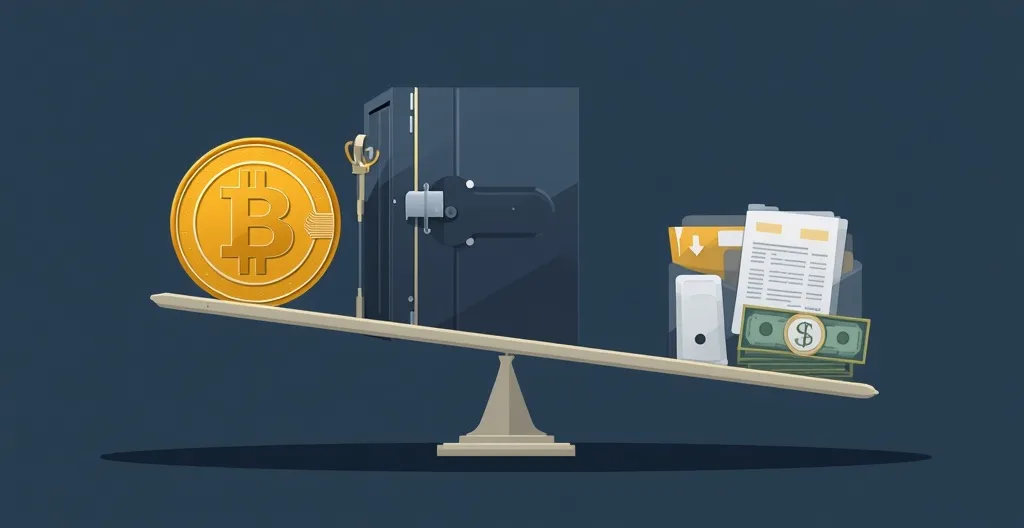
Bitcoin mining is under real margin pressure as difficulty and hashrate keep sliding, but the bigger market twist is that some public miners are no longer being priced like pure BTC bets. Investors are increasingly treating them as power-rich AI and high-performance computing infrastructure plays.
- Difficulty down 19.9% from its peak, per Bitcoin Magazine Pro
- Hashprice in the low-$30s keeps older rigs on thin ice
- AI and HPC contracts are changing how some miners are valued
- Lower difficulty is stress, not a Bitcoin security crisis
Bitcoin mining has been getting squeezed from several angles at once. According to Bitcoin Magazine Pro, difficulty has fallen 19.9% from its peak, a sharp reset that reflects weaker mining economics and the shutdown of less efficient hardware. That kind of move hurts miners, but it is also Bitcoin’s built-in adjustment mechanism doing its job.
Bitcoin’s difficulty fell 0.74% on July 25 to 126.23 trillion after a larger 5% cut on July 11. That left the network about 19% below its record level of roughly 156 trillion set in November 2025. Difficulty adjusts every 2, 016 blocks to keep average block times near 10 minutes, so when hashrate falls, the protocol makes mining easier for the remaining participants. That is not a meltdown. It is the system recalibrating after weaker operators get shoved off the field.
Hashrate tells the same story. Bitcoin’s seven-day average hashrate stood near 868 exahashes per second on July 29, while Hashrate Index’s 30-day measure was near 940 EH/s in its third-quarter review. Bitcoin Magazine Pro said the drawdown had lasted 287 days based on its hashrate series. Luxor’s Hashrate Index also said difficulty was negative year-over-year for only the second time in Bitcoin’s history.
The price backdrop has not helped. Bitcoin traded near $63, 100 on July 31, and with the network still issuing only 3.125 BTC per block after the April 2024 halving, the subsidy remains the main source of miner income. The next halving is currently projected for 2028, when the block subsidy is expected to fall to 1.5625 BTC. That means miners are already living through the phase where every satoshi of revenue matters.
Fees, meanwhile, are still nowhere near replacing the subsidy. Miners collected about 20 BTC in fees during the seven days through July 13, or roughly 2.86 BTC per day. That represented just 0.69% of total block rewards for that week. With about 144 blocks per day, Bitcoin currently creates roughly 450 BTC in daily subsidy when blocks arrive on schedule. Translation: transaction fees are still pocket change compared with the issuance stream that keeps miners alive.
Hashprice, the expected daily revenue earned per unit of mining power, is sitting near $32 per petahash per second per day. That is survivable for efficient operators with cheap electricity. It is rough for older fleets. Many of those machines can struggle to stay cash-positive around $30 to $35 in hashprice unless they have electricity below roughly five cents per kilowatt-hour. That is the ugly part of miner capitulation: machines do not negotiate, and bad power contracts do not magically become good.
Miner capitulation means forced or distressed exits under margin pressure. That can include shutting off rigs, selling Bitcoin to cover costs, or leaving the business entirely. Bitcoin Magazine Pro said miners had “found something more profitable to do with their hardware.” Luxor described the trend as “a structural shift, not just a cyclical low.”
That “something” is increasingly AI and high-performance computing.
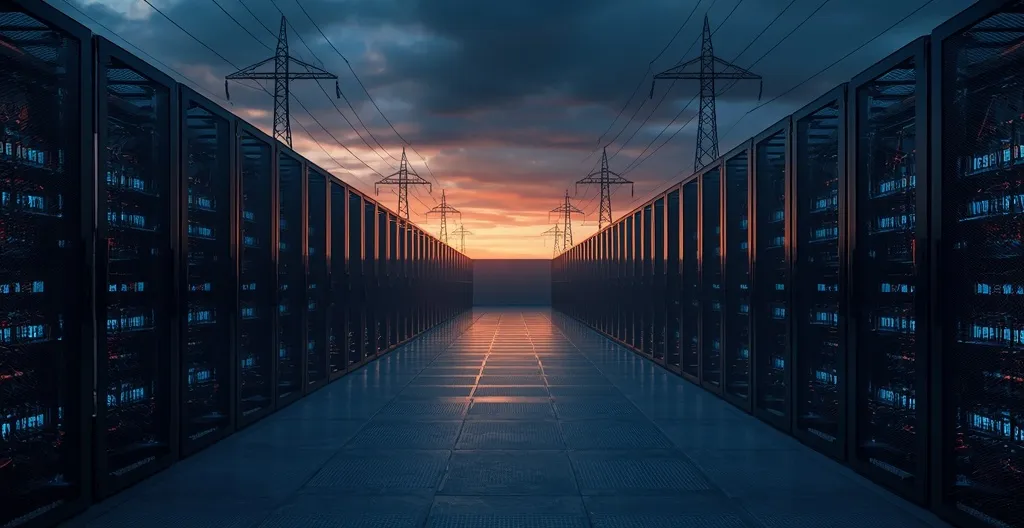
The logic is straightforward. Mining firms already control land, power access, cooling, and data-center-style infrastructure. Those are the scarce ingredients AI operators need too. In the right location, a mining site can be repurposed into leased compute capacity, often with steadier contract-based revenue than chasing block rewards when mining margins are thin.
Hut 8 is one of the clearest examples of that pivot. On July 20, it signed a second 15-year lease for 352 megawatts at its Beacon Point campus in Texas. The agreement raised Beacon Point’s base-term contract value to $19.6 billion, and Hut 8 said its total contracted AI portfolio reached $26.6 billion. Initial delivery for the second phase is scheduled for the second quarter of 2028. According to Barron’s market data, Hut 8 shares more than quadrupled over the preceding 12 months and rose 11% after the second Beacon Point agreement.
Core Scientific made a similar move on July 28, announcing an AMD partnership anchored by 15-year agreements covering about 530 MW and more than $14 billion in potential base contracted revenue. Core Scientific said its total leased customer capacity had reached roughly 1.1 GW, representing more than $24 billion in potential contracted revenue. That is a long way from the old “mine Bitcoin and hope” model. It is a power-and-infrastructure business with a Bitcoin sidecar.
TeraWulf shows how quickly the mix can change. In the first quarter, its AI and HPC lease revenue reached $21 million, while its Bitcoin-mining revenue was less than $13 million. That does not mean mining is dead, but it does show where some operators see the better marginal dollar.
There is a catch, of course. A signed lease is not the same thing as easy money. Turning a mining campus into competitive AI or HPC infrastructure can require major capital, tighter cooling, new networking, long sales cycles, and a customer base that may be concentrated in a few big counterparties. In other words, this is not some magical “Bitcoin mining, but greener and richer” cheat code. It is a harder business with a shinier press release.
There is also a more uncomfortable truth for Bitcoiners: some listed miners are effectively becoming energy and compute infrastructure firms that happen to still run a Bitcoin operation on the side. That can be smart corporate strategy. It also says something about how brutal pure mining economics can get when price weakens and difficulty stays high.
Listed miners sold more than 32, 000 BTC during the first quarter of 2026, more than their combined sales during all of 2025. At the same time, a basket of mining equities gained 56% during the early part of 2026 while Bitcoin fell 17%. That divergence tells you the market is no longer valuing these names only as leveraged Bitcoin proxies. Grid access, data-center assets, and AI optionality now matter.
That re-rating may be rational. It is also not the same thing as healthy mining fundamentals. Investors cheering the AI pivot are, in effect, admitting that the best part of some miners’ businesses may no longer be Bitcoin mining at all.
For Bitcoin itself, the headline looks harsher than it is. Lower difficulty and falling hashrate hurt miners, but they do not automatically signal a security emergency. The network is designed to adjust every 2, 016 blocks. If hashrate drops, difficulty drops too, and block production normalizes. Security would only become a serious concern if hashrate fell dramatically and stayed low for an extended period. That is not what is being shown here.
The real question is how long the pressure lasts and what kind of mining industry emerges on the other side. If Bitcoin price recovers, mining margins can improve quickly. If it does not, inefficient operators will keep getting forced out, more public miners may lean harder into AI and HPC, and Bitcoin’s security budget will continue to rely overwhelmingly on block subsidy rather than fees.
The next difficulty adjustment is expected around August 9 to August 11, depending on block production. Hut 8 is also set to report second-quarter results on August 4, which should give the market another read on whether the AI pivot is becoming a durable business model or just another shiny narrative attached to expensive power assets.
Key questions and takeaways
-
Is Bitcoin mining under pressure?
Yes. Falling difficulty, softer hashrate, and low hashprice show real strain, especially for older and less efficient fleets. -
Does lower hashrate mean Bitcoin is broken?
No. Bitcoin’s difficulty adjustment is designed to absorb exactly this kind of stress. Lower hashrate is a margin problem for miners, not an automatic protocol failure. -
Are miner stocks rising because mining is healthier?
Not necessarily. Investors are increasingly valuing some miners as AI and data-center infrastructure plays, not just as Bitcoin exposure. -
Can AI and HPC fully replace mining revenue?
For some firms and sites, they may become more profitable than mining. But conversion costs, execution risk, and customer concentration make this far from a free lunch. -
Are transaction fees carrying Bitcoin security yet?
No. Fee income is still tiny relative to the block subsidy, so the network remains heavily dependent on newly issued BTC for miner incentives. -
Should Bitcoin holders worry?
Not immediately. This is miner pain, not a sign that Bitcoin itself is failing. The protocol is adjusting as designed.
The blunt takeaway is simple: Bitcoin mining is becoming a brutal efficiency game. Cheap power, efficient machines, and disciplined treasury management are no longer advantages; they are survival requirements. Meanwhile, the market is rewarding miners that can turn their infrastructure into something more versatile than block production. That may be a smart adaptation for some companies, but it also confirms a hard truth: not every miner is really a miner anymore.
Further reading
A few relevant angles on miner economics, protocol basics, and the infrastructure pivot.
- Bitcoin Mining Faces Challenges Amid Price Decline and
- Error extracting content
- Making Methane Reduction Profitable: The Story Of
- Bitcoin protocol
- Bitcoin mining report
- Bitcoin Mining Profitability Squeezed by Rising Costs and
- Bitcoin Mining Faces 10.3% Difficulty Drop as Miner Squeeze
- Seven Major Bitcoin Mining Pools Back Stratum V2 as Mining