Bitkey says it addressed a researcher-flagged vulnerability and that customer funds were not at risk. That’s the part that matters most. A bug in a bitcoin wallet can be annoying, embarrassing, or dangerous, but there’s a big difference between a flaw and a theft path.
- [Bitkey addressed a vulnerability flagged by a researcher.](https://cryptobriefing.com/?p=326904)
- Funds were not at risk, according to the claim tied to the disclosure.
- Technical details were not provided, so the exact scope remains unclear.
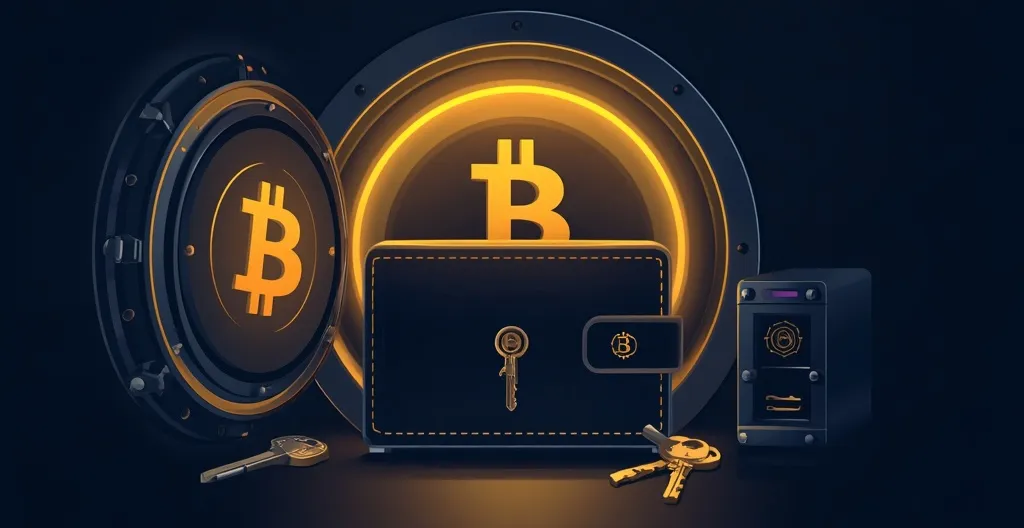
That distinction matters in self-custody, where the whole point is to keep control of your bitcoin without handing it to a custodian. Bitkey is Block’s bitcoin self-custody product, and its design centers on a 2-of-3 multisig setup. In simple terms: three keys exist, and two are needed to approve a transaction.
Bitkey’s own security framing says it uses “three keys instead of one, by default, ” with one key stored offline in secure hardware and no seed phrase for users to manage. That setup is meant to reduce the classic self-custody disasters, stolen seed phrases, single-device compromise, and the usual parade of user mistakes that scammers love to exploit. For a deeper explainer, Bitkey’s own docs on Enhancing Bitcoin Security with Bitkey's Self-Custody and How Bitkey Works: Multisig Without Seed Phrases lay out the model in plain English.
Still, a vulnerability does not automatically mean someone could drain the wallet. It might affect setup, recovery, authentication, app behavior, or some other part of the system without ever touching the signing process itself. In other words: a bug can be real and still fall short of “your funds are about to be yeeted into the abyss.”
That’s why the fund-safety claim should be read carefully. It is reassuring, but it is also narrow. The materials here do not identify the researcher, the affected component, the disclosure timeline, or the specific fix. So the only responsible conclusion is the simplest one: Bitkey says it handled a reported vulnerability and says customer funds were not exposed. For anyone wanting a broader foundation on wallet security, the plain-English definition of a Cryptocurrency wallet and the basics of Secure Software Development Fundamentals are worth a look.
There’s also a separate bit of context that should not be muddled together. Recent security reporting about Block’s wallet ecosystem has involved Bitcoin Wallets at Risk After Critical Coldcard Security, with one source explicitly saying Bitkey was not affected. So if you see these names mashed together like they’re the same incident, that’s sloppy at best and misinformation at worst.
The bigger lesson is familiar to anyone who’s spent time around bitcoin security: disclosure is not the same as disaster. A company can uncover a flaw, fix it, and confirm that funds were safe. That’s not a sign of perfection, perfection doesn’t exist in wallet security, but it is a sign that the reporting and response process is working the way it should. And yes, when the fix is confirmed publicly, that matters too; see the follow-up on Bitkey addresses vulnerability flagged by researcher, for the tighter framing.
At the same time, users should keep their guard up. “No risk to funds” does not mean “nothing went wrong, ” and it definitely does not mean “trust us bro.” Security claims are strongest when they come with clear advisories, patch details, and enough technical substance for independent scrutiny. Otherwise, you’re just asking people to admire the paint job on a car without looking under the hood.
That caution becomes even more relevant when you remember how ugly wallet failures can get. A prior cold-wallet incident, covered in Coldcard Seed Flaw Drains 1, 367 BTC as Firmware Update, showed how quickly “just a bug” can turn into a very expensive lesson. On the brighter side, there are still good developments worth watching in Bitcoin Self-Custody Advances as Sparrow, Coldcard and, where better tooling and more privacy-aware spending paths are pushing the space forward.
For Block specifically, Bitkey fits into a wider push around Bitcoin-native products, alongside Cash App and other consumer-facing rails. That broader strategy was laid out in Block Rolls Out Bitcoin Push With Bitkey Wallet, Cash App, and it helps explain why the company is under a microscope: if you’re selling self-custody to regular people, you do not get to be casual about security. Not in this market. Not with real money on the line.
And because terminology matters, Bitkey’s setup is not the same as the old-school “write down 12 words and pray” model. It is closer to a distributed safety system that tries to reduce single points of failure. That does not make it magic. It makes it a different tradeoff. Fewer seed-phrase disasters, yes, but also more moving parts, more software surface area, and more room for bugs to sneak in wearing a fake mustache.
Key questions and takeaways
-
Was Bitkey compromised?
The available information does not show a fund compromise. Bitkey says it addressed a vulnerability flagged by a researcher and confirmed that customer funds were not at risk. -
Does a vulnerability always mean stolen bitcoin?
No. A security flaw can affect usability, recovery, or other parts of a wallet without creating a direct path to theft. That’s why “no risk to funds” is meaningful. -
How does Bitkey’s wallet model work?
Bitkey uses a 2-of-3 multisig setup, meaning two of three keys are needed to move bitcoin. Bitkey says this model includes offline hardware key storage and no seed phrase for users to manage. -
Could this be confused with the Coldcard issue?
Yes, and that would be a mistake. Separate reporting in the available material concerns Coldcard devices and says Bitkey was not affected. -
Why should users care if funds were safe?
Because wallet bugs still matter even when money stays put. They can expose weak spots in the product, affect privacy or recovery, and show where future risks could emerge if they are not fixed properly.
Bottom line: Bitkey says it dealt with a researcher-reported vulnerability, and it says customer funds were not exposed. That’s the right kind of outcome for a bitcoin self-custody product, but until a full technical advisory is published, it should be treated as a limited disclosure, not a fairy tale of flawless security.