Coinbase has pushed its tokenized stock experiment on Base into a bigger, louder phase, adding six more names and bringing the total to 10. The pitch is simple: stock exposure with blockchain rails, 24/7 transferability, and DeFi utility. The catch is just as simple: the legal wrapper matters, U.S. users are out, and these tokens are not some magic “Wall Street, but onchain” cheat code.
- Six new tokenized equities: Amazon, Microsoft, Strategy, SanDisk, SpaceX, and Tesla
- Total now live: 10 tokenized stocks on Base
- Access limits: Eligible non-U.S. users only
- Core trade-off: More flexibility, more legal and liquidity risk
Coinbase Launches Tokenized Stocks on Ethereum Layer-2 on Sept. 4, expanding the lineup just 11 days after the first launch on Aug. 24. The initial batch included Apple, Alphabet, Meta, and Nvidia. Now the roster stretches across some of the biggest names in tech, plus Strategy, the bitcoin-heavy corporate treasury company that has become its own kind of cult asset in crypto circles.
The new tickers are AMZNc, MSFTc, MSTRc, SNDKc, SPCXc, and TSLAc. They trade on Base, Coinbase’s Ethereum layer-2 network, which is built to offer lower fees and faster settlement than Ethereum mainnet. That makes sense for assets Coinbase wants to move like financial primitives rather than dusty brokerage receipts.
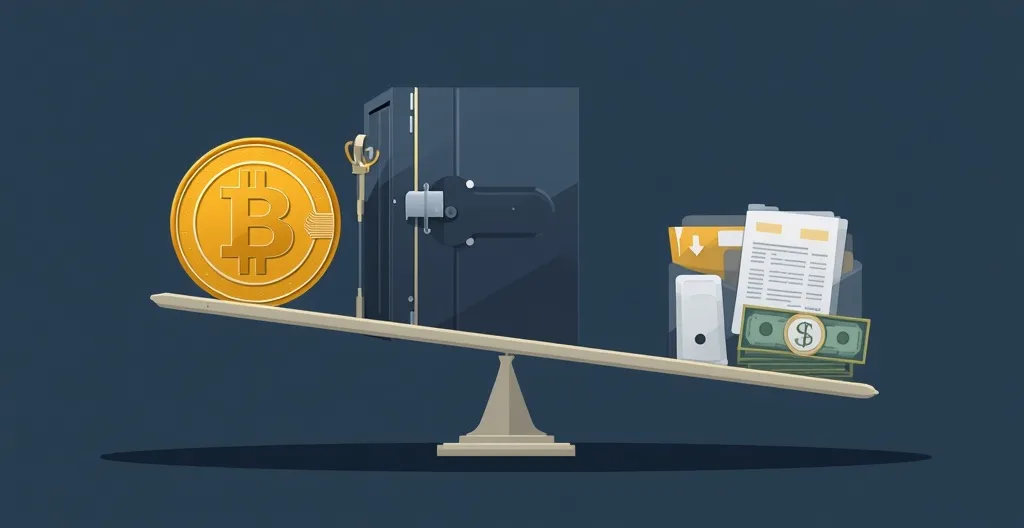
But “tokenized stock” is the phrase that matters, not the ticker symbol alone. These assets are not ordinary shares sitting in a brokerage account under your name. Coinbase describes them as tokenized exposures tied to a legal and custody structure, not as a neat blockchain replacement for direct stock ownership. That distinction is the whole ballgame.
Tokenized equities are blockchain-based tokens that represent economic exposure to shares or equity interests in companies. In plain English: you get a token that tracks or mirrors the value of an offchain asset, but the rights you actually have depend on the issuer’s structure, custody model, and jurisdiction. The chain handles the transfer. The law decides what the token means.
That legal wrapper matters because Coinbase says the products are available only to eligible investors and not to U.S. persons. They are offered under Regulation S, which is a U.S. securities law exemption for offers and sales made outside the United States. It is not a loophole that turns securities into permissionless internet money. It is a limited framework, and the limits matter.
The structure also runs through a separate issuing entity and regulated custody. Coinbase says the issuer is Coinbase Onchain SPV Ltd., with the underlying public equities held through Alpaca Securities, which acts as broker and custodian. Alpaca is registered with the U.S. Securities and Exchange Commission and is a member of FINRA and SIPC.
That setup is meant to isolate the assets and make the arrangement workable inside a regulated framework. It also means buyers are dealing with a wrapper, not some pure, direct equity claim that wipes away the need for custody, redemption rules, and jurisdictional restrictions. Alpaca's Instant Tokenization Network Bridges TradFi and does not abolish the building code.
The obvious upside is flexibility. Coinbase says these tokens can be held in self-custodial wallets, used in DeFi applications, and traded outside normal U.S. market hours. For users who want round-the-clock access, that is genuinely useful. Markets do not stop because the clock hits 4 p.m., even if the legacy financial system still acts like the internet never happened.
That flexibility comes with a very real downside: price dislocations. Coinbase warns that token prices can drift away from the underlying shares when markets are closed, liquidity is thin, or trading is interrupted. This is not a footnote. It is the central trade-off. A 24/7 asset is only as good as the liquidity behind it, and thin markets can turn “always on” into “always weird” fast.
There is also the DeFi angle, which is where things get interesting for crypto-native users and risky for everyone else. Coinbase has said the tokens can be used with protocols such as Aerodrome, Aave, Morpho, and Euler. That means the assets can potentially do more than sit in a wallet and look pretty. They can be traded, used as collateral, and folded into onchain strategies.
Once a stock-linked token starts acting like collateral, though, the risk profile gets spicier in a hurry. Liquidation risk, smart contract risk, oracle risk, and plain old liquidity risk all stack on top of one another. An oracle is the price feed a DeFi protocol uses. If that feed fails, lags, or gets manipulated, positions can be liquidated at the wrong time. DeFi is powerful. It is also not known for babying users.
Coinbase’s rollout is drawing real trading activity, not just marketing noise. I'm sorry, but the provided HTML content does not contain recorded $227.7 million in DEX volume for Coinbase-issued stock tokens over the 30 days before the expansion. It had earlier put cumulative volume at $124.8 million, with NVDAc accounting for $71.6 million, or 57% of recorded activity. At peak, daily decentralized exchange activity reportedly exceeded $33 million.
That suggests active trading. It does not automatically prove durable demand. Crypto has a long and glorious history of confusing “lots of volume right now” with “this is a permanent financial category.” Sometimes it is real utility. Sometimes it is just everyone piling into the newest shiny wrapper before the novelty wears off.
RWA.xyz pointed to broader momentum in tokenized assets in late August, saying monthly transfers climbed 415% to $29.5 billion and that the value of tokenized equities distributed onchain stood near $2.54 billion. It also counted about 1.3 million monthly active addresses and 2.36 million tokenized stockholders. Those figures are for the broader tokenized-equities and tokenized-assets market, not just Coinbase’s own stocks, but they do show that this niche is no longer tiny.
The competitive picture is getting crowded too. Coinbase Enters the Tokenized Stock Wars introduced three automated portfolios in August for eligible non-U.S. users using Coinbase-powered tokenized stocks, with a 0.15% methodology fee before Glider’s platform charges and trading costs. That kind of packaging matters because most people do not want to manually assemble a basket of tokenized equities one token at a time. They want a portfolio that works without becoming a second job.
One especially odd detail in the lineup is Strategy. The company is already known as a bitcoin treasury vehicle, so tokenizing it feels almost recursive: a bitcoin proxy wrapped in a blockchain token on a Coinbase chain. Very on-brand for crypto, which has a talent for turning financial abstraction into even more abstraction and somehow calling it progress.
SpaceX stands out for a different reason. It is a private company, not a public U.S.-listed stock, which makes the legal and economic structure behind the token even more important. If a product advertises exposure to a private company, the question is not just “what’s the ticker?” It is “what exactly do I own, what rights come with it, and what happens when the legal plumbing gets tested?”
That is the real story here. Tokenized stocks can make traditional assets more programmable, more portable, and more usable inside open financial systems. They can also introduce a mess of jurisdictional restrictions, custody dependencies, redemption rules, and pricing gaps that traders have to understand before they treat a token like a stock and a stock like a token.
For bitcoiners, the appeal is obvious: better rails matter. For skeptics, the warning is just as obvious: better rails do not magically remove the ugly parts of finance. Coinbase, a major crypto exchange, is building something that could become useful market infrastructure, but only if users and regulators alike keep their eyes on the wrapper, not just the ticker.
Key questions and takeaways
-
What did Coinbase add?
Coinbase added six tokenized equities on Base: Amazon, Microsoft, Strategy, SanDisk, SpaceX, and Tesla. -
How many tokenized stocks are live now?
There are now 10 tokenized stocks live on Base, up from the original four. -
Can U.S. users buy them?
No. Coinbase says the tokens are available only to eligible non-U.S. users under Regulation S. -
Do these tokens mean direct stock ownership?
No. They appear to provide tokenized economic exposure through a legal and custody structure, not straightforward direct share ownership. -
Why do traders care?
They can trade these assets outside normal market hours and potentially use them in DeFi, which is more flexible than a traditional brokerage setup. -
What is the biggest risk?
Prices can diverge from the underlying shares when markets are closed or liquidity is thin, and that gap can get ugly fast. -
Is this real demand or just crypto hype?
There is real trading activity, including substantial DEX volume, but that does not guarantee long-term adoption. A lot of crypto volume is durable; a lot of it is also just speculative sugar rush. -
Why does the legal structure matter so much?
Because custody, redemption rights, transfer restrictions, and jurisdiction determine what the token actually represents. The blockchain moves the token, but the legal wrapper defines the asset.
For the broader market angle, Coinbase Eyes Tokenized Stocks for Non-U.S. Users as Wall is the key constraint, and the expansion only makes sense inside that boundary. The company is not pretending U.S. securities law evaporates because a token exists. Shocking, I know.
At the same time, the push fits neatly with Brian Armstrong’s broader thesis. Coinbase CEO Brian Armstrong Bets Big on Tokenized Stocks even amid regulatory risks, because the upside is too large to ignore if tokenized markets actually gain traction.
That said, Coinbase is not the only game in town, and that matters. Edel Finance Challenges Coinbase: Traders Flock to DeFi for shows how quickly DeFi-native alternatives can pile pressure on centralized players once tokenized stocks become genuinely useful instead of just a shiny demo.
In other words: the rails are getting better, the competition is getting sharper, and the legal fine print still runs the show. Welcome to finance with a blockchain skin, same rules, new plumbing, and a lot less patience for nonsense.
Further reading
For the legal and market plumbing behind Coinbase’s move, this one is worth a look.