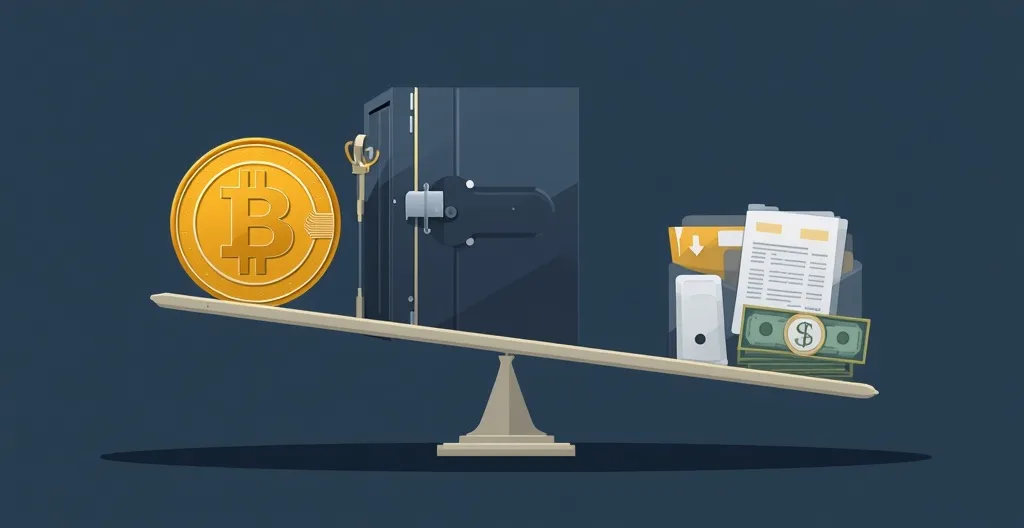
Coinbase is cutting a handful of weak trading pairs while pushing harder into derivatives and new listings. That is the real signal here: clean up thin markets, keep the useful rails, and lean into the part of crypto that actually earns serious fees.
- Six trading pairs are set to be suspended on Aug. 6, 2026
- Five of those pairs were moved to limit-only mode first
- Coinbase added BIO, BNKR and TREE for eligible customers
- Institutional derivatives accounts are moving to Deribit on Sept. 9
- Coinbase’s Circle agreement remains in place, while Q2 revenue came in below estimates
Coinbase Markets said it will suspend six cryptocurrency trading pairs on Aug. 6, 2026 as part of a routine review of supported markets. Five of those pairs were placed into limit-only mode before the cutoff, a standard step that gives traders time to manage positions without letting market orders rip through a thinning book.
The pairs set for suspension are LSETH-ETH, MINA-EUR, GRT-GBP, MASK-GBP, CHZ-USDT, and CRO-USDT. The five markets moved into limit-only mode are MINA-EUR, GRT-GBP, MASK-GBP, CHZ-USDT, and CRO-USDT. LSETH-ETH was not included in that notice.
For readers who do not spend their life staring at exchange screens, limit-only mode means users can place and cancel limit orders, but market orders are blocked. A limit order tells the exchange the worst price you are willing to accept. A market order says, “fill me now at whatever the market gives me, ” which is fine in deep liquidity and often a mess in thin markets.
That is why exchanges use limit-only mode before a suspension. It lowers the chance of ugly fills and gives users one last window to exit or adjust. In plain English: Coinbase is telling traders these markets are on borrowed time, so stop using market orders like a wrecking ball.
Coinbase said it monitors liquidity, trading activity, and order book conditions when reviewing supported markets. That is not a dramatic verdict on the underlying tokens. It is mostly market hygiene. Exchanges regularly cut underused pairs when books get too thin, execution gets sloppy, and maintenance costs stop making sense.
One important distinction: suspending a trading pair is not the same as removing the underlying asset entirely. A pair is just one route for trading an asset. Coinbase may still support the token through other markets, depending on what remains listed. So this is not necessarily a token funeral. It is more like closing a side road that nobody drives on anymore.
The pattern also tells you something about market structure. EUR and GBP pairs for smaller assets tend to get thinner than major USD or BTC routes, and when liquidity dries up, exchanges stop babysitting them. That can annoy traders who want direct fiat access, but it is not irrational. Thin books create bad execution, and bad execution is how users get burned.
At the same time, Coinbase is not just cutting. It is also adding new tokens. Eligible customers can now access BIO, BNKR, and TREE, tied to Bio Protocol, BankrCoin, and Treehouse. Coinbase said eligible users can buy, sell, send, receive, convert, and store the assets.
That mix of pruning and expansion is pretty standard for a large exchange. Some pairs get retired because they are too thin, while new listings get added when Coinbase sees demand or wants to support newer networks and communities. Whether BIO, BNKR, and TREE gain real traction is another matter. A listing is not a prophecy. Plenty of tokens get the badge and then spend the rest of their lives as little more than chart wallpaper.
The more meaningful strategic move is on the institutional side. Coinbase plans to transfer institutional clients’ International Exchange accounts, balances, and open positions to Deribit on Sept. 9. Trading is expected to pause for about 30 minutes during the transfer. Institutions that do not want to take part must close positions and International Exchange accounts by Aug. 28.
That matters because Deribit is not some side project. Coinbase acquired the derivatives venue in August 2025 for about $2.9 billion, and now the integration is turning into real plumbing work. Deribit is best known for crypto options and derivatives, and Coinbase is clearly pushing deeper into that business rather than relying only on spot trading.
The operational details matter for institutions. These migrations are not just a name change on a dashboard. Open orders get canceled, balances and positions have to be rebooked, and firms that do not prepare in time can be left scrambling. Coinbase says the pause should last about 30 minutes, but anyone who has ever dealt with trading infrastructure knows that “about” is doing a lot of heavy lifting there.
The broader point is simple: Coinbase increasingly looks like a derivatives and institutional infrastructure company, not just a spot exchange. That is where durable volume often lives. Spot trading gets the headlines; derivatives bring stickier activity and a deeper relationship with professional traders.
That shift was visible in Coinbase’s own second-quarter numbers. The company reported $1.22 billion in revenue, below the $1.29 billion estimate tracked by Wall Street, and down 14% from the previous quarter. Revenue weakness is not exactly a victory lap, but it does not erase the strategic direction of the business either. The exchange can have a softer quarter and still be building something larger underneath it.
Coinbase also confirmed that its commercial agreement with Circle will renew automatically after both companies met the required contractual conditions. That keeps the USDC relationship intact for now, which matters because stablecoins remain one of the more commercially important parts of crypto. They are not flashy, but they are useful, which is more than can be said for half the token market on a random Tuesday.
ARK has also stayed active. The ARK Innovation ETF bought 38, 761 Coinbase shares worth about $5.68 million, adding to earlier purchases of Coinbase and Circle shares on Aug. 3. That is not a guarantee of anything, of course. Institutional buying is a signal, not scripture. But it does suggest some large investors still see value in Coinbase even after a weaker revenue print.
The larger policy backdrop is still unsettled. U.S. crypto market structure legislation, including the CLARITY Act, remains under discussion in the Senate. That matters because exchanges do not just compete on product and fees; they also compete on how much regulatory uncertainty they can survive. Clearer rules would help, but crypto has never been known for getting the easy version of anything.
For traders holding one of the affected pairs, the practical takeaway is straightforward: do not wait until the cutoff. If you need to move a position, check whether you are already in limit-only mode and make your plan before Aug. 6, 2026. If you use the institutional derivatives product, the Aug. 28 deadline and Sept. 9 migration date are the ones that matter most.
Key takeaways
-
Why is Coinbase suspending these pairs?
Coinbase says it reviews supported markets regularly and looks at liquidity, trading activity, and order book conditions. In practice, that usually means a pair is too thin or too messy to keep supporting. -
Are these tokens being removed completely?
Not necessarily. Coinbase is suspending specific trading pairs, which is narrower than removing the underlying assets altogether. -
What does limit-only mode do?
It allows limit orders but blocks market orders. That helps traders avoid bad fills when a market is losing depth. -
Why does the Deribit migration matter?
Because it shows Coinbase is pushing deeper into institutional derivatives, which is a bigger and more strategic business than trimming a few weak spot pairs. -
Is the Circle agreement still alive?
Yes. Coinbase said the commercial agreement with Circle will renew automatically after contractual conditions were met, which keeps the USDC relationship in place for now. -
What does ARK buying Coinbase shares mean?
It suggests some institutional investors still see upside in Coinbase, even after a softer quarter. It is a sentiment signal, not a guarantee of future gains.
Coinbase is doing two things at once: cutting weak trading corridors and building a stronger derivatives base. That is not flashy, but it is real. In crypto, real tends to matter more than loud.
Further reading
A few useful sources if you want the plumbing behind the headlines.
- Coinbase to suspend six trading pairs, including MINA-EUR
- Coinbase Q2 earnings and trading-volume update
- Coinbase Markets trading rules
- Coinbase to buy Deribit for $2.9 billion
- Circle moves 4.4B USDC to Coinbase in record HyperEVM transfer
- Coinbase’s $2.9B Deribit buy signals aggressive growth strategy
- Coinbase acquires Deribit for $2.9B, aiming to dominate crypto derivatives market