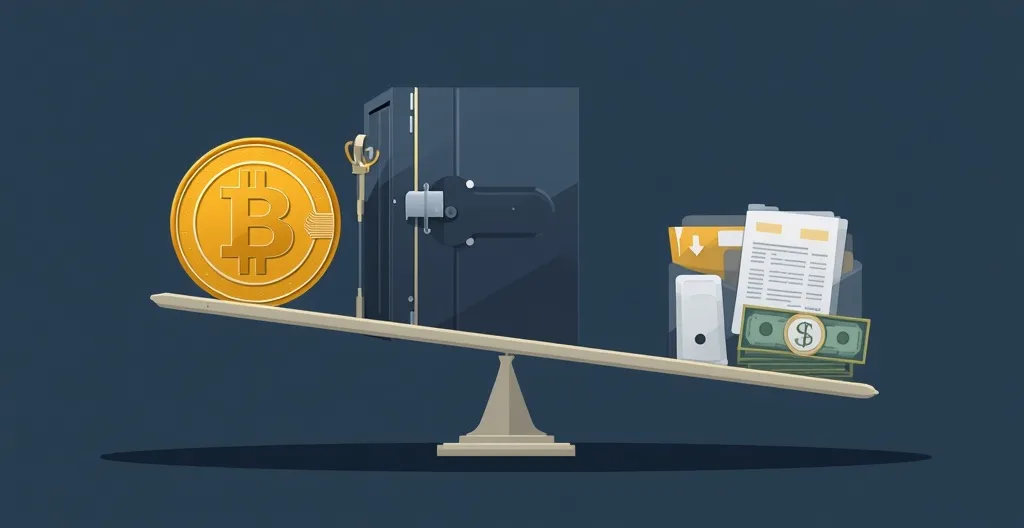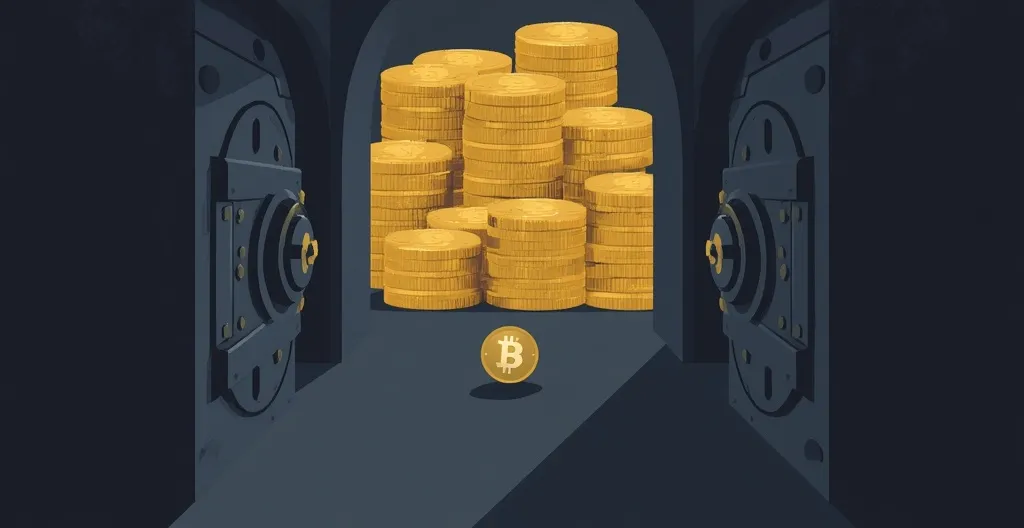
Crypto market makers are the plumbing behind instant fills, tight spreads, and the illusion that most tokens trade more smoothly than they actually do. They are essential. They are also rent-seeking middlemen with enough influence to shape price, perception, and sometimes outright nonsense.
- Liquidity is provided, not magical.
- Market makers make money from spreads, launch deals, and trading.
- Crypto’s gray area makes abuse hard to separate from legit market support.
- DEXs are different from CEXs, but not immune to gamesmanship.
When a trade on Binance or Coinbase fills instantly, there is usually liquidity on the other side, sometimes from another trader, sometimes from an exchange’s routing or internal inventory, and often from a market maker actively quoting both sides of the book. On a decentralized exchange, the plumbing is different. Liquidity comes from pools, automated market makers, and arbitrageurs rather than a classic order book.
That distinction matters. A Wintermute-style firm is not literally standing behind every Uniswap swap. But in both models, someone, or something, is making the market work.
What a market maker actually does
A market maker posts buy and sell quotes. The bid is the price it will buy at. The ask is the price it will sell at. The gap between them is the spread, and that spread is the core of the business.
If a trader wants to sell immediately, the market maker buys. If a trader wants to buy immediately, the market maker sells. The point is to keep markets tradable and reduce slippage, which is the ugly little gap between the price you expected and the price you actually got. For a plain-English breakdown, see Trading Insights: How the Bid-Ask Spread Works.
Without this kind of liquidity, many crypto markets would look like ghost towns with a ticker. Thin books, huge price jumps, and brutal execution would be the norm, especially outside peak hours.
That’s the service. The catch is that the service is never free, never neutral, and never completely clean.
How they make money
The simplest source of revenue is the spread. If a market maker can buy slightly below and sell slightly above, it earns the difference over and over again at scale.
Here’s a crude illustration: if a market maker quotes BTC/USDT with a one-basis-point spread, 0.01%, and handles $500 million in daily volume, the gross spread capture could be around $50, 000 per day, or roughly $18 million per year, on that one pair on one exchange. That is an illustration, not a guarantee. Real-world profits are reduced by competition, adverse selection, inventory risk, hedging costs, and the fact that a market maker does not get to keep every cent of the spread like some cartoon villain scooping coins into a sack.
The spread is only one leg of the stool. Publicly discussed market-making arrangements can also include setup fees, monthly retainers, token loans, and sometimes options. A public GSR proposal cited a $100, 000 setup fee, a $20, 000 monthly retainer, and a $1 million BTC/ETH loan. Contracts are often set for 12 to 24 months.
That token loan detail is worth spelling out. In simple terms, the project lends tokens to the market maker so it can support liquidity, often on the sell side. The project is effectively helping fund the appearance of a functioning market. That can be legitimate. It can also be a very polished way of renting a market and calling it organic.
Market makers also trade for themselves. They may arbitrage prices across venues, hedge inventory, or take directional positions when they think they have an edge. That part of the business is where “liquidity provision” can start to look suspiciously like “we know what’s going on and we’re not wasting the information.”
Why token projects hire them anyway
Because without them, a lot of launches would be a disaster.
New tokens often start with thin order books. If there isn’t enough buy and sell interest, prices can swing wildly and slippage can get nasty fast. A token may be listed, but functionally untradeable except during the busiest hours. That is not a liquid market. That is a hostage note with a chart attached.
Market makers help make the market usable. They tighten spreads. They deepen books. They reduce the chance that the first wave of traders gets wrecked by poor execution.
But there’s a darker side. If liquidity is mostly contractual and concentrated in a single firm, then it can vanish when the deal ends or the support is withdrawn. What looked like real depth was sometimes just rented depth. Crypto loves to call that liquidity. Sometimes it is better described as a lease with a countdown clock.
The biggest names in the business
Among the most prominent crypto market makers are Wintermute, Jump Crypto, GSR, and DWF Labs. These firms operate across centralized exchanges, decentralized venues, and over-the-counter, or OTC, desks, direct deals done away from public order books.
Wintermute, founded in 2017, is one of the best-known independent players. According to reporting cited in the source material, it handles enormous volume across more than 80 platforms and reports around $3.5 trillion in annual trading volume. That is not a typo. In crypto, the scale gets stupid very quickly. Its own Insights page offers a window into how the firm frames the business.
Wintermute also took a major hit in September 2022, losing roughly $160 million in a DeFi exploit tied to the Profanity vanity-address vulnerability and compromised hot-wallet infrastructure. A hot wallet is simply a crypto wallet connected to the internet. Fast and convenient. Also very hackable if you build like a clown. The mechanics of How the Wintermute Hack was Executed are a reminder that liquidity firms are not just market infrastructure, they are also huge attack surfaces.
Jump Crypto is the crypto arm of Jump Trading, a Chicago-based high-frequency trading firm founded in 1999. That traditional-market pedigree matters. These are not retail degens with a terminal and a dream. They are serious trading shops with serious infrastructure and serious reach.
Then there is DWF Labs, which has drawn more scrutiny because its model can blur the line between market making, investment, and token support. That kind of dual role is exactly where conflicts of interest start breeding in the dark. Even if the arrangement is disclosed, the incentives can still get ugly fast.
Where market making turns into manipulation
“Every time you buy or sell a token on an exchange and the order fills instantly, a market maker is on the other side.” That’s the clean version. The messier truth is that market makers have inventory, exchange access, and information advantages that can influence prices in ways ordinary traders never see.
Visible depth on an exchange order book can be misleading. Orders can be placed and canceled quickly. That practice is called spoofing, showing fake liquidity to influence perception without intending to fill. It is illegal in traditional markets and has been sporadically enforced in crypto, but the line often stays fuzzy because enforcement is patchy and intent is hard to prove.
Wash trading is another classic scam: trading with yourself, or an associated account, to fake volume. Front-running means getting ahead of client orders using privileged information. None of this is unique to crypto, but crypto’s fragmented venues and uneven oversight make it easier to get away with the usual market garbage.
“The line between market making and market manipulation remains undefined.”
That sentence is doing a lot of work, because it gets to the heart of the problem. A firm can be a necessary liquidity provider and a highly conflicted participant at the same time. Both things can be true. That’s the part everyone prefers to gloss over when the numbers look good.
What DEX market making looks like
Decentralized exchanges work differently from centralized order books. Instead of matching bids and asks directly, automated market makers, or AMMs, use liquidity pools and formulas to set prices. Uniswap is the classic example. Uniswap V3 added concentrated liquidity, which lets providers place capital inside a chosen price range instead of across all prices. For a broader comparison, Understanding Crypto Market Maker Models and Their Impact is useful context.
That improves efficiency, but it also creates new vulnerabilities. On-chain liquidity is more visible, which is useful for transparency, but it also gives other actors a map. On-chain market makers can be exposed to maximal extractable value, or MEV, where searchers and bots observe transactions and try to exploit them through ordering or rebalancing games.
So yes, the system is more open. No, that does not mean it is cleaner. Transparency is a double-edged sword. It lets everyone watch the game, but it also lets everyone see where the bodies are buried.
Why regulators are circling
Market making stops being a technical footnote when it starts affecting market integrity. Regulators are increasingly looking at whether liquidity support crosses into misleading conduct or unregistered market activity.
On December 20, 2024, the U.S. SEC charged Tai Mo Shan to Pay $123 Million for Negligently Misleading, a subsidiary of Jump Crypto Holdings LLC, over conduct tied to Terraform and the collapse of Terra’s UST stablecoin. According to the SEC, Tai Mo Shan purchased more than $20 million of UST and acted in a way that helped support the peg while misleading the market about UST’s stability.
The SEC said Terraform and Do Kwon were found liable in April 2024, and that Terraform agreed to pay $4.5 billion. Tai Mo Shan later settled for $73, 452, 756 in disgorgement, $12, 916, 153 in prejudgment interest, and $36, 726, 378 in civil penalty. That is not pocket change. That is the sort of bill that makes people in the industry suddenly discover the value of compliance.
There have also been broader enforcement efforts aimed at market abuse. In October 2024, the FBI ran Operation Token Mirrors, using a fake token called NexFundAI in a sting that led to charges against four market-making firms and 18 individuals. The point was simple: if you think the market is full of smoke and no one is watching, you are already in trouble.
Separately, reporting cited from a Wall Street Journal investigation said Binance’s internal surveillance team identified $300 million in suspected wash trades by DWF Labs in 2023, involving YGG and at least six other tokens. DWF denied the allegations. That distinction matters. Allegation is not proof. But it is also not nothing.
Chainalysis data cited in the source material estimated $2.57 billion in potential wash trading activity across 74, 037 tokens, or 3.59% of all launched tokens, with pump-and-dump patterns lasting an average of 6.23 days. Those figures are estimates of potential activity, not a courtroom finding. Still, they show the problem is structural, not incidental.
What the business really tells us
Crypto market making is not a charity. The firms doing it are businesses, and they are paid to manage risk, quote tight markets, and keep tokens moving. The revenue comes from spreads, launch agreements, and trading. The incentives are not subtle. See also How crypto market makers work: the firms behind every trade for a deeper look at the mechanics behind the scenes.
That’s why concentration matters so much. If one major firm is carrying most of the visible support for a token, the market can look healthy right up until the moment that support disappears. Then the depth vanishes, the spread blows out, and traders discover that “liquidity” was just a temporary costume.
This is the hard truth crypto keeps tripping over: market makers are necessary infrastructure, but they are also power centers. They help markets function, and they can also help markets lie.
That does not mean every market maker is crooked. It means the sector deserves real scrutiny, clear disclosure, and enforcement that can actually keep up. Otherwise the industry will keep pretending that rented depth is the same thing as honest price discovery. It isn’t.
Key questions and takeaways
-
What is a crypto market maker?
A firm that provides liquidity by quoting buy and sell prices, helping trades execute quickly and with less slippage. -
How do market makers make money?
Mainly from the bid-ask spread, plus setup fees, monthly retainers, token loans, options, arbitrage, and proprietary trading. -
Why do token projects hire market makers?
To make new listings tradable, reduce slippage, and create deeper order books. That helps trading, but it can also disguise how fragile the liquidity really is. -
What is the biggest risk for traders?
That the visible liquidity is temporary or contract-driven. If the market maker pulls out, the book can thin out fast and price discovery can get brutal. -
Are market makers always legitimate?
No. They are essential to market structure, but crypto’s weak oversight makes it hard to separate real liquidity provision from spoofing, wash trading, or other forms of manipulation. -
Are decentralized exchanges safer?
Not automatically. DEXs are more transparent, but MEV, concentrated liquidity, and on-chain trading strategies still create plenty of room for exploitation.
The healthy way to think about market makers is bluntly: they are useful, necessary, and sometimes deeply sketchy. In crypto, that mix is not a bug. It’s the business model. For more context on recent liquidity stress, see Wintermute Warns: Crypto Liquidity Crisis Stalls 2024 Bull.
That caution matters even more when DeFi gets hit hard: Rhea Finance Hit by $18.4M DeFi Exploit: Security Flaws and Drift Protocol $280M Hack: Solana DeFi Exploit Exposes show how quickly “liquidity” and “security” can turn into very expensive buzzwords.