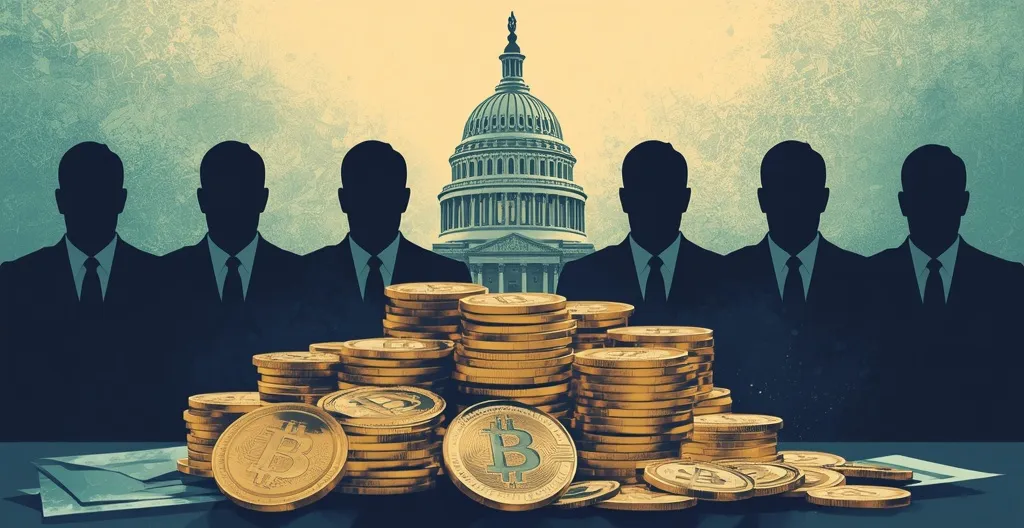
Fairshake says it is backing 32 incumbent House candidates ahead of the November 2026 elections. The group is using independent advertising to support lawmakers from both parties as Congress debates crypto rules.
- Fairshake’s slate includes 13 Democrats and 19 Republicans.
- CoinDesk reports that six candidates are receiving $1 million each in support from Fairshake and its affiliates.
- The support takes the form of independent advertising, not direct campaign donations.
- Stablecoin rules, market structure and crypto taxes are part of the policy backdrop, but the industry has no single shared plan.
What Fairshake’s backing means
CoinDesk reported on Oct. 5, 2026, that Fairshake was supporting 32 House incumbents running in November. The reported slate includes 13 Democrats and 19 Republicans. “Backing candidates” is more accurate than saying Fairshake has formally designated 32 races. The reported support is directed at candidates.
Fairshake is not writing checks to the candidates’ campaigns. CoinDesk describes the support as independent advertising bought outside the campaigns’ involvement. That distinction matters: candidates do not receive the money directly, and the available reporting gives no total for Fairshake’s spending across the slate.
CoinDesk reports that Fairshake spokesman Geoff Vetter said six candidates were receiving $1 million each in support from Fairshake and its affiliates. The report does not say whether each amount is planned, already spent or a reported allocation. The figure should not be read as a confirmed payment to a campaign.
The six named candidates are Republicans French Hill, Bill Huizenga and Bryan Steil, and Democrats Steven Horsford, Derek Tran and Janelle Bynum. Hill chairs the House Financial Services Committee, Huizenga is a senior member of the committee, and Steil leads its digital-assets subcommittee.
CoinDesk says Stand With Crypto gives Horsford, Tran and Bynum an “A” rating on digital-asset issues. That rating reflects the advocacy group’s assessment, not an independent measure of how any lawmaker will vote on a particular bill. Fairshake also cited Horsford’s role in advancing a bipartisan crypto tax bill through the House tax committee. The available reporting does not name the bill or give its date and current status.
Why committee seats matter
Committee assignments can determine whether legislation gets a hearing, shape how a bill is written and influence whether it reaches the full House. CoinDesk reports that Fairshake-backed candidates sit on committees with relevant jurisdiction, including Ways and Means, Financial Services, Agriculture, Science and Judiciary.
That gives the slate political value to an industry seeking a voice in Congress. But campaign support does not guarantee a win, a vote or agreement on a specific proposal. Fairshake’s activity also does not mean crypto companies, developers, investors and users all want the same rules. Their interests can differ on consumer protection, oversight, privacy and the limits of regulatory authority. Broader spending by crypto, AI and betting firms puts this political push within a wider debate over corporate influence.
Vetter described Fairshake to CoinDesk as an organization focused on policy rather than party:
“Fairshake has always been and always will be an issue-focused organization. We back pro-crypto candidates who support American innovation in both parties.”
CoinDesk also reports that Fairshake’s ads do not always mention crypto. The group may focus on other issues it believes will resonate with voters. That can make an ad’s political purpose less obvious to voters weighing a candidate’s position on digital assets.
The policy backdrop: stablecoins, market structure and taxes
Several distinct policy questions sit behind the political push. Stablecoins are digital tokens designed to hold a relatively steady value, often by tracking the U.S. dollar. Market-structure rules would define how digital assets and the businesses that trade them fit into the regulatory system. Tax proposals address how crypto transactions and holdings are treated under tax law.
The GENIUS Act, which establishes a federal framework for payment stablecoins, was signed into law on July 18, 2025. In its Oct. 5, 2026, report, CoinDesk described a separate fight over the Digital Asset Market Clarity Act, a market-structure bill. The report said the bill failed to advance in the Senate in September 2026.
These developments do not add up to a unified crypto agenda. A stablecoin issuer, an exchange, a software developer and a token holder may all want clearer rules, but disagree sharply about what those rules should require. Fairshake’s slate shows organized political activity. On its own, it does not reveal a shared regulatory blueprint for the sector.
What Fairshake says its influence looks like
Vetter told CoinDesk that Fairshake had backed 53 winners out of 57 races in the primaries and was working toward “the largest pro-crypto caucus in American history.” Those are Fairshake’s claims, as reported by CoinDesk. The available information does not define which races or period the 53-of-57 figure covers, so it is not a standalone measure of the group’s influence. Previous coverage examined Coinbase and Brian Armstrong’s funding of Fairshake ahead of the 2026 midterms.
The reporting cited here does not provide the full roster of 32 candidates. The Hill names several additional lawmakers, including Tom Emmer, Glenn Thompson, Jason Smith, Pete Aguilar and Josh Gottheimer, but its supplied list has only 26 names. That is not enough to reconstruct or verify the complete slate. The total spending across all 32 candidates is also unknown.
Key questions and answers
-
Who is Fairshake backing?
CoinDesk reports that Fairshake is supporting 32 incumbent House candidates ahead of the November 2026 elections: 13 Democrats and 19 Republicans. The reporting cited here does not include a complete candidate list.
-
Is Fairshake donating directly to campaigns?
No direct donations are described. CoinDesk characterizes the support as independent advertising bought outside the campaigns’ involvement.
-
How much is Fairshake spending?
CoinDesk reports that six candidates are receiving $1 million each in support from Fairshake and its affiliates, but does not clarify whether those amounts are planned, spent or allocated. It gives no total for the full slate.
-
What crypto legislation is at stake?
The policy backdrop includes the GENIUS Act, signed into law in July 2025, and the market-structure debate around the CLARITY Act. Crypto tax proposals are also part of the discussion, but the reporting does not show that the industry has a shared position on these issues.
-
Does Fairshake’s support guarantee a pro-crypto vote?
No. Political spending can help candidates, but it cannot guarantee an election result or determine how a lawmaker will vote on a particular bill.
Fairshake’s bipartisan slate is an effort to build relationships with lawmakers who may shape crypto policy, including through committee work. That is meaningful political organizing, but it does not prove that Congress or the crypto sector has agreed on what regulation should look like.