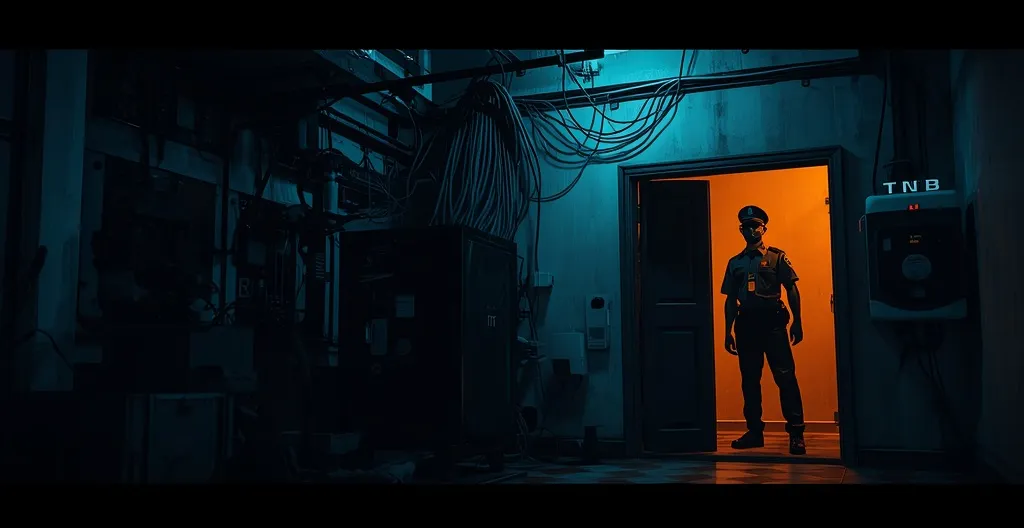
Malaysian police detained two men in Seri Iskandar and seized 30 Bitcoin mining machines after uncovering an alleged illegal electricity connection. The case has been opened under the Penal Code and the Electricity Supply Act, and authorities say the real problem is not Bitcoin itself, but stolen power and the safety hazards that come with it.
- Two men detained in Seri Iskandar
- 30 Bitcoin mining machines seized
- Illegal electricity connection allegedly used
- Fire risk and utility losses remain the big concerns
Perak Tengah district police chief Supt Hafezul Helmi Hamzah said the district’s Criminal Investigation Division carried out the operation together with Tenaga Nasional Bhd (TNB), Malaysia’s national utility company. The two local suspects, aged 40 and 52, were remanded for three days while investigators continued their work.
Police also seized an internet router, a desktop switch, and a coil of electrical wire. That combination is a pretty familiar fingerprint in these cases: a machine-heavy setup built to run around the clock, with the power bill quietly shoved onto someone else’s meter. Mining rigs do not sip electricity politely. They gulp it.
The case is being investigated under Section 427 of the Penal Code and Section 37(1) of the Electricity Supply Act 1990. In plain terms, the issue is suspected tampering with electricity infrastructure and taking power without authorization.
That distinction matters. Running Bitcoin mining hardware is not the offense here. The alleged offense is electricity theft.
As Supt Hafezul Helmi put it:
“The two men were detained to assist investigations, ”
Malaysia has seen this movie before. In a July operation in Tronoh, police arrested two men and seized 30 Bitcoin miners detained in Malaysia electricity theft. Investigators found mining equipment at all three properties raided, and technical inspections by TNB confirmed electricity theft at two abandoned houses. It is the same old playbook: steal power, hide the rigs, hope the math works out before anyone shows up with a warrant.
Another operation in May 2025 in Terengganu uncovered 45 mining machines across properties in the Hulu Terengganu and Marang districts, including sites in Bukit Perpat and Wakaf Tapai. In that case, officials estimated electricity theft at RM36, 000 per month, while the seized equipment was valued at roughly RM225, 000.
TNB said in 2024 that illegal Bitcoin mining had caused more than RM440 million, roughly $101 million at the time, in electricity theft losses since 2020. The utility’s reported yearly losses included RM5.9 million in 2020, RM140.4 million in 2021, RM124.9 million in 2022, and RM67.1 million in 2023.
Those are not small nuisance numbers. They point to a persistent, organized pattern of power theft that costs the utility money and, by extension, hits paying customers and the grid itself.
There is also a safety issue that should not be brushed off as bureaucratic hand-wringing. Illegal connections can overheat, spark, and trigger fires. A separate February 2025 case in Kuala Lumpur involved an explosion and smoke that led firefighters to a house where modified wiring and mining equipment were found. When heavy electrical loads meet hacked-up wiring, the ending tends to be predictable, and none of it is fun.
For readers new to the subject, Bitcoin mining is the process of using specialized computers to compete in securing the network and earning block rewards. It is energy-intensive by design. That makes electricity the biggest ongoing cost, which is exactly why some operators try to cut corners by bypassing meters or tampering with power lines.
That is the ugly side of proof-of-work economics. When power is expensive, bad actors get creative. Not innovative. Creative in the same way a guy with a crowbar is “creative” with a lock.
Malaysia’s enforcement response has become familiar as well: police and TNB working together to inspect suspicious properties, trace abnormal electricity use, and dismantle illegal setups. The pattern suggests this is now a recurring enforcement campaign, not a one-off cleanup.
There is a broader point here too. Bitcoin mining itself is not the crime, and pretending otherwise would be lazy. But energy-heavy industries do create incentives for theft when margins are tight and oversight is weak. That is why these raids keep happening. The hardware may be advanced, but the scam is ancient: use what you didn’t pay for, pray nobody notices, and act offended when the lights go out.
Key questions and takeaways
-
Was Bitcoin mining itself illegal in this case?
No. The alleged offense was electricity theft and illegal wiring, not Bitcoin mining as such. -
Why do police and TNB target these setups?
Because they can cause major financial losses and create real fire hazards through modified wiring and unauthorized connections. -
Why do illegal miners steal electricity?
Power is the biggest operating cost in mining. If someone avoids paying for it, the operation becomes more profitable until enforcement catches up. -
Is this an isolated raid?
No. Malaysia has seen repeated enforcement actions tied to crypto mining and electricity theft, including seizures in Tronoh and Terengganu. -
Why is this a public safety issue as well as a financial one?
Illegal connections and modified wiring can overheat, short out, and start fires. Authorities have already linked similar setups to smoke and explosions.
For now, the Seri Iskandar case fits a pattern Malaysia knows all too well: mining rigs, suspicious wiring, stolen electricity, and a utility company left with the bill. The crypto angle may grab headlines, but the core issue is much simpler, theft, plain and ugly.
Further reading
A few related pieces that add context on the raids, the grid theft angle, and the bigger mining backdrop in Malaysia.
- 30 Bitcoin miners detained in Malaysia electricity theft
- Malaysian police seize 73 Bitcoin miners using stolen electricity
- Malaysia raids lead to seizure of 75, 578 crypto mining rigs
- Personal Internet Security
- Malaysia seizes 75, 000 crypto mining rigs in crackdown
- Malaysia seizes 75, 578 crypto miners in electricity theft crackdown
- Malaysia’s chip tariff clash with U.S. threatens Bitcoin mining and blockchain tech
- Malaysia battles US tariffs: Trump duties threaten Bitcoin mining costs