URLs Tell Us Where Data Is. The Next Web May Need to Know Who Controls It.
A URL can point to a document, but it usually cannot tell a machine who may change it, what license applies or whether a claim of ownership is legally valid. Finding a resource and verifying its claims and permissions are separate tasks. That gap may matter more as software agents begin acting on the web.
- URLs help locate resources; applications usually manage permissions and history.
- Metanet proposes linking data and authorization records through signed transactions on BSV.
- A signature can show that a key authorized an action, not that its holder legally owns the data.
- Identity, privacy, recovery, interoperability and scale remain unresolved challenges.
Finding a file is not the same as knowing what you can do with it
A URL is an address for locating a web resource. DNS helps resolve a domain name, HTTP retrieves the resource, and TLS can secure the connection to a server. None of those steps establishes who created the content, who controls the relevant account or key, or who has the legal right to edit, reuse or sell it.
That context often sits with the service storing or displaying the data. A content management system may track who published an article and who can edit it. Google Drive manages document permissions; GitHub records repository access and contributor activity; social networks control accounts and access to posts.
These arrangements can work well within a service. Friction starts when data moves between services, or when another system needs to check permissions without relying on someone to interpret a screen, contract or platform rule.
An AI agent handling a digital resource may need to know whether it can read or modify a file, which version is current, what it costs and what license applies. A URL alone cannot answer those questions. A cryptographic key cannot, by itself, prove that its holder has legal authority either.
What Metanet proposes
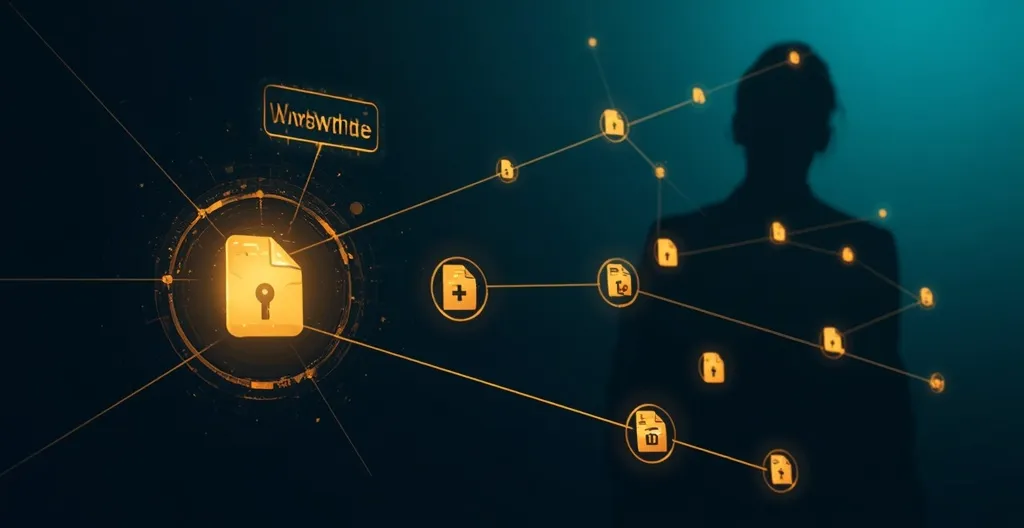
Metanet is described as an overlay protocol for creating structured data relationships on the BSV blockchain. The BSV wiki’s Metanet Protocol description presents a model where transactions form nodes and cryptographically signed connections form edges. Together, they create a directed graph, with relationships running from one item to another, much like links in a branching file structure.
For example, a file could link to an earlier version, a permission record and a payment record. In Metanet’s described model, a child node must be authorized by its parent. Control of the relevant key determines who can add to that part of the structure. Write access can be delegated for one branch without transferring control of the whole graph.
That is the protocol’s stated design, not proof that the model is widely deployed or that its security and practical performance have been established. The available information provides no adoption figures or independent validation of those capabilities.
The difference between a record and the truth of that record matters. A signature can help show that a particular key authorized a transaction. It cannot prove on its own that the key belongs to a named person, that person had legal authority, or a licensing claim is valid. A ledger may make a record tamper-evident, but it cannot guarantee that the original claim was true or that the permission remains legally valid.
On-chain does not mean putting every file on a blockchain
“Off-chain” means stored outside the blockchain. Large or private data does not necessarily need to go directly onto a ledger. Metanet’s described approach allows data to remain elsewhere while hashes, signatures, permissions, payments or references are recorded or linked through a shared ledger.
A hash can help check whether a file matches a previously recorded value. It does not establish who created the file or who owns it. Keeping the file off-chain does not automatically make a system private, either. Depending on what gets recorded, links between identifiers, payment patterns or other metadata may still reveal information.
The practical questions are what gets recorded, who can interpret it, how sensitive details are protected and whether other systems can use the records. The supplied description does not answer those questions about privacy and interoperability.
How DIDs differ from Metanet
Decentralized identifiers, or DIDs, address a related but distinct problem. They are designed to provide identifiers that can be controlled without relying on a centralized identity provider, though the details depend on the DID method and its implementation. A DID is not a universal ownership registry, and it is different from Metanet’s proposed graph of data and authorization relationships.
The W3C DID Resolution specification defines parameters such as versionId and versionTime for requesting a particular version of a DID Document. Support for these parameters is optional and depends on the method. The specification provides a way to request version-specific resolution, but it does not guarantee that every DID method preserves or serves a complete history.
The hard questions are about identity, recovery and law
A persistent record is useful only if people and systems can interpret it correctly. Who connects a key to a publisher, company or individual? What happens if the key is lost, stolen or used without authorization? How can access be revoked, an error corrected or a court decision reflected when it conflicts with an existing record?
These are ordinary human and legal problems, not exotic edge cases. A system needs answers before anyone can treat a cryptographic record as dependable evidence of authority. “Code is not law” remains a useful warning. A technical record may help establish what happened, but it does not decide what the law should recognize.
Portability takes more than persistent records. Applications need compatible formats, ways to resolve identities and access to any off-chain data. A record that lasts indefinitely but cannot be interpreted or retrieved by other systems is not much of a portability win.
Scale is a design requirement, not proof of demand
If software agents routinely check permissions, make payments and update records, they could generate substantial activity. A shared infrastructure built to support that use would need to process updates at a cost and speed people can tolerate. That is a design challenge, not evidence that internet-scale demand already exists or that Metanet has shown it can meet such demand.
Performance claims also need clear definitions. Blockchain transactions, database operations and backend response times measure different things. One cannot stand in for another. Without test conditions and independent benchmarks, headline throughput figures would not show how Metanet performs in real use.
Work on BSV infrastructure, including the Teranode Group, is part of the broader effort to address scaling and practical deployment. That work does not establish Metanet’s performance on its own.
Key questions and takeaways
-
Does a URL tell you who owns a file?
No. It helps locate a resource. Permissions and legal rights are handled through other systems, including applications, contracts and law.
-
What does Metanet propose?
It describes using signed connections between data nodes on BSV to represent relationships and authorization. The available information does not establish broad adoption or independently verified performance.
-
Does a signature prove legal ownership?
No. It can show that a key authorized an action, but connecting that key to a person and establishing the person’s legal rights require more.
-
Can sensitive data stay off-chain?
Yes. Metanet’s described model allows data to remain outside the blockchain, but that alone does not prevent metadata exposure or solve privacy.
-
Do DIDs always provide historical records?
No. W3C DID Resolution defines version-selection parameters, but support is optional and depends on the DID method.
A possible approach, not a settled answer
Digital resources often cross application boundaries, and automated systems need clear instructions about what they may do with them. Persistent, machine-readable records could help systems check some of that context. But a shared ledger is one possible approach, not a proven requirement or an established solution.
Metanet proposes a way to structure data and authorization relationships on BSV. Whether it can do that usefully depends on questions beyond cryptography: identity, legal authority, privacy, key recovery, interoperability and affordable operation. The next web may need to know more than where data lives. It will also need credible answers about who can act on it, and why.