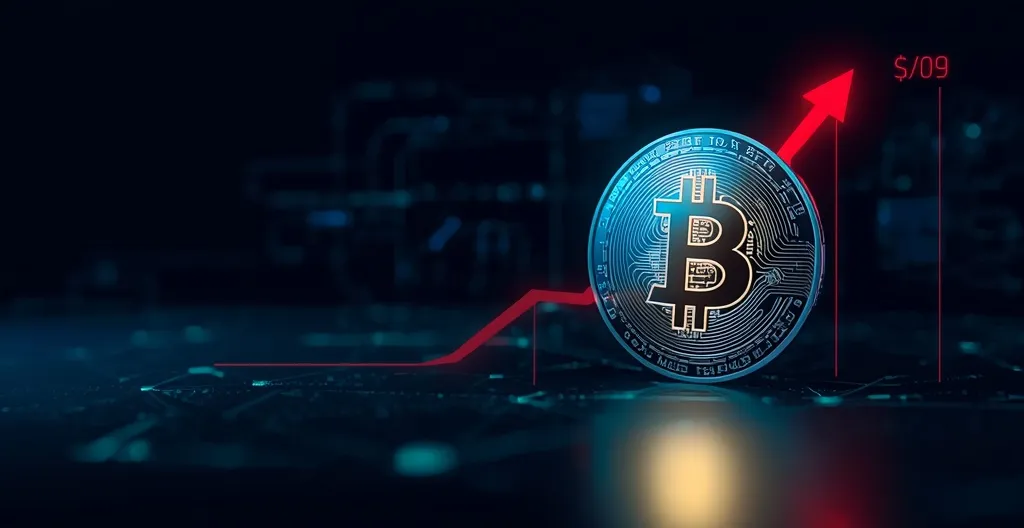
Pi Network is getting a short-term lift, but this is still a test of strength, not a victory lap. PI climbed more than 10% on the week, helped by heavier trading, the Protocol 26 Mainnet upgrade, and a RoboPay payment integration, then ran straight into resistance around $0.09.
- PI gained more than 10% this week
- Trading volume rose, but exact figures vary by venue and timestamp
- $0.090 remains the key breakout line
- Protocol 26 and RoboPay add narrative support, not proof of lasting demand
At the latest read cited by crypto.news, PI traded near $0.0872 and briefly touched $0.0902 during the session. That puts the token right against a resistance zone between $0.0882 and $0.0900. In plain English: buyers are pushing, but sellers are still holding the line.
The move has improved near-term sentiment. It has not fixed the bigger chart.
That distinction matters. Crypto loves a green candle and a heroic narrative, but a bounce inside a downtrend is not the same thing as a trend change. PI may be catching a bid, yet it still sits below its longer-term moving averages, a blunt reminder that the market remains skeptical.
What’s behind the bounce?
The price action coincided with three things: stronger trading activity, a network upgrade, and a new payment integration.
First, volume. The market notes tied to the move say trading volume rose 75% to roughly $11.5 million. OKX, meanwhile, showed a different live snapshot with $15.46 million in 24-hour volume. Those figures are not the same, so the clean takeaway is simply that volume picked up materially. More activity usually helps a move feel less hollow.
Second, Protocol 26. According to the Pi Core Team, Mainnet node operators must upgrade by Aug. 11 or risk losing their connection to Mainnet. That is an operational deadline, not a slogan. Pi Network says Protocol 27 is the final planned update in this cycle.
For readers new to the jargon: the Mainnet is the live blockchain network, where actual transactions happen. Node operators run software that helps keep the network functioning. If they do not update, they can be cut off from the live network. Blockchains are not sentimental.
Third, RoboPay. The Fabric Foundation announced that Pi Network has joined RoboPay as a payment partner, with PI to be used for robot services across the Fabric network.
“Pi will be used to pay for robot services across the Fabric network, ”
That is a utility-oriented announcement, and it is better than empty marketing fluff. Still, one integration is not the same thing as broad adoption. Crypto has a bad habit of turning “can be used” into “will be used everywhere” before anyone checks whether the thing is actually moving in the wild.
Why $0.090 matters
On the 4-hour chart, PI is pressing into the $0.0882 to $0.0900 resistance band. A resistance zone is a price range where selling pressure has repeatedly stopped further gains. Traders often use it as a line of defense: some sell to lock in profits, others short it, and buyers have to chew through that supply.
A 4-hour close above $0.090 is being treated as the first clear sign of an immediate breakout. That would not guarantee a straight shot higher, but it would show buyers can absorb supply and keep the price above a stubborn ceiling.
If PI clears that level, the next obvious target is the psychological $0.10 mark, followed by the 50-day simple moving average near $0.10218. From the cited $0.0872 area, that would be a gain of roughly 17%. In crypto, that is a decent move. In crypto hype culture, it is usually treated like an election result.
The longer-term picture is still weak. The 20-day simple moving average sits near $0.08513, the 50-day near $0.10218, the 100-day near $0.12807, and the 200-day near $0.15230. When price is below those levels, the broader trend is still bearish until proven otherwise.
Momentum is better, but not overheated
The 4-hour Relative Strength Index, or RSI, was cited at 61.97, with a signal average of 53.98. RSI measures momentum. Readings near or above 70 are often seen as overbought, so PI is not at a stretched level yet.
The upper Bollinger Band on the 4-hour chart was listed at $0.08824. A Bollinger Band is a volatility gauge, and the upper band can act like a near-term ceiling when price gets extended. That helps explain why PI may be stalling just under resistance instead of ripping cleanly through it.
Support on the downside starts around $0.0845 to $0.0851, with lower 4-hour support near $0.08085. If those levels fail, the chart could revisit the July base between $0.070 and $0.075. That is the ugly side of weak-trend rallies: when buyers get tired, the floor can disappear faster than the marketing narrative.
Protocol 26 is meaningful, but not magic
Protocol 26 is a real technical milestone. It shows Pi Network is still maintaining and updating its network, and it forces Mainnet node operators to stay current if they want to remain connected.
That matters. A lot of crypto projects talk endlessly about “building” while their codebase collects dust like a forgotten treadmill. An upgrade deadline at least shows active maintenance.
But protocol housekeeping is not the same thing as demand generation. A network can improve technically without immediately creating more buyers for the token. Upgrades can support confidence, reduce friction, and keep infrastructure alive. They do not automatically create a flood of fresh capital.
Pi Network still carries the baggage that has followed it for years: a long development timeline, questions around token utility, and ongoing debate about how much real-world demand the network can actually produce. Supporters see a mobile-first project with a large community. Critics see a token that still has to prove itself in the market, not just on the roadmap.
For newcomers trying to untangle the basics, the r/PiNetwork Wiki can be a starting point, though like most community-run crypto resources, it should be treated as a map, not scripture.
RoboPay adds utility, but the scale is still unknown
The RoboPay integration is the most concrete utility angle here. If PI can genuinely be used to pay for robot services across the Fabric network, that gives the token a payment role instead of another vague “ecosystem” promise.
That said, the scale is still unclear. The available announcement frames this as a payment partnership, not proof of meaningful transaction volume. It is a use case. It is not yet evidence of broad adoption, sustained demand, or deep liquidity.
That is where a lot of crypto narratives get sloppy. A partnership announcement is not the same thing as active usage. A use case is not the same thing as a market. And one headline does not erase a chart that still leans weak over the medium term.
For a broader view of market tracking and baseline metrics, Pi holders also tend to watch Pi Network Plummets 62% Post-Mainnet: Scam Claims, Sales and Pi Network Users Sell Accounts Amid Mainnet Migration, because the ugly side of this ecosystem has never been just price, it has been trust, migration friction, and a lot of people trying to game the system.
If you want a basic price snapshot without the usual market theater, Pi Network Price: PI/USD Live Price Chart, Market Cap is one of the standard reference points, while Pi Network: Current Price, Performance, and Future Prospects gives another market-facing view that can be useful for comparison.
What the bigger picture says
OKX’s live market data gives the move some perspective. At the time of its capture, Pi Network was up 12.02% over seven days, but still down 9.88% over 30 days, 47.91% over three months, and 74.34% over the past year. OKX also lists PI’s all-time high at $3.000 on Feb. 26, 2025 UTC.
That is the real context. A move from sub-$0.10 levels looks lively, but PI is still deep underwater versus its peak. This is a bounce inside a much larger drawdown, not a clean resurrection.
That does not make the recent move meaningless. It just keeps everyone honest. In crypto, honesty is a scarce asset.
Key questions and takeaways
-
Is PI in a real breakout?
Not yet. PI is testing resistance near $0.090, and it needs a convincing close above that level before traders can call it a breakout with a straight face. -
Did Protocol 26 matter?
Yes, operationally. It shows active network maintenance and forces node operators to upgrade, but it does not by itself prove stronger token demand. -
Does RoboPay mean PI has real utility now?
It means PI has a stated payment use case. That is better than pure hype, but it is not proof of broad adoption or lasting demand. -
What level matters most next?
$0.090. If PI clears that, traders will likely watch $0.10 and the 50-day SMA near $0.10218. -
Can the move fail quickly?
Absolutely. If support around $0.0845 to $0.0851 breaks, PI could slide toward $0.08085 and possibly back to the $0.070 to $0.075 area. -
Has the long-term trend actually changed?
Not yet. PI is still below its 50-day, 100-day, and 200-day moving averages, so the broader trend remains weak until price proves otherwise.
PI has momentum, fresh headlines, and a chart that finally looks alive. It also has overhead resistance, a weak larger trend, and a market that has every reason to stay cautious.
That is a workable setup for a speculative bounce. It is not a license to start printing moon charts and pretending one upgrade plus one partnership solved everything. Crypto has enough nonsense already.
For anyone wanting to track how the project keeps evolving, the latest technical update and community documentation are worth keeping an eye on alongside the market data and the AI KYC push for Mainnet, because identity, migration, and compliance remain just as important as price candles. And for those trying to separate signal from fantasy, the ongoing debate around Pi Network price rises 10% as $0.09 breakout nears is exactly where the hype meets reality.