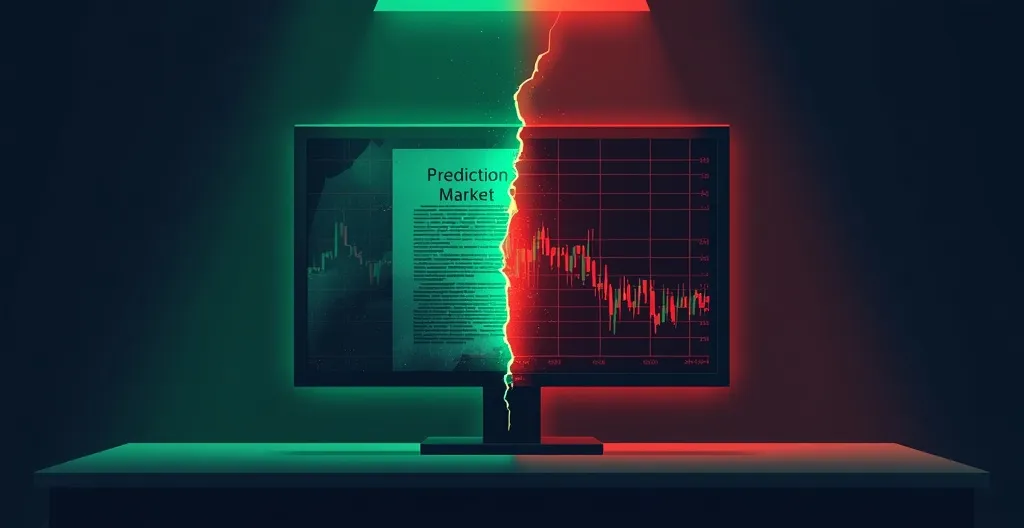
A prediction market can look like a neat binary bet until the market gets suspended, the wording gets changed, or the exchange simply voids the contract. That is when traders find out whether they bought a clean position or a legal headache in a suit.
- Markets can be suspended, voided, modified, or withdrawn.
- Venue rules decide whether collateral is released or positions are frozen.
- U.S. event contracts are caught in a real state-versus-federal legal fight.
- On-chain markets can make outcomes harder to reverse, for better and worse.
Prediction markets usually follow a simple script: a contract opens, shares often trade somewhere near $0 to $1, the event happens, the winning side gets $1, and settlement happens after resolution. That tidy path is the pitch. The messy part is what happens when the market does not reach a normal finish.
That is where the rulebook stops being background noise and starts deciding what your position is actually worth.
When a market does not settle normally
There are four broad ways a market can end off script.
Suspended means trading is stopped, usually by a regulator, court, or the venue itself, while the dispute or legal pressure plays out. In that state, positions may be frozen rather than settled.
Voided means the exchange cancels the contract because it cannot be resolved fairly under the stated criteria. In that case, positions are canceled and collateral is typically released, though fees may or may not be refunded depending on the venue.
Modified means the market keeps living, but the exchange changes the wording, renames it, clarifies it, or issues an interpretive note explaining how the contract should be read.
Withdrawn means the venue pulls the market from listing, often in response to legal or operational pressure.
None of those outcomes is rare enough to ignore. They are part of the plumbing. And in prediction markets, plumbing is where things either work properly or quietly leak money.
Why markets get voided
Voiding usually happens when the wording does not map cleanly onto reality. A market can be perfectly logical on paper and still become impossible to settle fairly once the real-world event arrives.
That is not unique to crypto venues or regulated exchanges. Any market built on language has this problem. Words are squishy. Reality is not.
The useful habit is reading how a venue defines a valid outcome, a dispute, and a failed resolution before trading. Those clauses are where the whole game gets decided when the happy path breaks down.
The legal fight is not small
This gets more serious with U.S. event contracts, especially sports-related ones. The core dispute is whether they are legitimate derivatives or gambling products that require state licensing.
According to a 2026 CFTC advance notice, the agency withdrew a 2024 proposal regulatory considerations for prediction markets and event “in light of various forms of state regulatory actions and litigation concerning the Commission’s exclusive jurisdiction over event contract derivatives.” The same notice also says licensed exchanges certified approximately 1, 600 event contracts for listing for trading in 2025.
That matters because it shows two things at once: the market is growing fast, and the legal framework around it is still under active attack. The CFTC, state gaming regulators, and courts are all involved in the fight over who gets to police these products.
So if someone tells you prediction markets are just “betting with extra steps, ” they are missing the point. The legal structure is the point.
What self-certification means
On a designated contract market, or DCM, a licensed exchange can self-certify a contract for listing under CFTC procedures. That means it can go live without waiting for prior affirmative approval.
That is one reason event contracts can move quickly. It is also why the market can expand faster than the political and legal system can cleanly absorb it.
The CFTC expects DCMs to list contracts that are not readily susceptible to manipulation, and to maintain surveillance and dispute procedures. Translation: yes, the exchange can launch the product, but it also has to own the mess when the contract gets contentious.
For the formal list of approved Contracts & Products, the paperwork is where the real gatekeeping lives, not the marketing copy.
Why exchanges rename or clarify markets
Sometimes the problem is not a full legal clash. Sometimes the contract was just badly phrased.
In those cases, an exchange may rename the market, clarify the terms, or publish an interpretive note spelling out how ambiguous language will be read. That can help resolve a contract fairly. It can also leave traders feeling like they bought one thing and ended up holding something slightly different.
That is the quietest kind of damage: nothing is canceled, nobody gets refunded, but the position is no longer quite the position you thought it was. Sneaky little beast, that one.
For a blunt example of the risk, see what happens to your position if a market Is delisted when a venue decides the contract no longer gets a seat at the table.
What blockchain-based venues change
Some blockchain-based prediction markets use on-chain resolution and governance mechanisms instead of relying entirely on a centralized operator. The general flow can include a proposal stage, a challenge window, and token-holder voting before finalization.
The upside is obvious to anyone who cares about decentralization: once the protocol finalizes the result, reversal becomes difficult or impossible for an operator to force.
That is a real protection against arbitrary meddling. It is also a protection against correction. If the protocol locks in a wrong result, the chain does not care how confident, annoyed, or correct you feel about it.
Centralized exchanges can sometimes fix obvious mistakes, but they can also rewrite outcomes under pressure. On-chain systems reduce that discretion, but they can also harden errors into permanent outcomes. No free lunch. Just different flavors of pain.
The whole fight is showing up in places like Prediction Markets: A New Frontier in State Regulatory, where states are making it clear they do not intend to sit quietly while federal agencies claim the steering wheel.
And yes, the insider-risk problem is real too, which is why Insider Trading Concerns in Prediction Markets and keeps coming back as a live issue instead of some academic footnote.
Why the rules matter more than the chart
The price on the screen is only half the story. The rulebook decides whether your trade means what you think it means.
That is why the best habit is not chasing the prettiest price; it is reading the venue’s rules on voiding, suspension, and settlement disputes before putting capital at risk. In this category, that habit puts you ahead of most of the order book.
Prediction markets are useful because they put numbers on uncertainty. They can surface information quickly, reward sharper judgment, and expose weak consensus without much ceremony.
They can also turn into legal and operational messes fast. That is not an argument against them. It is an argument against treating them like a toy.
The state-versus-federal brawl is not hypothetical, either. Just look at 44 states say CFTC has no authority over sports prediction, which is about as subtle as a brick through a window.
For a more immediate crypto-policy angle, CFTC Moves to Regulate Crypto Prediction Markets as Sports shows how quickly the regulatory temperature can rise once contracts start looking like wagers with a blockchain wrapper.
Key questions and takeaways
-
What happens if a prediction market is voided?
Positions are generally canceled and collateral is released. Whether fees are refunded depends on the venue’s rules. -
Can a market be stopped before settlement?
Yes. Regulators, courts, or the exchange itself can suspend trading, and a withdrawal can remove the market before a normal finish. -
Can the terms change after I buy in?
Yes. Exchanges may rename a market, clarify wording, or publish interpretive notes that change how the contract is read. -
Do on-chain markets remove operator risk?
They reduce it, but not entirely. Once final under the protocol’s rules, reversal is usually difficult or impossible, which protects against meddling but can lock in a bad result. -
What is the biggest mistake traders make?
Ignoring settlement rules, dispute language, and venue discretion. In prediction markets, that is often where the real risk lives.
The bigger picture
Prediction markets are one of the cleaner ways to turn uncertainty into price. That is valuable. It is also why they keep colliding with regulators who do not like ambiguity, especially when sports contracts start looking a lot like gambling with a thinner coat of paint.
The upside is real. The downside is real too. Venue rulebooks can cancel, freeze, or reinterpret a position after money has already changed hands. On-chain systems can make outcomes more trustworthy, but they can also make bad outcomes irreversible. The legal fight in the U.S. is not a side issue; it is part of the product now.
The practical move is simple: know what you own, know who can change it, and know what happens if the market refuses to settle cleanly. If you skip that part, you are not trading a forecast. You are trusting a contract you have not read to behave better than most humans do.
For the latest political angle around market operators and regulators, CFTC Expands Leadership as Prediction Markets Face U.S is worth keeping in view, because staffing and leadership changes matter when the fight gets this nasty.
And if you want the broader context on how the White House and federal agencies are shaping the terrain, Trump Backs Prediction Markets as CFTC, States Clash Over captures the political side of the same cage match.