South Korea is preparing to update how the state manages assets, and virtual assets are set to be included under a proposed National Asset Basic Act.
- South Korea is moving to modernize state asset rules
- Virtual assets would be included in the framework
- The proposed law is called the National Asset Basic Act
- The widely repeated 78 billion won Bitcoin figure is not verified here
According to The Block, South Korea’s Ministry of Finance and Economy said it will establish the National Asset Basic Act to update the government’s asset-management system. The framework is expected to cover new asset classes, including intellectual property and virtual assets.
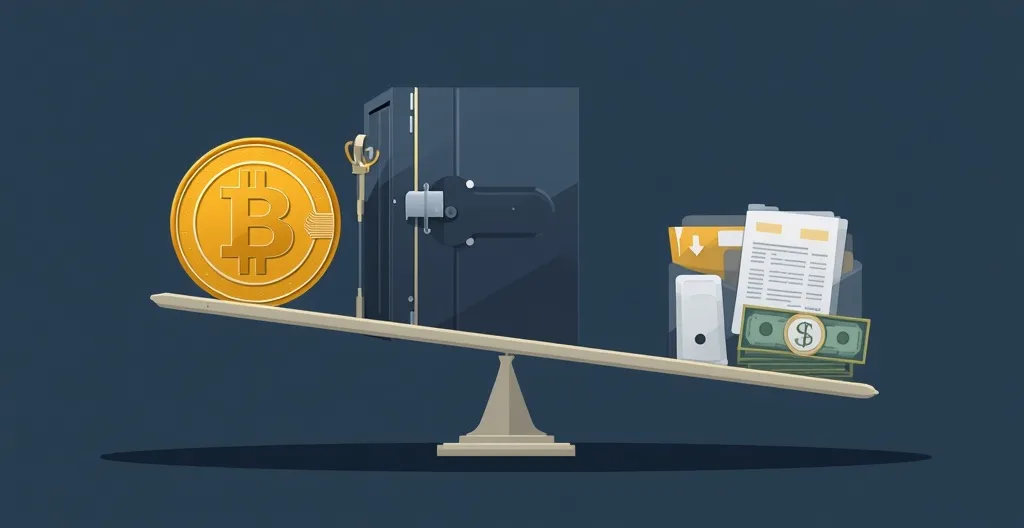
That phrase, virtual assets, is the key one. In policy language, it usually refers to cryptocurrency assets such as Bitcoin and other tokens. So this is not just about one coin, one stash, or one government wallet with a fancy headline attached to it. It points to a broader move: South Korea is trying to bring digital assets into the same legal and administrative structure used for other state holdings.
That may sound dry, but it matters. Governments do not usually wake up one day and become crypto-native. They get pushed into it through seizures, forfeitures, tax enforcement, custody, and accounting. Once the state ends up holding crypto, it has to answer some very unsexy but essential questions: Who controls the keys? How are assets stored? When are they sold? How are they valued and audited?
This is where the headline gets a little ahead of itself. The usable reporting supports a story about virtual assets broadly. It does not confirm that South Korea’s state crypto holdings are worth 78 billion won, and it does not prove that the rules are Bitcoin-only. Those details may exist elsewhere, but they are not verified in the material available here.
That distinction matters. A law that includes crypto in a state asset framework is not the same thing as a pro-Bitcoin policy. In many cases, it is the opposite: the state wants more control, more clarity, and more compliance. Bureaucrats are not suddenly turning into cypherpunks. They are trying to make the paperwork less embarrassing.
Still, this is a meaningful step. When a government starts explicitly treating virtual assets as part of its asset-management regime, it is acknowledging that crypto is no longer some temporary nuisance to be ignored or wished away. It is part of the system now, whether regulators like that fact or not.
There is also a practical upside if the framework is written well. Clear rules can improve custody standards, reporting, liquidation procedures, valuation methods, and audit requirements. That is the boring plumbing that keeps public assets from turning into a mess of ad hoc decisions and administrative guesswork. In crypto, as in life, bad keys and bad bookkeeping are a great way to create expensive problems.
But there is a downside too. More formal rules can also mean tighter surveillance, stricter disposal rules, and heavier compliance burdens. So while this may be a step toward legal clarity, it is not automatically a win for self-sovereignty or Bitcoin’s ethos of minimizing trust in institutions. The state can get more competent without getting more libertarian. Shocking, I know.
The bigger takeaway is simple: South Korea appears to be moving toward a more coherent legal framework for state-held digital assets. That is a sign of maturity, even if it comes wrapped in government language that sounds like it was written by a committee that hates fun.
Key questions and takeaways
-
What is South Korea doing?
It is preparing a proposed legal framework, the National Asset Basic Act, to update how the state manages assets, including virtual assets. -
What are “virtual assets”?
In this context, it generally means crypto assets such as Bitcoin and other tokens. The term is broader than Bitcoin alone. -
Is this a Bitcoin-only policy?
No. The available reporting points to virtual assets broadly, not a Bitcoin-only rulebook. -
Is the 78 billion won figure confirmed?
Not by the usable material here. It should not be treated as verified. -
Why does this matter?
It suggests South Korea is formalizing how the state handles crypto, including custody, audits, and possible liquidation, instead of relying on one-off procedures. -
Does this mean South Korea is becoming pro-Bitcoin?
Not necessarily. A stronger legal framework can just as easily be about state control and compliance as it is about any deeper embrace of Bitcoin’s principles.
If South Korea follows through, the real significance will be less about hype and more about structure: clearer rules for how public institutions handle digital assets, and possibly tighter control over them too. That is not a moonshot. It is bureaucracy catching up to reality, which, in crypto, counts as progress.
Further reading
A few useful references on South Korea’s crypto rules and the related custody/security issues.
- Bitcoin rules planned for South Korea's 78 billion won state crypto holdings
- South Korea moves to treat crypto under updated state asset rules
- South Korea watchdog says $40 billion giveaway shows new rules needed
- Mapping South Korea's digital asset regulatory landscape
- South Korea sells $23.5M in seized Bitcoin: security failures raise alarms
- South Korea Bitcoin dispute turns deadly: partner accused of poisoning over $900K loss
- Hacker returns $21M Bitcoin to South Korea: exposes crypto security flaws