
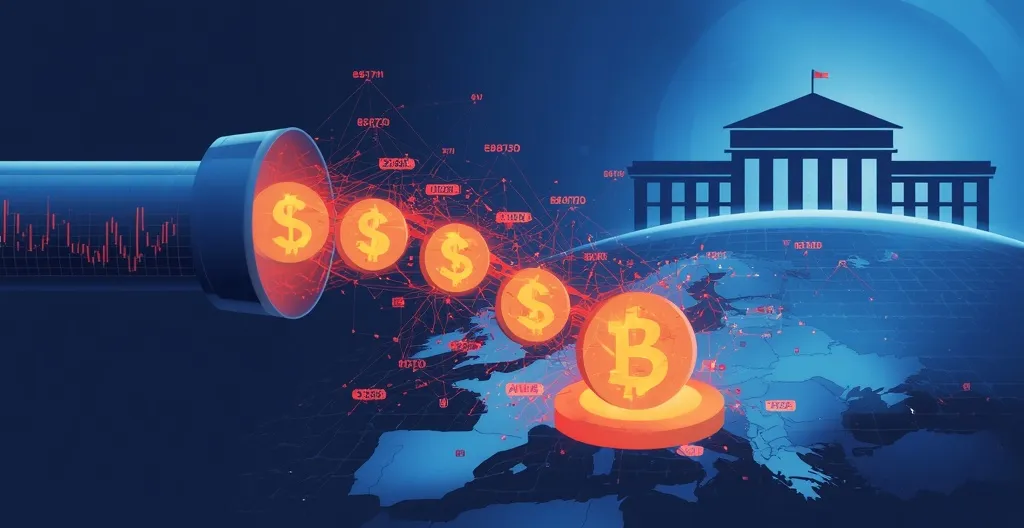
Direct access to dollar stablecoins can push demand beyond crypto markets and into foreign exchange, according to a Bank of Korea issue note published on Sept. 3 by Jihyun Kim and Sangheum Cho.
- Direct fiat pairs matter, exchange access can transmit stablecoin demand into FX pressure.
- Korea saw a premium, not a won move, no direct won-stablecoin pair, no measurable exchange-rate response.
- Brazil showed passthrough, direct access was associated with weaker FX and higher stablecoin demand.
- Policy is now about plumbing, regulators are debating rails, reserves, and access, not just tokens.
The core finding is simple, and a little inconvenient for anyone who likes pretending stablecoins are just harmless trading fuel: when users can buy dollar-backed stablecoins directly with local currency on a major exchange, the demand can spill into the FX market and put downward pressure on that currency.
That is the Bank of Korea’s argument. Not that stablecoins always weaken currencies. Not that every exchange listing is a macro event. But that market structure matters, and the rails matter more than the marketing.
Stablecoins such as USDT and USDC are designed to track the U.S. dollar. In many markets they function as digital dollars, especially where access to hard currency is limited, expensive, or politically messy. If you can only get them through indirect routes, the pressure may show up as a local premium. If you can buy them directly with fiat on a large exchange, that demand can travel farther and start behaving like currency demand.
The research looked at 12 currencies with enough local and global exchange data, using observations from 2019 through 2025. Binance’s introduction of direct fiat-stablecoin pairs for selected currencies was the key structural change. The researchers describe the resulting path from crypto demand into currency markets as a shock-transmission channel. In plain English: the exchange listing can turn a crypto purchase into a real-world FX flow.
That does not mean the effect is automatic or massive every time. It means the plumbing can decide where the pressure lands.
One clear result was that local stablecoin premiums fell by roughly 0.33 to 0.38 percentage points after Binance introduced direct fiat pairs overall. That is what you would expect if easier access reduced local price distortions. Better liquidity usually narrows spreads. Markets love efficiency right up until efficiency becomes a delivery system for currency pressure.
Brazil offered the sharper example. In a weekly test, a one-standard-deviation increase in Google searches for Bitcoin was associated with a 0.118% depreciation of the Brazilian real and a 0.109-percentage-point increase in Brazil’s stablecoin premium. That is an association, not proof that search traffic alone caused the real to weaken. But it does show how crypto demand can line up with FX pressure when direct access exists.
The comparison with South Korea is the real tell. During the study period, Korea did not have a direct won-stablecoin pair on Binance. Without that direct rail, the pressure mostly showed up as a local stablecoin premium rather than a measurable exchange-rate move. The paper says there was no statistically measurable relationship between stablecoin buying pressure and the won’s exchange rate under the market structure examined.
That distinction matters. A stablecoin premium is a crypto-market pricing distortion: the token trades above its implied dollar value because demand in that local market is stronger than supply. Currency depreciation is a macro outcome: the local currency itself weakens against the dollar. The Bank of Korea researchers are saying the first can become the second when the rails are open enough.
That helps explain why exchange design is not a side issue. It is the whole game. If users cannot efficiently convert local currency into stablecoins directly, the demand gets absorbed more inside the token price. If the direct pair exists, the same demand can compress the premium while pushing more of the pressure into FX. Different plumbing, different outcome.
South Korea’s market is not small, either. According to APAC's Diverse Crypto Adoption and Market Dynamics in 2025, won-denominated purchases of stablecoins reached about $64 billion in the 12 months through June 2025, making South Korea Asia-Pacific’s largest local-currency stablecoin market in that period. That is big enough to matter to regulators, banks, and anyone who still thinks this is a niche corner of crypto for keyboard cowboys and weekend degens.
But size is not the same as damage. The number shows adoption, not necessarily harm. The more important question is where the demand lands, inside a local premium, or out in the currency market where central banks start sweating.
The Bank of Korea said that relationship could change if Korea expands access for corporations and foreign investors. It also prefers bank-led issuance early on, citing monetary and financial stability concerns. That is the standard central bank instinct: if a money-like instrument is going to spread, keep the adults with balance sheets close to the steering wheel.
The policy backdrop is still unsettled. Korea’s Digital Asset Basic Act remains unresolved, and the government is also weighing offshore won settlement and foreign exchange reforms. That makes the research relevant right now, because it lands squarely in a debate over who gets access, on what terms, and how much pressure the system can absorb.
There is also a broader lesson here for anyone who likes to talk about stablecoins as if they are just “efficient payments.” They are that. They are also a way to reach dollars, store value, and move capital around faster than legacy systems often like. Tether has said USDT adoption has grown in countries including Venezuela, Argentina, Bolivia, and Turkey. That is not surprising. When local money gets shaky, people reach for something harder.
The dark side is obvious enough that regulators are no longer pretending not to see it. The IMF has warned about local tokens easing conversion into dollar stablecoins, which is exactly the sort of pathway that makes policymakers nervous about capital flight and dollarization. Stablecoins can help users escape bad money. They can also make it easier to leave a weak currency behind in a hurry.
That does not make them evil. It makes them powerful.
It also means the usual lazy take, “crypto up, currency down, ” is too blunt to be useful. The Bank of Korea findings do not say stablecoins always weaken local currencies. They say the effect depends on market access, liquidity, and the exchange structure around the token. No direct pair, and the pressure can stay mostly inside crypto-market pricing. Direct pair, and some of that demand can leak into FX.
That is why the result matters beyond South Korea. If similar fiat-stablecoin rails expand in other markets, the same transmission could show up elsewhere. Maybe that becomes a feature. Maybe it becomes a headache. Probably both, depending on which side of the trade you’re standing on.
What is clear is that the boring stuff, listings, trading pairs, settlement routes, reserve rules, is where the real action lives. Not the marketing decks. Not the moon-boy rhetoric. The plumbing.
Key questions and takeaways
-
Can dollar stablecoins weaken a local currency?
Yes, but only under the right market structure. The Bank of Korea study suggests the FX effect becomes more likely when exchanges offer direct fiat-stablecoin pairs that let demand spill into currency markets. -
Why did South Korea show a premium instead of a won move?
Because there was no direct won-stablecoin pair on Binance during the study period. Without that direct access, demand mostly showed up as a local stablecoin premium rather than measurable exchange-rate pressure. -
What did Brazil show?
Brazil showed the opposite setup. Direct access was associated with FX passthrough, including a 0.118% depreciation of the real in a weekly test tied to a one-standard-deviation increase in Bitcoin Google searches. -
How big is South Korea’s stablecoin market?
Chainalysis estimated about $64 billion in won-denominated stablecoin purchases in the 12 months through June 2025, calling South Korea Asia-Pacific’s largest local-currency stablecoin market in that period. -
Why do regulators care about exchange pairs?
Because exchange pairs determine whether stablecoin demand stays mostly inside crypto pricing or becomes a channel into FX markets. That is a policy issue, not just a trading detail. -
Does the study prove stablecoins are bad for currencies?
No. It shows a conditional transmission mechanism, not a universal rule. The effect depends on access, liquidity, and how the market is built.
The useful takeaway is not that stablecoins are inherently good or bad. It is that access changes behavior. Give users a direct fiat rail to dollar stablecoins, and demand can move from a crypto premium into actual currency pressure. Keep the rails tighter, and more of that pressure stays trapped inside the token price.
That is not a bug in the analysis. It is the point.
For a broader policy backdrop, see the Stablecoin Legislation: An Overview of the GENIUS Act of, which helps frame why lawmakers keep circling the same questions: who can issue, who can redeem, and how much risk gets pushed into the system when private digital dollars start acting a lot like public money.
And if you want a deeper, more technical view of how these instruments are actually functioning in the wild, the THE STATE OF STABLECOINS paper is a useful snapshot, messy, imperfect, but far more honest than the usual “stablecoins are just fintech” nonsense.
The mechanics matter too. An How to Estimate International Stablecoin Flows framework helps explain why regulators and economists keep staring at cross-border movement rather than just token volumes. Flows tell you where the pressure is going; balances only tell you what already settled.
And if you want a more direct warning from Seoul’s policymakers, the Bank of Korea’s own stance is laid out in Dollar stablecoins can weaken local currencies, BOK finds, which is basically the headline version of a broader concern: once dollar rails become too easy, local money can get shoved aside in a hurry.
The Bank of Korea has also been blunt about domestic guardrails in Bank of Korea Rejects Non-Bank Stablecoins: Risk of Chaos, where the central bank’s preference for controlled issuance runs straight into the usual crypto argument that innovation does not need a permission slip from legacy finance to exist.
That tension isn’t unique to Korea. It’s showing up everywhere from exchange policy to treasury planning, especially as Binance Secures $2B in Stablecoins from MGX: CZ Hints at feeds the same giant, awkward question: when stablecoins become institutional ammo, are they still just crypto rails, or are they becoming shadow money with a slicker interface?
There is also a more specific warning out of Seoul in Bank of Korea Warns: Non-Bank Stablecoins Risk Financial, which underlines the same point from a different angle: the real fight is not about whether stablecoins exist, but who controls the issuance, the reserve quality, and the on-ramps that can turn token demand into macro pressure.
That is why the boring stuff, listings, trading pairs, settlement routes, reserve rules, is where the real action lives. Not the marketing decks. Not the moon-boy rhetoric. The plumbing.
Further reading
A few related reads on stablecoin market structure, policy risk, and why the rails matter more than the slogans.


