
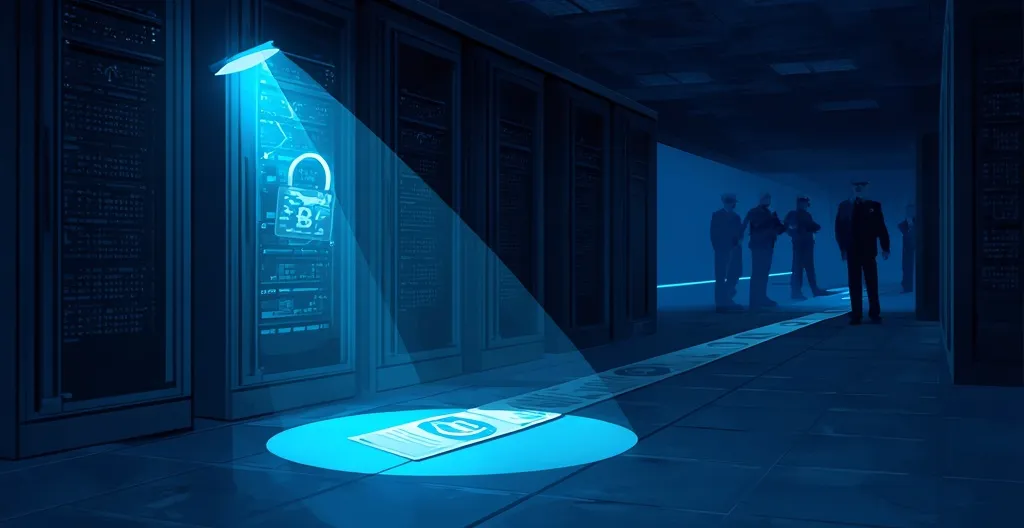
A reported Justice Department memo has thrown Binance’s fast-response help for crypto investigations into the spotlight. The core question is not whether U.S. investigators can prove a policy shift, but whether they should expect less informal support from the exchange on urgent freezes and cross-border seizures.
- Reported DOJ warning says less help may be coming
- Courtesy freezes could be replaced by formal MLAT requests
- Binance denies any change in U.S. law enforcement cooperation
- Speed matters when stolen crypto is moving fast
According to The Information, DOJ staff were told to expect less support from Binance starting June 8, especially when investigators need urgent account freezes or help with overseas seizure requests. The report does not show Binance refusing a specific U.S. request. It describes a warning to prosecutors and agents, which is a very different thing from a public policy announcement.
Binance says there has been no change.
“There has been and will be no change to Binance’s cooperation with U.S. law enforcement.”
The exchange says it will continue to respond to valid U.S. law enforcement requests tied to active investigations, and that it is looking at ways to increase cooperation. So the public picture is messy: one report says investigators should prepare for less informal help, while Binance says nothing has changed. Classic crypto, really. Even the paperwork comes with drama.
Why this matters so much
Crypto crime is a race against the clock. When stolen funds land on an exchange, a quick freeze can be the difference between recovery and a permanent loss. Miss that window and the assets can be moved through bridges, swaps, and multiple wallets before anyone in an office with a badge and a form gets traction.
That is why exchanges sometimes use what are known as courtesy freezes. These are informal, temporary holds placed quickly while formal legal paperwork catches up. They are not glamorous, and they are not a legal category. They are just a practical way to stop money from disappearing while the system lumbers into motion.
If Binance is really moving away from that kind of quick help in some cases, investigators may have to rely more on formal channels such as an MLAT, or Mutual Legal Assistance Treaty request. That is a government-to-government process used to ask for evidence or action across borders. It offers cleaner legal cover, but it is usually slower because it moves through official channels instead of a direct law-enforcement-to-exchange workflow.
And in crypto, slow is often fatal.
Why Binance is under such close scrutiny
This dispute lands in the shadow of Binance CEO Changpeng Zhao Resigns Amidst Guilty Plea for 2023 U.S. criminal settlement. The DOJ says Binance and Changpeng Zhao pleaded guilty to charges tied to anti-money laundering, unlicensed money transmission, and sanctions violations. Binance agreed to pay $4, 316, 126, 163, and the settlement required the company to improve its compliance program and operate under independent monitoring.
That is not a footnote. It is the backdrop for every conversation about Binance and law enforcement cooperation.
Once a company has resolved federal criminal charges and agreed to a compliance overhaul, even a hint of reduced cooperation gets read through a much harsher lens. Prosecutors and investigators are going to notice if the exchange they once relied on for quick freezes suddenly looks more formal, slower, or less flexible.
Binance has tried to present the opposite picture. The company says it spends about $300 million a year on compliance and has handled more than 313, 000 law enforcement requests worldwide. It also runs a Law Enforcement Request System for government agencies.
Those are Binance’s own figures, not independently verified here, but they are clearly meant to send a message: we cooperate, we spend big on compliance, and we are not trying to be the Wild West with a matching logo.
Reported warning versus confirmed fact
The important distinction is simple: the reported DOJ memo is not the same as a confirmed Binance policy change. The memo, as described by The Information, appears to be an internal warning telling staff to expect less help in some cases starting June 8. Binance, by contrast, says there has been no change in cooperation.
That gap matters.
A warning to investigators may reflect anticipated friction, a change in how requests are handled, or simply a new expectation that formal requests will be needed more often. It does not, by itself, prove that Binance has shut the door on cooperation. The public materials also do not show Binance refusing a particular request.
So the most accurate way to read this is cautious, not sensational. The report suggests prosecutors should brace for a slower process. Binance insists the process is unchanged. Until more is publicly verified, that is where the facts stop.
What investigators lose when speed slips
Crypto transfers move fast and ignore borders. That is great when people want open financial rails, censorship resistance, or a hedge against broken institutions. It is terrible when the money belongs to victims of theft, fraud, ransomware, or sanctions evasion.
Exchanges are often the last practical choke point. If stolen funds hit a platform and the exchange acts quickly, investigators may be able to preserve them. If the exchange waits for formal paperwork in every case, the criminals get more time to rinse the funds and disappear into jurisdictional fog.
That is why informal cooperation matters. It is not about cutting corners for the sake of it. It is about not letting a hacker’s six-minute head start become a full escape plan.
MLAT requests can still work, and in some cases they are the right tool. They provide stronger legal cover, especially in cross-border matters. But they are not built for emergencies. When the asset is already moving, a slow legal process can become a polite way of saying, “good luck catching up.”
Why this is more than a Binance issue
The bigger question is whether crypto enforcement can keep pace with borderless money when the legal machinery moves like it’s carrying cement shoes.
Binance is simply the most visible test case because it sits at the center of a huge amount of global trading and because of its history with U.S. regulators. But the same tension exists across the industry: fast-moving digital assets on one side, slow formal process on the other.
That tension is unavoidable. The same tools that make crypto useful, speed, portability, global reach, also make it a gift to thieves if the institutions surrounding it cannot react fast enough. Scammers love bureaucracy almost as much as they love other people’s money.
There are also related reports that the Treasury Department asked for records and interviews tied to settlement duties and possible sanctions concerns, and that Binance denied Iran sanctions violation claims while pointing to its cooperation with investigators. Those reports reinforce the same point: Binance remains under heavy U.S. scrutiny, and its compliance posture is still being watched closely.
That is exactly why the cooperation question matters. If investigators trust an exchange to act fast, more stolen funds can be frozen. If they do not, the criminals win by default.
Key takeaways
-
Did Binance actually change its policy?
There is no public proof of a confirmed policy shift. Binance denies any change, while the reported DOJ memo suggests staff should expect less informal help. -
What is a courtesy freeze?
It is a temporary, informal hold an exchange may place quickly before formal legal paperwork arrives. In crypto theft cases, that speed can save stolen assets. -
Why would MLATs slow things down?
MLATs are formal government-to-government requests, so they usually take longer than an exchange acting directly on an urgent law enforcement request. -
Why does Binance’s 2023 settlement matter here?
Binance resolved U.S. criminal charges tied to AML, unlicensed money transmission, and sanctions violations, and agreed to a $4, 316, 126, 163 penalty plus compliance monitoring. That history makes any cooperation dispute much more serious. -
What is the biggest risk if freezes get slower?
Stolen crypto can be moved and laundered before law enforcement can lock it down. In these cases, delay usually helps the thief and hurts the victim.
The real issue is not whether Binance looks good in a press release. It is whether investigators can still get fast help when funds are about to vanish. If the reported warning reflects reality, then thieves just got a little extra breathing room, and that is exactly the sort of nonsense the crypto world should not tolerate.
Further reading
A few related pieces that help round out the bigger picture on enforcement, market flows, and regulation.
- Understanding the Impact of Climate Change on Global
- Justice Department Warns Prosecutors to Expect Less
- Cryptocurrency and crime
- Binance DOJ Report Sparks Questions Over Crypto
- Bitcoin Tests $62K Support as Miner Deposits to Binance
- Rare Binance Flow Signal Flashes as Bitcoin Struggles Below
- India Parliament Opens Formal Crypto Regulation Talks with


