
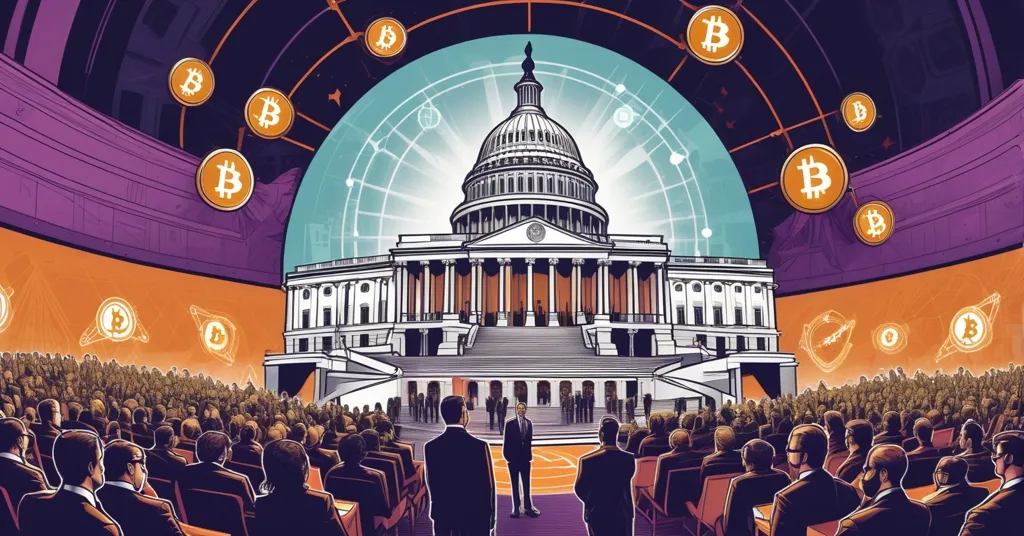
Bitcoin Policy Institute has announced Freedom Tech DC 2026, a policy summit designed to push Bitcoin, privacy, and decentralized technology deeper into the heart of Washington, D.C. The message is blunt: Bitcoin is no longer just a chart on a screen or a toy for traders chasing candles. It’s increasingly a political issue, a civil-liberties issue, and a fight over who gets to control money, data, and access.
- Freedom Tech DC 2026 is being framed as a policy-focused summit.
- Bitcoin Policy Institute is bringing Bitcoin and freedom-tech debates into Washington, D.C.
- The event appears centered on privacy, self-custody, decentralization, and financial freedom.
- It highlights a bigger shift: Bitcoin is being treated as infrastructure, not just speculation.
The name Freedom Tech is broad on purpose. It points to technologies that reduce dependence on centralized gatekeepers and give users more control over their money and information. In plain English: fewer middlemen, fewer permission slips, and fewer bureaucrats or corporate compliance departments deciding what you can do with your own assets.
That framing matters because Bitcoin has always meant more than number-go-up narratives for a large chunk of the community. At its core, Bitcoin is censorship-resistant money: a system that lets people send and receive value without asking a bank, platform, or government for approval. It is also a settlement network, meaning it can finalize transactions in a way that is hard to reverse or censor. For many users, that makes Bitcoin a hedge against inflation, debasement, and the kind of financial overreach that turns ordinary people into collateral damage.
Bitcoin Policy Institute taking that conversation to Washington is a signal. Policy is where the real battles happen. Code matters, but laws determine whether users can self-custody their bitcoin, whether privacy tools are treated like basic software or treated like contraband, and whether exchanges and payment companies become little more than surveillance funnels with a customer service desk.
Self-custody is a key concept here. It means holding your own bitcoin instead of leaving it with an exchange or third-party custodian. That’s a major difference. If you don’t control the keys, you don’t fully control the coins. Crypto’s history is littered with the consequences of forgetting that lesson the hard way.
A summit in Washington, D.C. also shows that the conversation has matured. Bitcoin is no longer easy to dismiss as a niche hobby for libertarians, traders, and the occasional loud-mouthed degenerative gambler with a laser-eyed profile picture. It is increasingly being discussed as financial infrastructure with policy implications that touch savings, payments, surveillance, and global access to money.
That said, Washington can be a tricky place for any movement claiming to stand for freedom. The city loves to praise innovation right up until innovation threatens the incumbents who fund, regulate, or influence the system. A well-meaning policy summit can easily become beltway theater: polished panels, nice suits, careful talking points, and exactly zero appetite for upsetting the people writing the rules. That risk is very real.
Still, the upside is hard to ignore. If Bitcoin and privacy tech are not in the room, the room gets filled by bankers, regulators, and industry lobbyists who may be perfectly happy to regulate decentralized systems into something bland, compliant, and functionally useless. The cypherpunks shouldn’t be polite visitors in that process; they should be participants. Otherwise, the future gets written by the same crowd that brought us financial surveillance as a feature and calls it “consumer protection.”
Freedom Tech DC 2026 also suggests that the debate is widening beyond Bitcoin alone. That’s important. Bitcoin maximalists make a strong case that BTC is the most credible long-term monetary asset because it is simple, battle-tested, and resistant to political meddling. That argument carries weight, especially when the discussion is about money, savings, and settlement.
But not every problem is solved by Bitcoin, and pretending otherwise is tribal nonsense. Other decentralized systems and blockchain protocols fill different roles. Ethereum, for example, is built for programmability and smart contracts, while other networks focus on identity, privacy, scaling, or application-specific use cases. Bitcoin does not need to do everything, and it probably shouldn’t. The point is not to force every protocol into the same lane; the point is to defend open systems that let users choose the right tool for the job.
Privacy is another reason this summit matters. Financial privacy is not a dirty concept. It is a normal human expectation. Most people don’t want every purchase, transfer, or savings decision exposed to corporations, hackers, or government databases waiting to be breached. Privacy does not mean criminality. It means dignity, safety, and control. The loudest critics of privacy tools often act as if cash never existed and as if surveillance is just the cost of doing business. That’s a cynical bargain, and frankly, it stinks.
There’s also a practical policy question lurking beneath the branding: what does “freedom tech” actually mean once lawmakers and regulators start asking for definitions? The answer will likely determine whether this becomes a serious rights-based conversation or just another glossy crypto event with patriotic packaging. If Bitcoin Policy Institute can use Freedom Tech DC 2026 to push for self-custody rights, privacy protections, and clearer limits on regulatory overreach, that’s a real win. If not, it risks becoming another D.C. gathering where everyone nods gravely and nothing changes.
For ordinary Bitcoin users, the stakes are not abstract. They affect whether exchanges can freeze funds without due process, whether privacy-preserving software is treated as suspicious by default, whether miners are squeezed by political hobby horses, and whether developers can build tools without being preemptively labeled as criminals. These are not fringe concerns. They are the difference between open financial networks and heavily managed digital choke points.
There’s a bigger cultural shift here too. A few years ago, the mainstream conversation about crypto was dominated by price speculation, celebrity endorsements, and shameless moon-boy predictions. That circus still exists, because of course it does — every industry has its grifters, and crypto seems to manufacture them in bulk. But the stronger, more durable narrative is moving toward rights, resilience, and infrastructure. Price comes and goes. Tools that keep working under pressure are what matter.
That is why a Bitcoin policy summit in Washington matters. It isn’t just about optics. It’s about whether decentralized systems are treated as legitimate public-interest infrastructure or as a threat to be boxed in, diluted, and domesticated. The difference between those outcomes will shape the next stage of Bitcoin adoption, privacy tech development, and broader crypto regulation in the United States.
What is Freedom Tech DC 2026?
Freedom Tech DC 2026 is a policy summit announced by Bitcoin Policy Institute. It is aimed at bringing Bitcoin, privacy, and decentralization discussions into Washington, D.C., where rules around finance and digital rights are shaped.
Why does Washington, D.C. matter for Bitcoin?
Because regulations can either protect open networks or choke them off. The people writing policy influence self-custody, exchange rules, privacy tools, tax treatment, and how decentralized tech is treated by the state.
Is the summit only about Bitcoin?
Probably not. The “Freedom Tech” label suggests a wider focus on privacy, open networks, and decentralized infrastructure, even if Bitcoin is the centerpiece.
What does self-custody mean?
Self-custody means you hold your own bitcoin with your own private keys instead of trusting a company or exchange to hold it for you.
Why is privacy such a big issue in crypto policy?
Because financial privacy is part of basic freedom. People should not have every transaction exposed by default to companies, surveillance systems, or overreaching regulators.
What’s the main risk with events like this?
That they become polished lobbying exercises with little real resistance to regulation. Bitcoin and privacy advocates need more than nice panels and safe language; they need actual pushback.
The strongest version of this movement is not anti-policy. It is pro-freedom, pro-open markets, and pro-user control. That means being honest about tradeoffs. Regulation can curb fraud, protect consumers, and create clearer rules. But it can also become a blunt instrument used to entrench incumbents, punish privacy, and make decentralized systems more compliant than useful. That tension is the whole game.
Freedom Tech DC 2026 looks like an attempt to put that tension on the table before the rules harden around the wrong assumptions. If it works, it could help legitimize Bitcoin as more than an investment thesis and help frame privacy and decentralization as essential parts of a healthy digital economy. If it fails, the usual suspects will keep pretending that freedom is fine, as long as it comes with KYC paperwork and a leash.


