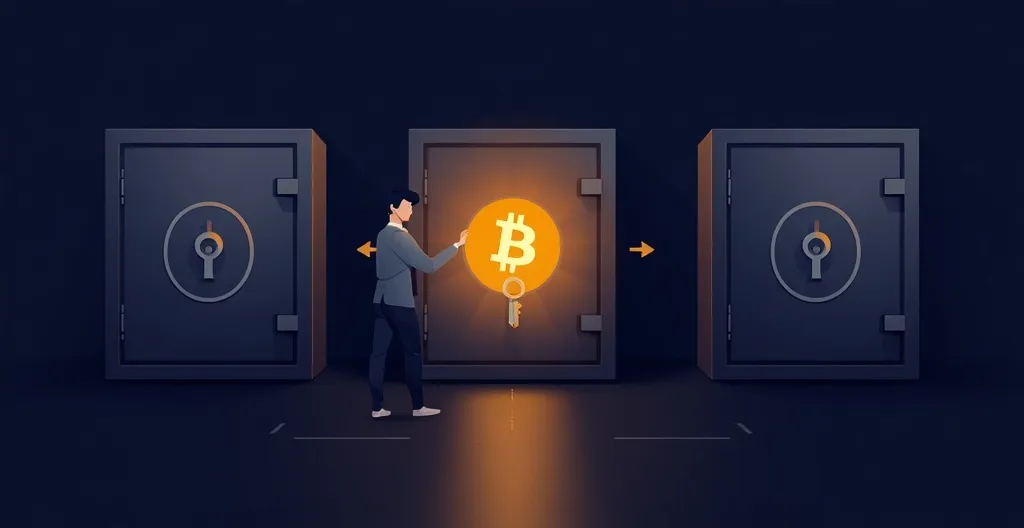
Bitget says last week’s huge exploit did not come from stolen private keys or drained cold wallets, but from compromised internal access tied to third-party products. That distinction matters. The vault may have stayed shut, but the front door still got kicked in.
- Initial loss estimate: about $351.6 million
- Later reconciliation: about $387.5 million to $388 million
- Bitget’s explanation: third-party vulnerability, stolen internal credentials
- Bitget says: private keys and cold wallets were not compromised
- Withdrawals: being restored in phases, starting with BTC
According to Bitget CEO says $388M hack exploited third-party security, the attacker exploited vulnerabilities in third-party products, stole internal credentials, and used them to issue fraudulent withdrawal commands that bypassed the exchange’s risk controls. The company says the incident has been contained, affected systems were isolated, and withdrawals are now coming back online step by step.
The number attached to the theft has not been perfectly tidy. Early reporting put the affected amount at roughly $351.6 million. Later reconciliation pushed the total to about $387.5 million to $388 million as more transactions were classified. Messy? Yes. Unusual? Not really. Exchange incidents are often mapped out in real time, and the first number is sometimes just the first number.
Chen said the breach did not compromise private keys and did not affect cold wallets. That is a meaningful distinction, but it is not a free pass. In crypto security, losing control of access systems can still be catastrophic even if the offline vaults stay untouched. If an attacker can abuse internal credentials and backend workflows, they may not need the keys at all.
“Affected systems were isolated and the vulnerability has been remediated.”
“Relevant servers were isolated to prevent further compromise and preserve forensic evidence.”
“Internal credentials were revoked and reissued, with access to highly sensitive systems restructured.”
“We notified the relevant third-party vendor, shared details of the vulnerability and disabled the affected functionality pending a fix.”
“Mandiant and SlowMist continue to support the independent forensic investigation and asset-tracing efforts.”
That response is the kind of thing users want to hear after a breach, because it points to actual incident-response steps instead of generic corporate fog. Isolate the servers. Revoke the credentials. Preserve forensic evidence. Bring in outside security teams. Those are the basics, and when a company skips them, the problem usually gets worse.
The more important takeaway is where Bitget says the failure happened. This was not presented as a classic cold-storage theft. It was an access-control failure, the kind of compromise that can happen when exchanges rely on internal permissions, vendor tooling, and backend systems that trust the wrong thing a little too much. One bad credential can do a lot of damage if the system is built to obey it.
That’s the part of centralized crypto that never makes the marketing slides look good. The biggest risk is often not the vault. It’s the web of software, permissions, approvals, and third-party dependencies wrapped around the vault. Clean little slogan, ugly little reality.
Bitget says withdrawals are now being restored in phases. BTC came back first, with ETH, USDT, and then other tokens, fiat currencies, and peer-to-peer trading services following later. That staggered reopening is standard practice after a major exchange incident. You bring back the safest rails first, watch for anything odd, and only then widen the blast radius again. Ideally in the unsexy direction of caution, not the exciting direction of another headline.
The company is also leaning hard on its protection fund, which it says is meant to cover user funds. Bitget describes it as a self-funded reserve held in publicly visible wallets. That is better than a corporate shrug and a PDF full of comforting nonsense, but it is still just a reserve. Transparency helps. It does not magically turn a reserve into a force field.
That’s where the devil’s-advocate view comes in. Protection funds are useful, but they are not a guarantee. Their value depends on size, liquidity, and how often they get tested. If a platform eats one big loss, a reserve can help. If multiple incidents land at once, or if a larger loss hits, the math gets less flattering very quickly.
Bitget’s explanation also raises the right kind of uncomfortable question: how much damage can a third-party dependency do before people stop calling it “just infrastructure”? In crypto, that line is often laughably thin. A vendor product, an internal credential, a backend approval flow, and a permissive policy can together become the shortest route between “secure exchange” and “where did the money go?”
The attribution angle should also be handled with care. Earlier suspicion around North Korea was described by Chen as preliminary, not confirmed. That is the correct posture. Crypto hacks get geopolitical labels slapped on them far too quickly, sometimes before investigators have even finished reading the logs. Sometimes the boring answer is the real one: access was too broad, controls were too weak, and someone got in through a door that should have been bolted.
One more wrinkle is the tension between centralized response and decentralized infrastructure. Bitget reportedly considered asking THORChain to block access from attack-linked addresses, but THORChain said it cannot selectively blacklist individual wallets. That is decentralization in practice: censorship resistance is a feature, but so is the inability to play clean-up crew for every theft. The tradeoff is real, not theoretical, and it can be a headache when stolen funds start moving through open protocols.
For users, the lesson is simple and a bit harsh: “Our cold wallets were safe” is not the same as “your funds were never at risk.” An exchange can still suffer a serious breach through access systems, internal tools, or third-party integrations even if the offline storage layer remains intact. Cold storage reduces one class of failure. It does not make centralized platforms invincible.
What is the biggest takeaway from Bitget’s explanation?
Bitget says the exploit came through compromised internal access tied to third-party products, not through stolen private keys or cold-wallet theft. That shifts the lesson from wallet security to access-control security, which is where a lot of exchange pain actually lives.
Did Bitget say its private keys were stolen?
No. Chen said private keys were not compromised and cold wallets were not affected. That is reassuring in one narrow sense, but it does not erase the size or seriousness of the breach.
Why were withdrawals restored in stages?
Because exchanges usually reopen the safest services first and monitor them closely before turning everything back on. BTC came first, followed by ETH, USDT, and then other services later.
Does the protection fund guarantee user safety?
No. A protection fund can help absorb losses and calm users, but it is still a reserve, not a miracle. If losses are large enough or incidents pile up, the fund can be tested hard.
What is still unclear?
The exact third-party vulnerability, which internal credentials were stolen, how the risk controls were bypassed, and how much of the stolen crypto has been frozen or recovered. Bitget says the forensic investigation is ongoing, so the full technical picture is still being pieced together.
Bitget now has the familiar job of a compromised exchange: isolate, investigate, restore services carefully, and convince users that the damage is contained. That may stabilize operations. It does not change the broader reality that centralized exchanges remain juicy attack surfaces, and that “not the private keys” is cold comfort when the withdrawal machinery itself has been bent to someone else’s will.
For a broader breakdown of the incident’s accounting, see Bitget Says $351.6 Million in Assets Affected by Security, along with Crypto Exchange Bitget Says Hacker Exploited and Crypto exchange Bitget pauses withdrawals after $350 for earlier reporting on the pause in withdrawals.
More technical detail on the suspected attack path is available in Bitget Says Attacker Exploited Third-Party Security Product and Bitget Says Backend Compromise Triggered $387.5M Fraudulent, while a separate update tracks recovery progress in Bitget Resumes BTC Withdrawals After $388 Million Incident.
For readers newer to the plumbing behind exchange security, a Cryptocurrency wallet is the tool that stores the keys needed to access and move digital assets. In Bitget’s case, the company says those keys were not the weak point. The access layer was.
That broader distinction also echoes some of Bitget’s other recent positioning. The exchange has been pushing an AI-native universal exchange model, and it has also been cited in reports on the 2025 tokenized stocks boom. Ambitious? Sure. But none of the growth narratives matter much if the security stack can be kicked in through the side door.