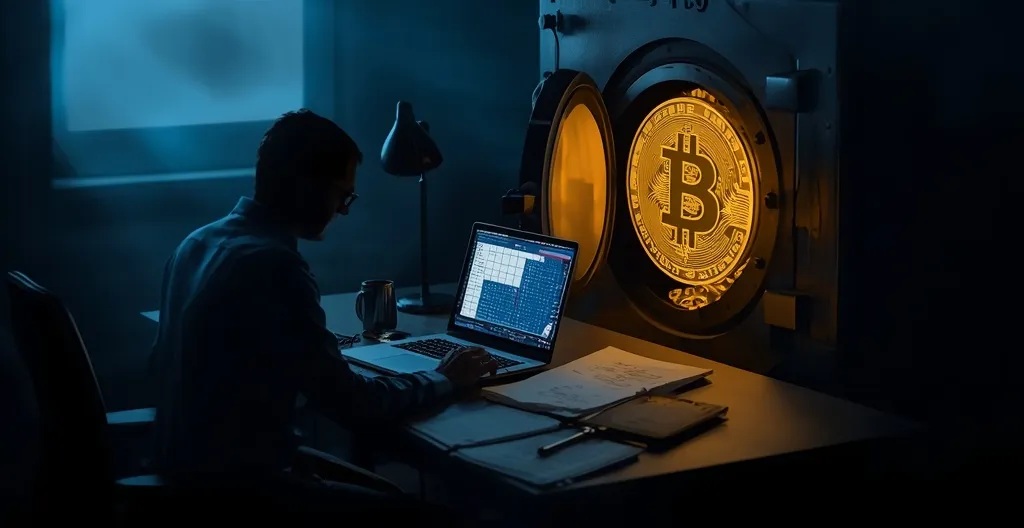
Bitcoin’s blockchain is permanent. Exchange failures are not. For one British investor, that gap between code and human incompetence just turned a £1, 500 gamble into a recovery worth about £3.3 million, or roughly $5 million.
- 61 BTC recovered after 12 years
- Stored on Intersango, an early UK-based exchange
- CEL Solicitors used blockchain tracing and old records to prove ownership
- Original investment: about £1, 500 in 2011
- Recovered value: about £3.3 million ($5 million)
The investor, identified only as Chris, bought Bitcoin in 2011 after a friend told him it might one day be worth something serious. That friend was not wrong. Chris put in around £1, 500, and within weeks his holdings had risen to about £4, 000.
Then the access problem started.
Chris kept his Bitcoin on Intersango, an early UK-based exchange, until the platform became inaccessible in 2014. From that point on, he could not withdraw his coins. The Bitcoin itself did not disappear from the blockchain, but his practical control over it did. That distinction matters. In crypto, “lost” often means “still there, but unreachable, ” which is a very different beast from coins being stolen or destroyed.
Chris spent 12 years trying to recover the funds. He eventually turned to CEL Solicitors, who helped piece together the claim using blockchain tracing and old records. In plain English, blockchain tracing means following the public movement of coins on Bitcoin’s ledger and cross-checking that history with documents that can link a wallet or exchange account to a specific person. Bitcoin is pseudonymous, not anonymous; the chain leaves footprints, and those footprints can sometimes be matched to real-world records.
According to the information available, the legal team identified a wallet associated with the failed exchange that held thousands of Bitcoin. After several months of work, 61 BTC were returned to Chris in May 2026. The exact mechanics of the handover were not fully detailed, but the end result was clear enough: the coins made it back to the owner they belonged to all along.
At the prices cited, the recovered Bitcoin was worth about £3.3 million, or roughly $5 million. The source also places Bitcoin around $78, 000 at the time, with a slight rise over the prior 24 hours. That turns a small 2011 purchase into a life-changing sum, but only after years of uncertainty and a lot of legal legwork. Easy money? Hardly. More like delayed money with a stress surcharge.
“a punch in the stomach”
That is how Chris described watching Bitcoin climb while he still could not access his holdings. It’s a brutally honest line, and anyone who has dealt with a frozen exchange, lost credentials, or a broken custody setup will understand the feeling immediately.
Chris says he plans to buy a bigger family home and keep part of the Bitcoin as a long-term holding. Sensible enough. After being forced into a 12-year hodl by circumstances instead of conviction, he’s earned the right to take some profit without asking permission from the internet’s self-appointed investment sages.
The bigger lesson is not that Bitcoin is magical. It’s that its transparency can still be useful when institutions fail. The public ledger can help investigators and lawyers follow coin movement, but tracing alone is not enough. Ownership has to be backed up with records, identity documents, account history, and a credible chain of evidence. That’s the part people skip when they imagine blockchain solving everything with a wave of the hand.
Intersango’s collapse also reflects a very early era of crypto, when exchanges were often fragile, security was uneven, and users were learning the hard way that custody risk is real. If someone else holds your coins, you are not really “done” until you can actually withdraw them. That’s the old maxim in crypto for a reason: not your keys, not your coins. Crude? Yes. True? Also yes.
At the same time, this recovery cuts against the fatalistic claim that lost Bitcoin is always gone forever. Sometimes it is just trapped behind bad infrastructure, missing paperwork, or a failed custodian. When enough records survive and the on-chain trail lines up, recovery is possible. Not common. Not simple. But possible.
That’s the part worth sitting with. Bitcoin is resilient, but the people and platforms around it often are not. A £1, 500 punt in 2011 turned into millions, yet the real story is the same one that keeps repeating across crypto: code can keep working long after a company falls apart, and the difference between fortune and frustration is often whether you control the keys.
Key questions and takeaways
- How did Chris lose access to his Bitcoin?
He left it on Intersango, an early UK-based exchange that became inaccessible in 2014, which stopped him from withdrawing the funds. - Was the Bitcoin destroyed or just inaccessible?
It was inaccessible. The coins still existed on the Bitcoin blockchain, and tracing plus records helped prove they belonged to Chris. - How much did Chris originally invest?
He put in about £1, 500 in 2011. - What was the recovered Bitcoin worth?
The 61 BTC were valued at about £3.3 million, or roughly $5 million, at the time referenced. - Why does blockchain tracing matter?
It lets investigators follow coin movement on the public ledger and match that activity with documents and account records tied to a claimant. - What’s the main custody lesson here?
If you don’t control the keys, you’re trusting someone else not to lose, freeze, or fumble your money. That trust can get very expensive. - Will Chris sell all of the recovered BTC?
No. He plans to buy a bigger home and keep part of the Bitcoin as a long-term holding.
Further reading
A few related pieces worth a look if you want the broader Bitcoin context without the fluff.