
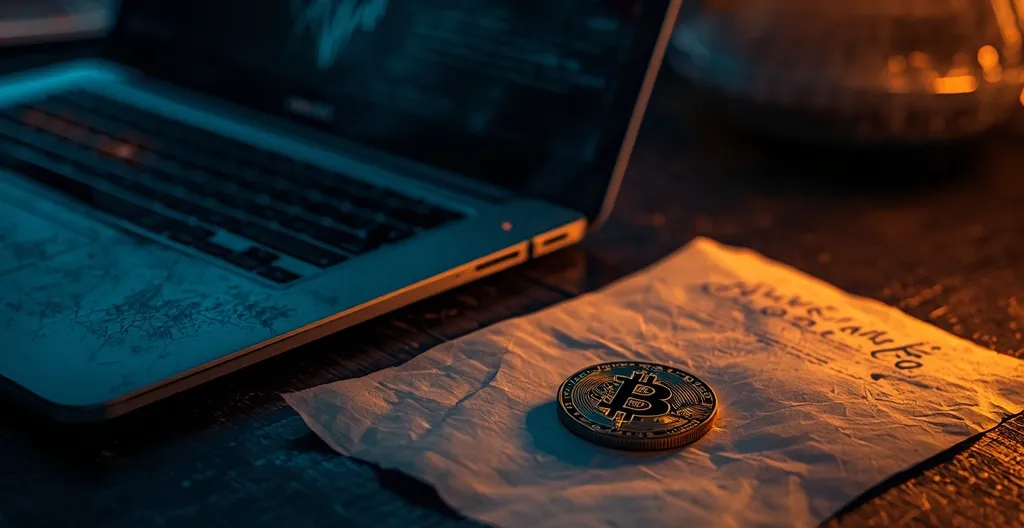
A headline claiming a British investor recovered 61 Bitcoin worth $4.5 million after 12 years is eye-catching, but the evidence behind it is thin. That matters, because in crypto, a good story is not the same thing as a verified one.
- Claim: 61 BTC reportedly recovered
- Stated value: $4.5 million
- Time frame: 12 years
- Big caveat: the claim is unverified in the material available
What can be said with confidence is simple: the headline describes a possible recovery of long-lost Bitcoin by a British investor. What cannot be confirmed from the available material is how the coins were lost, how they were recovered, or whether the valuation was tied to a specific date and BTC price. For a closer example of a similar long-lost stash being found, see British Investor Recovers 61 Bitcoin (BTC) Worth $4.5M.
That distinction matters. A lot of crypto coverage gets lazy here, one dramatic number, zero context, and suddenly a rumor is dressed up as news. No, a headline is not a blockchain receipt.
Still, the general scenario is believable. Bitcoin is a bearer asset, which means control depends on control of the private keys or seed phrase. A private key is the secret that proves ownership of coins. A seed phrase is the backup set of words used to restore a wallet. If either is lost, access can disappear for years. For readers weighing storage options, this is the whole point of Custodial Wallet vs Self Custody: Which Is Safer for You?
That is the brutal trade-off of self-custody. Bitcoin gives users sovereignty, censorship resistance, and the power to hold value without asking permission. It also gives them full responsibility for not screwing it up. There is no customer support line for “I threw away my wallet backup in 2013.”
Over the years, dormant BTC has been rediscovered from old laptops, forgotten exchange accounts, damaged hard drives, and paper backups found long after they were thought gone. Sometimes the owner still has enough information to recover access. Sometimes the coins are lost for good. Bitcoin does not care either way.
The $4.5 million figure also needs a careful read. Without a timestamp, it is best treated as an estimate, not a fixed accounting value. Bitcoin’s price moves enough that “worth $4.5 million” can become stale fast. Fiat valuations are snapshots, not scripture.
If the recovery claim is accurate, the most interesting part is not the number. It is the method. Was an old wallet file restored? Was a seed phrase rediscovered? Did the investor regain access to a device that had been collecting dust for more than a decade? Those are the details that turn a headline into something meaningful. They are also the details that remain missing here. In the same recovery-and-security vein, there is also growing interest in tools like How to Recover a Crypto Wallet Without a Seed Phrase, though the blunt truth is that miracles are rare and bad backups are still bad backups.
There are also practical questions that get skipped when people chase the feel-good angle. A long-lost stash can raise tax issues, inheritance complications, and security concerns, depending on the jurisdiction and circumstances. Bitcoin may be borderless, but paperwork still loves a border. For anyone handling complex tax filing, even boring admin has its place, which is why some people joke that Ditch the paperwork. Tax docs and data imported for you. sounds like the most exciting sentence in finance.
For newcomers, the lesson is plain: treat your keys like the money they control. Back up your seed phrase. Store it safely. Do not rely on memory. Do not leave serious value on a device with no recovery plan. Self-custody is freedom, but it is not a toy. If you want a cleaner, deeper explanation of the privacy and security angle, BIP 324: Version 2 P2P Encrypted Transport Protocol is a useful reminder that Bitcoin security is not just about storage, it’s also about the network itself.
For longtime holders, the story is a reminder of Bitcoin’s early wild west era, when many people stored coins badly, forgot about them, or underestimated how valuable those coins would become. Some recovered access later. Some never did. That is part of Bitcoin’s history, equal parts innovation, discipline, and expensive human error. And sometimes the self-custody lesson is personal: Bitcoin Developer René Pickhardt Says Self-Custody Fears kept him from buying more BTC, which is a pretty brutal reminder that fear and friction can be just as expensive as lost keys.
Key questions and takeaways
-
Is the 61 BTC recovery confirmed?
Not from the material available here. The claim is plausible, but it is not supported with enough detail to treat as verified. -
Why do old Bitcoin recovery stories matter?
They show how self-custody works in practice: if you control the keys, you control the coins. If you lose access, the Bitcoin can sit untouched for years, or vanish from your reach entirely. -
What does “recovered” usually mean in crypto?
It usually means the owner regained access to coins by finding a seed phrase, restoring a wallet file, recovering a device, or otherwise getting control of the private keys again. -
Is $4.5 million a precise valuation?
No. Without a time and price reference, it should be read as an approximate headline figure based on market value at some point in time. -
What is the biggest lesson for Bitcoin holders?
Protect your backup like your wealth depends on it, because it does. Bitcoin rewards discipline and punishes sloppy custody with zero sympathy.
Bitcoin keeps exposing the same old problem in a new form: people are often great at acquiring assets and terrible at keeping track of them. Sometimes that ends with a lucky recovery. Sometimes it ends with a very expensive lesson. As crypto custody goes mainstream, even retail hardware wallet distribution matters, which is why developments like Best Buy Sells Tangem Hardware Wallets Nationwide, Boosting are worth watching, even if the market still has plenty of clowns trying to sell “easy money” fantasies.
And yes, AI is already being dragged into this mess too: Claude AI Helps Recover 5 BTC After 11 Years, Raises shows how machine help can sometimes recover access, while also opening a fresh can of security worms. On the education side, one of the strangest but most important parts of crypto is that real recovery, custody, and access issues can intersect with rules as mundane as Provision of Program of Distance Education Authorized when it comes to jurisdiction, compliance, and where a user’s setup may be anchored legally. And for companies trying to make complex workflows less painful, Meet CODI: The Conversational Interface for Underwriting is a sign that automation is steadily creeping into finance whether traditional institutions like it or not.


