
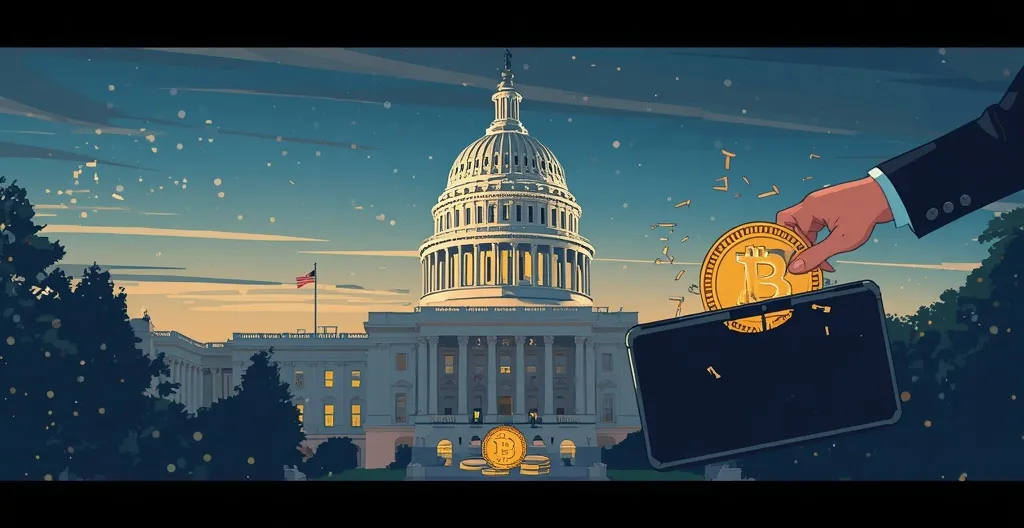
California lawmakers have decided meme coins and public office should not mix. AB 2409 targets officials who try to turn government authority into a personal token launchpad, and it now sits on Gov. Gavin Newsom’s desk.
- AB 2409 passed both chambers and now awaits Newsom’s decision.
- Public officers would be barred from issuing meme coins under the bill.
- A separate platform restriction kicks in Jan. 1, 2027 for certain official-linked meme coins.
- Enforcement would be civil, using injunctions and disgorgement, not criminal charges.
The bill was introduced by Assembly Member Avelino Valencia, passed the Senate on Aug. 26, and then cleared the Assembly in a 78-0 vote after the Senate amendments were adopted on Aug. 21. That is not a narrow win. It’s a bipartisan-looking stomp.
AB 2409 would add a new chapter to California’s Government Code covering prohibited digital financial transactions. The basic idea is blunt: if you hold public office, you should not be able to mint a speculative token off your name, image, or office and then pretend it’s just harmless internet culture.
That may sound obvious to anyone with a functioning ethical compass, but crypto has a way of turning obvious conflicts into “innovative monetization opportunities.” This bill is California’s attempt to say: enough with the cute packaging.
What AB 2409 actually does
The bill would prohibit a public officer or a covered public employee from issuing a meme coin. In the bill’s language, issuing means making a token available for public purchase, donation, or exchange for anything of value, whether or not the token is actively promoted.
That matters because it closes the easy dodge. An official could not simply claim, “I didn’t market it, I just put it out there.” Under AB 2409, availability itself can trigger the prohibition.
The bill defines public officer broadly. That includes state and local elected or appointed officials, members of the California Legislature, and members of boards, commissions, committees, and other bodies with only advisory powers. The public employee rule is narrower and applies to employees of state or local government entities who have decision-making authority over bids and contracts for their entity.
So this is not a blanket ban on every government worker in California. It is aimed at officials with public power, and at the smaller subset of employees whose responsibilities could create obvious conflict-of-interest problems.
The bill also defines meme coin broadly. It covers digital assets marketed or recognized primarily through association with internet memes, public figures, fictional characters, animals, cultural phenomena, current events, shared humor, celebrities, noteworthy people or events, or social trends. These tokens derive their value primarily from public interest, speculation, or community engagement.
In plain English: if a token exists mainly because people think it’s funny, viral, or politically charged, this bill likely has it in its sights. That’s not a bug. It’s the point.
The 2027 platform rule is the other big piece
AB 2409 also reaches beyond the officials themselves. Beginning Jan. 1, 2027, a digital asset service provider would be prohibited from listing for sale on behalf of, or for purchase by, a California resident, a meme coin issued on or after that date when the token is offered by, or in partnership with, a federal public official or a state or local public officer.
That is not a general California ban on meme coins. Adults can still buy and sell plenty of speculative nonsense if they want to. The bill is narrower than that. It targets official-linked tokens tied to covered public figures.
The Aug. 21 amendment changed this part of the bill. Earlier language focused on meme coins containing the likeness or image of a covered public official. The final Senate language applies when a meme coin is offered by, or in partnership with, one of those officials. That is broader, and much harder to game with branding tricks.
The bill also defines federal public officials broadly, including elected and appointed federal officers plus members of federal boards, commissions, committees, and other bodies, including advisory bodies.
One practical question hangs over that rule: what exactly counts as “in partnership with” a public official? That kind of language will matter a lot when platforms and lawyers start parsing whether a token is actually tied to an official or merely piggybacks on the aura of one.
How enforcement would work
AB 2409 uses civil enforcement, not criminal penalties. The California Attorney General could file a civil action seeking an injunction, which is a court order to stop the conduct, and disgorgement, which means forcing someone to give up money gained through wrongdoing.
District attorneys, city attorneys, and county counsel could also enforce the prohibition against public officers and employees issuing meme coins.
That enforcement model is important. California is not trying to turn every stupid token stunt into a felony case. It is trying to strip away the profit and stop the conduct. Sensible, really. Not everything reckless needs a jail cell attached to it.
Why lawmakers pushed the bill
The bill’s legislative findings say that “public officials should not use government authority for private financial gain.” Assembly Member Avelino Valencia also argued that digital asset platforms have made meme coins easier to create and could allow bad actors to circumvent existing financial disclosure and conflict-of-interest rules.
That is the real ethical problem here. Meme coins are already a playground for speculation, hype, and dumb money. Put an elected official in the mix and you get a much uglier cocktail: access, influence, and the possibility that public office is being used as a brand license.
California Common Cause and the Consumer Federation of California were listed as supporters in the Assembly Banking and Finance Committee’s April analysis. As of April 16, that analysis listed no opposition.
The bill also reflects a broader shift in how lawmakers are starting to think about politically linked digital assets. The old excuse was that a token is “just crypto.” The newer, more honest read is that when public authority and speculative assets collide, you are not looking at innovation so much as a conflict-of-interest factory.
The Trump factor is hard to ignore
The committee analysis cited President Donald Trump’s Official TRUMP meme coin as background. Trump launched the token shortly before returning to the White House in January 2025, and it quickly became a lightning rod for ethics complaints.
In April 2026, Trump held a Mar-a-Lago event restricted to leading TRUMP holders. The top 297 qualifying holders were invited, and the top 29 received access to a separate VIP reception. Democratic lawmakers criticized the event, arguing it looked like pay-to-play access dressed up as a fan gathering.
A previous crypto.news report said Trump reported about $636 million tied to the TRUMP meme coin. The same report cited blockchain analysis estimating that nearly 989, 000 wallets had collectively lost about $3.81 billion by the end of June.
Those numbers do not prove every holder lost money or every gain was improper. But they do show why officials are getting jumpy. When one politically branded token can create massive wealth, massive losses, and direct access to power all at once, ethics alarms are not exactly being oversensitive.
Trump also disclosed about $1.4 billion in crypto-related income for 2025, including income connected to TRUMP and World Liberty Financial. That kind of figure is exactly the sort of thing that makes “private gain” and “public duty” sound uncomfortably close to each other.
California is not acting in a vacuum
The state’s move comes as federal lawmakers in 2026 continue debating restrictions on government officials’ digital asset activities. Sen. Kirsten Gillibrand has called for members of Congress and their spouses to be prohibited from issuing or promoting meme coins, while negotiations continue over the Digital Asset Market Clarity Act, often called the CLARITY Act.
Updated Senate text released in July included a government ethics provision barring the president, vice president, members of Congress, and certain senior federal officials from issuing or sponsoring digital assets while in office. Senate negotiators also developed revised ethics language that would allow state authorities to enforce restrictions involving federal officials’ crypto activities.
Rep. Ritchie Torres proposed legislation in May 2025 to restrict digital assets using the names, images, or likenesses of covered political figures when the arrangement produced direct or indirect financial gain.
So California is not exactly going rogue here. It is joining a broader effort to stop officials from turning their public identities into tradable crypto assets. A novel problem, sure, but not a complicated one: if you can profit from your office by selling a token to the public, the temptation for abuse is already doing laps around the room.
What this means for crypto
For the crypto industry, AB 2409 is both narrow and messy. Narrow, because it does not ban meme coins outright. Messy, because any rule that tries to separate legitimate token activity from politically branded speculation will create compliance headaches.
Platforms, launchpads, and token issuers may need to review how they handle official-linked tokens, especially if a project is associated with a public figure in a loose or indirect way. The phrase “in partnership with” is going to matter a lot, and so will questions about who controls a project, who benefits from it, and how much political branding is enough to trigger the rule.
There will almost certainly be legal fights too. States do not regulate in a vacuum, and crypto cases love a good preemption, commerce clause, or free-speech argument. Nothing about this space stays tidy for long. If there’s a loophole, someone in a blazer is already drafting a memo around it.
Still, the broader principle is hard to argue with. Bitcoin was supposed to separate money from political meddling, not create a new market for office-backed speculation. Meme coins can be goofy, cultural, and even harmless when they’re just internet theater. The moment public authority gets involved, though, the joke starts smelling like a grift.
Key questions and takeaways
-
Is California banning all meme coins?
No. AB 2409 targets meme coins issued by public officers and certain linked tokens involving covered officials, not meme coin trading in general. -
Who would be barred from issuing a meme coin?
State and local public officers, plus a narrower class of public employees with decision-making authority over bids and contracts. -
What changes in 2027?
Starting Jan. 1, 2027, digital asset service providers would be barred from listing certain official-linked meme coins issued on or after that date for California residents. -
How would the bill be enforced?
Through civil actions. The Attorney General could seek injunctions and disgorgement, and local legal authorities could also enforce the rule. -
Why is this getting so much attention?
High-profile political meme coins, especially Trump’s TRUMP token, made the risk plain: public office can be turned into a monetized brand, and that is exactly the kind of conflict of interest lawmakers want to shut down.
AB 2409 now awaits Newsom’s signature or veto. If it becomes law, California will have drawn a sharper line than most states against public officials using meme coins as a side hustle. About time, frankly.
For a broader look at the chaos around political tokens and market mania, see Dogecoin, TRUMP, and DeepSnitch AI: Hype, Whales, and Risks, Pro-XRP Lawyer Blasts TRUMP and MELANIA Meme Coin Crash, and Bitcoin Rejects $80K as Meme Coins and Pepeto Chase Next.


