
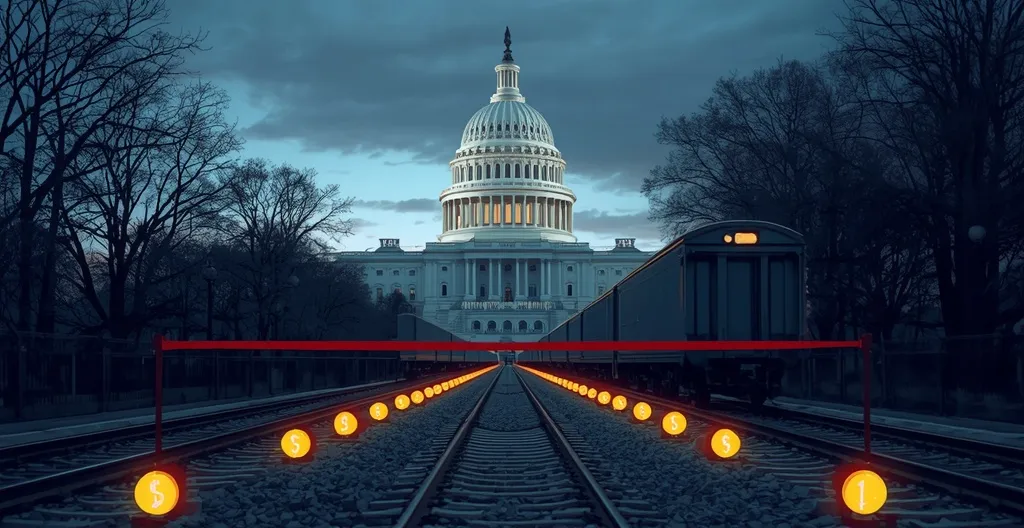
One year after the House passed CLARITY, the Senate has done what Congress does when a bill gets too real: it has parked the hard part and called it process.
- One year ago today, the House passed CLARITY 294-134 on July 17, 2025.
- It still has no Senate floor vote 365 days later.
- GENIUS Act became law.
- The anti-CBDC measure only advanced by riding another bill.
- Washington rewards crypto bills that are narrow, quiet, and politically low-risk.
The anniversary is not subtle. In one week of July 2025, the House passed three crypto bills. One is law. One is law by accident and the President will not sign it cleanly. The third, the one meant to matter most for market structure, is still stuck in the Senate after a full year.
That is the pattern. Crypto legislation moves when it is either narrow enough to be boring or attached to something bigger so nobody has to own it outright. Once a bill starts touching market structure, ethics, jurisdiction, and the President’s own crypto-linked finances, the whole machine slows to a crawl. Sometimes it is not even gridlock. It is just Washington protecting itself from embarrassment.
CLARITY is the main market-structure bill for digital assets. In plain English, it is the framework that is supposed to help answer who regulates what, which tokens are treated like commodities or securities, and what rules apply to exchanges, issuers, and developers. That matters because the current setup leaves builders and investors guessing whether they are complying with a rulebook or waiting to be ambushed by one.
The House’s “Crypto Week” in July 2025 looked like a breakthrough. Congress Set to Bring CLARITY to Digital Asset Market passed 294-134, with more than 70 Democrats crossing over. The U.S. GENIUS Act Creates First Federal Stablecoin Framework cleared the House 308-122. The Anti-CBDC Surveillance State Act squeaked through 219-217.
Three bills. Three very different outcomes.
GENIUS was the easy one. It passed the Senate 68-30 in June 2025 and became law on July 18, 2025. It created the first federal framework for payment stablecoins, which is a fancy way of saying Washington finally wrote down some actual rules for dollar-pegged crypto tokens instead of pretending the market could run forever on vibes and enforcement actions.
That law matters because stablecoins are not side quests. They are the rails that move dollars through crypto markets. The GENIUS Act Signed: Stablecoin Regulation or CBDC Threat to framework is also concrete: it sets reserve rules, disclosures, certification requirements, and issuer standards. It is plumbing, not poetry. Congress often prefers plumbing, especially when it can tell itself it solved a problem without starting a larger war.
There is a catch, of course. GENIUS also shows the kind of bill Washington likes best: narrow, technical, and easy to defend. The first major rulemaking deadline arrives on July 18, 2026, which means the real work is only beginning. Passing a law is one thing. Getting regulators to write the actual rules without mangling them is another sport entirely.
The anti-CBDC fight followed a different path. CBDC means central bank digital currency, in this context a government-issued digital dollar. The House passed the anti-CBDC bill narrowly, but the real move came later: a provision barring the Federal Reserve from issuing a CBDC through 2030 was attached to the 21st Century ROAD to Housing Act.
That housing package passed the Senate 85-5 and the House 358-32. It is now being held up because the President will not sign it while the unrelated SAVE America Act is still in the mix. So yes, the anti-CBDC idea moved forward, but not because Congress stood tall and passed it cleanly. It moved because it got smuggled through a bigger vehicle. Capitol Hill loves a loophole almost as much as it loves a press release.
CLARITY is not getting that treatment. It is the bill that actually matters for market structure, and that is exactly why it is stalled. The Senate Banking Committee approved it 15-9 on May 14, 2026, and it was placed on the Senate Legislative Calendar as Calendar No. 423 on June 1. In other words, it is eligible for floor action.
Eligible is not the same as ready.
Clarity Act survival depends on the U.S. Senate getting a latest merged Senate draft was released on July 14, 2026, but the vote math is still ugly. Republicans hold roughly 53 seats, and cloture requires 60 votes. That means at least seven Democrats have to support ending debate, assuming full GOP attendance and no defections. The Senate can make a simple bill feel like a hostage negotiation. CLARITY is getting the deluxe package.
Some of the friction is familiar policy stuff: DeFi developer protections, stablecoin yield, agency turf, and which regulator gets the biggest slice of the pie. Some of it is raw politics. On July 14, Chris Murphy, Chris Van Hollen, and Jeff Merkley formally opposed the merged draft. The two Democrats who crossed over in committee, Ruben Gallego and Angela Alsobrooks, do not automatically provide floor support. Committee votes are the Senate’s version of “we’ll see.”
The ethics fight is where this gets really messy. The bill’s critics want restrictions on government officials profiting from the crypto industry they regulate. That sounds straightforward until it runs into the President’s reported crypto-linked income, which has turned the issue into a giant neon sign for opponents. According to the disclosure cited in the source, that figure was roughly $1.4 billion in crypto-related income, including about $636 million from the memecoin bearing his name and more than $500 million tied to World Liberty Financial.
A high-level White House meeting on the ethics issue was held on July 15, 2026. Majority Leader John Thune has pledged a floor vote before the August recess. The House leaves July 23, the Senate around August 7, and the White House crypto adviser begins military leave on July 27. That is a lot of calendar pressure for a bill that has already spent a year in the penalty box.
House Financial Services Chair French Hill says senators from both parties are still working toward a deal. Kristin Smith of the Solana Policy Institute says returning lawmakers and fresh text are signs of momentum. Patrick Witt, the White House digital assets adviser, is pointing to GENIUS’s first anniversary as proof that coordinated action can work.
He has a point. But GENIUS is not CLARITY, and pretending they are the same kind of political object is how people end up selling fantasy instead of policy. GENIUS was narrow enough to pass. CLARITY is broad enough to trigger every institutional nerve ending in Washington.
There is also a market reality sitting under the legislative drama. On March 17, 2026, the SEC and CFTC issued a joint interpretation that used a five-category taxonomy and treated 16 named digital assets, including Bitcoin, Ether, XRP, Solana, Cardano, Dogecoin, Polkadot, Avalanche, Chainlink, and Litecoin, as digital commodities. That gave the market a usable map.
But a map is not the territory, and it is definitely not permanent law. SEC's New Framework for Classifying Crypto Assets can be changed, re-read, litigated, or quietly buried by the next administration. That is exactly why CLARITY matters. The market needs something sturdier than a policy memo and a prayer.
The current framework has helped, but it has not ended the offshore drift. When U.S. rules stay fuzzy, firms structure around non-U.S. persons, use offshore foundations and DAOs, and design products to avoid tripping over American law before launch. Federal vs. State Issuer Paths may encourage more activity back onshore, but it also noted that the real-world shift is not guaranteed.
Robinhood’s Stock Tokens are a useful example of how strange things get when the domestic rulebook is still half-written. When firms start engineering around regulatory uncertainty, that is not always innovation. Sometimes it is just compliance survival with a better marketing team.
The anniversary leaves two clean readings.
The bull case is that this delay means little. Congress may still pass CLARITY once the ethics language settles, the calendar clears, and the Senate stops tripping over its own shoelaces.
The bear case is uglier: the delay is the message. The House vote was the easy part. The Senate has spent the last twelve months proving that the real bill is too broad, too politically loaded, and too tangled up with power to move cleanly.
“The pattern across all three is the same: what passed was what could be attached to something else or what nobody had a personal stake in blocking. CLARITY is neither.”
“That is the template for what Congress can pass on crypto. Narrow scope, clear beneficiary, no personal stakes.”
That is the uncomfortable truth here. Congress can pass narrow crypto laws. It can move controversial ideas only when they are hidden inside something else. It can produce a stablecoin framework when the plumbing is simple and the politics are manageable. What it has not shown is that it can finish the real job: building durable market-structure law that gives exchanges, investors, builders, and developers something that survives the next administration without getting rebuilt from scratch.
One year is long enough for delay to become the point.
Key questions and takeaways
-
Why did GENIUS pass while CLARITY stalled?
GENIUS was narrow, technical, and politically easier to defend. CLARITY is a market-structure bill that forces lawmakers to confront jurisdiction, enforcement, and ethics all at once. -
What does CLARITY actually try to do?
It aims to define how digital assets are regulated, including which agency oversees which activity and how tokens are treated under securities or commodities law. For the industry, that means fewer guesswork-driven compliance games. -
Why does the Senate keep slowing this down?
The bill needs 60 votes for cloture, so Republicans need Democratic support. That gives ethics disputes and jurisdiction fights real blocking power. -
What does the anti-CBDC outcome tell us?
It shows controversial crypto policy can still move if it is attached to a larger must-pass vehicle. Congress often prefers indirect action when direct action is too awkward. -
Does the SEC/CFTC framework solve the problem?
No. It gives the market a working classification system for now, but it is still administrative guidance, not durable statute. A future administration can change it. -
Why are stablecoins such a big deal?
They are the bridge between crypto markets and dollar liquidity. GENIUS created the first federal framework for payment stablecoins, but how yield, reserves, and issuer rules shake out will still matter a lot.
Further reading
A couple of primary sources and related coverage worth keeping handy if you want the paperwork, not the political theater.


