Coldcard has patched the firmware flaw that let some devices create weak Bitcoin seed phrases, but the ugly part remains: if your seed was generated on the affected firmware, you still need a new wallet and a transfer of funds. A firmware update can fix the future. It cannot resurrect bad randomness from the past.
- [Fix shipped](https://coldcard.com/docs/upgrade/): 5.6.1 for Mk4/Mk5, 1.5.1Q for Coldcard Q
- Old seeds still exposed: affected wallets must be migrated, not just updated
- New rule: every new seed now needs user-supplied entropy
- Broader hardening: PSBT checks, USB boundaries, firmware validation, RNG fault handling
Coldcard said in an Aug. 20 post on X that it had released firmware versions 5.6.1 and 1.5.1Q after a security review. The update tightens seed generation, adds extra checks around transaction signing, and hardens several device boundaries that should have been tighter from the start.
But the key issue is simple: if a recovery phrase was created on the vulnerable firmware, the weakness is baked in. No patch can retroactively turn a weak seed into a strong one. That is not how entropy works, and thankfully not how Bitcoin math works either.
Coldcard now requires at least one source of user entropy when creating a new seed. The company said users can supply randomness through unpredictable key presses, physical dice rolls, or coin flips, and the device then combines that with its own internal sources. Coldcard put it plainly: “Every newly generated seed now requires one source of user entropy.”
That matters because a seed phrase is the master backup for a Bitcoin wallet. If the seed is weak, predictable, or created through a busted randomness path, the wallet is compromised at the foundation. A hardware wallet can only protect keys if those keys were born from properly generated entropy in the first place.
What the new firmware changes
Firmware 5.6.1 applies to Coldcard Mk4 and Mk5 devices. Firmware 1.5.1Q applies to the Coldcard Q. The update is not just about seed generation. It also adds staged verification of PSBTs, or partially signed Bitcoin transactions, before signing.
A PSBT is a Bitcoin transaction format that lets a hardware wallet review and approve transaction details without exposing private keys to an online computer. In plain English, it is the handoff point where the wallet checks the spending request before it signs anything. More checks there are a good thing. Fewer “oops” moments, fewer coins wandering off into the sunset.
The release also changes default SIGHASH handling. SIGHASH determines which parts of a transaction a signature commits to, and weak or unusual settings can create avoidable risk if users do not understand what they are approving. Coldcard’s choice to block some of those defaults unless protections are lowered is the right kind of boring security behavior.
Other changes include stronger boundaries around USB connections and firmware updates, improved Delta Mode isolation, fixes for backups involving the active wallet, and extra checks around random-number-generator initialization and fault conditions. Users were also told to verify the firmware’s digital signature before installation, which is table stakes for serious self-custody.
Why old seeds are still a problem
The flaw was not cosmetic. It was a randomness failure. According to Block’s Bitcoin engineering and security team, the issue came from a firmware change in March 2021 that caused affected software to use a deterministic MicroPython fallback instead of the intended STM32 hardware random-number generator.
That distinction matters. Hardware wallets are supposed to rely on real randomness when generating seeds. If the device falls back to a predictable software path instead, the search space shrinks. That turns a wallet from “effectively impossible to guess” into something much easier to brute-force for a determined attacker with enough time, compute, and luck.
Block’s review estimated that older Mk2 and Mk3 devices could produce seeds with about 40 bits of effective randomness, while vulnerable Mk4, Mk5, and Q devices reached only about 72 bits. The intended level was 128 bits.
Those numbers are not abstract trivia. They describe how hard it is to guess the seed. The lower the entropy, the smaller the pool of possible keys an attacker needs to search. That is the whole reason seed generation is such a big deal: if the randomness is weak, the private keys are too.
Coldcard says affected users need to do three things: update the device, create and verify a new seed, and transfer Bitcoin to the replacement wallet. That is the correct move. Annoying? Yes. Optional? No.
Which devices and seeds are affected
The advisory covers different device families and different version ranges. For Mk2 and Mk3, seeds generated on versions 4.0.1 through 4.1.9 are affected. For Mk4 and Mk5, the warning covers seeds generated before 5.6.0. For Coldcard Q, it applies to seeds created before 1.5.0Q.
Mk1 devices are outside the regression identified by researchers. Other Coinkite products named in the disclosure, TAPSIGNER, OPENDIME, and SATSCARD, are also not covered by the same issue.
There is one useful exception Coldcard has already identified: wallets whose owners added at least 50 fair, independent, and private dice rolls before the final seed words were produced. The company said those rolls supplied at least 128 bits of independent randomness.
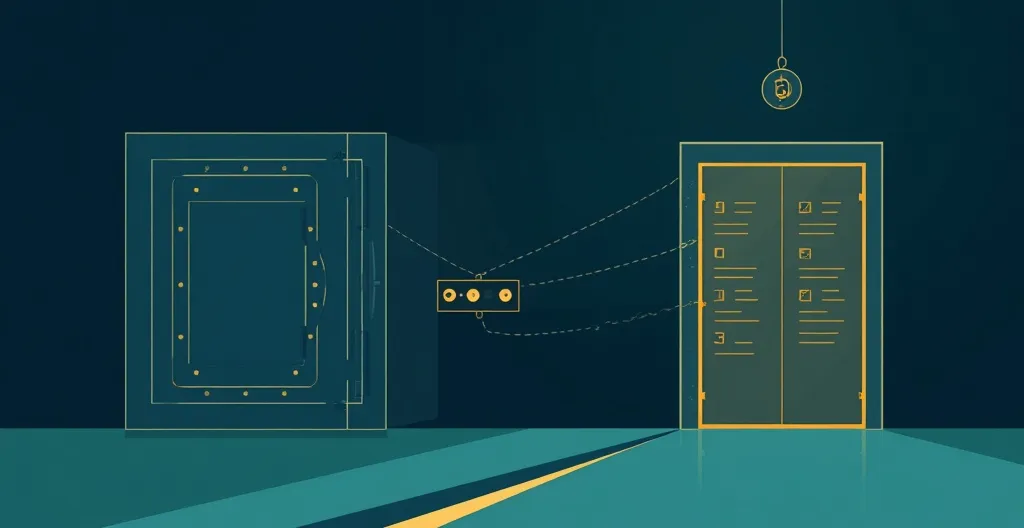
A BIP-39 passphrase adds another layer of protection, but it does not repair a weak seed. It can help against theft if used correctly and kept secret, but it does not undo a flawed randomness process. Extra locks are nice. A rotten doorframe is still a rotten doorframe.
How bad was the exposure?
Researchers later estimated that four suspected attack waves removed 1, 816 BTC from more than 5, 200 addresses. Those figures should be handled carefully, because different researchers have separated confirmed reports from address clustering based on transaction patterns. Still, the scale suggests this was not some theoretical bug that only matters in whiteboard meetings and vendor slides.
There were also signs the fallout reached centralized exchanges. In an Aug. 4 report on exchange inflows, OKX Chief Compliance Officer Jonathan Brockmeier said:
“We’re seeing record levels of inflows now to centralized exchanges post-Coldcard, ”
Galaxy Research said it shared suspected attacker addresses with exchanges, blockchain investigators, and U.S. federal law enforcement agencies. It also reported that about 90% of the Bitcoin taken during the confirmed attack waves had not moved from the identified destination wallets.
That kind of stillness does not mean the coins are safe. It usually means someone is waiting, testing routes, or trying not to attract more attention than necessary. Stolen Bitcoin does not always move fast. Sometimes it just sits there like a loaded trap with patience.
Why this matters beyond Coldcard
This is bigger than one hardware wallet brand having a bad week. It is a reminder that self-custody depends on the quality of the entropy pipeline, not just on shiny hardware or a well-designed metal case.
Hardware wallets are supposed to keep private keys offline and reduce exposure to malware. That promise stands or falls on the seed generation process. If firmware silently routes wallet creation through a deterministic fallback, the security model is already in trouble before the first transaction is ever signed.
Coldcard did the right thing by not pretending a firmware patch alone was enough. The new release improves future seed generation and hardens the device in several places, but it also acknowledges the uncomfortable truth: old affected wallets need to be replaced, not merely updated.
That is how real self-custody works. The freedom is real. So is the responsibility. And when the randomness goes sideways, there is no magical blockchain dust that fixes it after the fact.
Key takeaways
- Did the firmware fix old weak seeds?
No. The update improves future seed generation, but it cannot repair a seed that was created with weak randomness. - What should affected users do now?
Update the device, generate and verify a fresh seed on the fixed firmware, and move Bitcoin to the new wallet. - Why is user entropy required now?
It adds real randomness from the user, reducing the chance that a seed can be generated through a weak or predictable path. - Is a BIP-39 passphrase enough protection?
No. It can add a barrier, but it does not fix an underlying seed that was generated with too little randomness. - Which devices are affected?
Coldcard Mk2, Mk3, Mk4, Mk5, and Q devices are covered in specific firmware ranges; Mk1 and some other Coinkite products are outside the disclosed regression. - Was this just a theoretical flaw?
No. Block’s review tied it to a real firmware regression, and later analysis linked it to suspected theft waves involving 1, 816 BTC.
The blunt lesson is this: entropy is not a feature you can skip and patch later. If your wallet was created on the vulnerable firmware window, treat the seed as tainted and move on to a fresh one. In Bitcoin, the seed is the whole game. Everything else is just hardware around it.
Further reading
A few more useful references on the Coldcard mess and the fallout around weak seed generation:
- Coldcard firmware update requires affected users to move
- Coldcard Security Advisory
- Inside the USD 116 Million Coldcard Hack
- Coldcard Build Error Exposed Weak Seed Generation in Massive Bitcoin Hardware Wallet Theft
- Coldcard Firmware Flaw Linked to Massive Bitcoin Wallet Drain
- Bitcoin Faces $512M $70K Bid Wall as Coldcard MK5 Pushes Self-Custody