A Coldcard security warning has forced a hard truth into the open: if your seed was generated on vulnerable firmware, a software update alone may not save you. Galaxy Research estimated the wave of drains at 1, 367.05 BTC, worth about $88.6 million, across 4, 585 addresses, and the fix is not glamorous, users need fresh seeds and careful fund migration.
- 1, 367.05 BTC was estimated drained, worth about $88.6 million
- 4, 585 addresses were affected across three suspected attack waves
- Updating firmware does not repair an existing weak seed
- Coldcard users with affected seeds were told to create a new wallet and move funds
- The flaw hit self-custody, not Bitcoin itself
On Aug. 1, Dogecoin community contributor Mishaboar urged Coldcard users to move bitcoin into wallets controlled by newly generated seed phrases.
“If you have ever used a COLDCARD device of any kind, migrate your funds to a new wallet immediately.”
That warning was not random drama for clicks. It came after on-chain researchers linked a large wave of Bitcoin drains to a seed-generation flaw in certain Coldcard firmware versions, first detailed in a Firmware Update Advisory for Coldcard Mk2, Mk3, Mk4, Mk5.
Galaxy Research said its latest on-chain estimate put the total at 1, 367.05 BTC, or about $88.6 million. The firm described that number as its “estimated observed size”, which matters because it is not a final confirmed total. It is the best public blockchain trace so far, not a courtroom verdict.
The distinction is worth making early: Bitcoin itself was not hacked. The problem was wallet security. A cryptocurrency wallet seed phrase is the recovery key to a wallet, and anyone who controls it can spend the coins. Self-custody means holding your own keys instead of trusting an exchange or custodian. That freedom is the point, and when the tools fail, the pain point too.
What researchers found
Galaxy Research said the thefts appeared across three suspected attack waves. The first wave removed 1, 082.65 BTC from 1, 196 addresses in about 41 minutes on July 30. A third wave drained roughly 208 BTC from 1, 912 addresses.
Galaxy said the waves appeared internally consistent with a single operator in each case, though it could not determine whether one attacker controlled all three. That is the right level of caution. Blockchains can show patterns very clearly. They rarely hand over the person behind the keyboard.
Crypto.news also noted that the activity looked tightly coordinated, with elevated fixed fees and no change outputs. In Bitcoin, “change” is the leftover amount sent back to the sender after a transaction. No change outputs usually means a full sweep, not ordinary wallet spending. In plain English: this looked deliberate, not accidental.
The incident echoed earlier reporting on how a Coldcard Exploit Explained: Who Lost Bitcoin and Who's can ripple through a surprisingly large chunk of the ecosystem when users assume hardware alone equals safety.
What went wrong inside the wallet
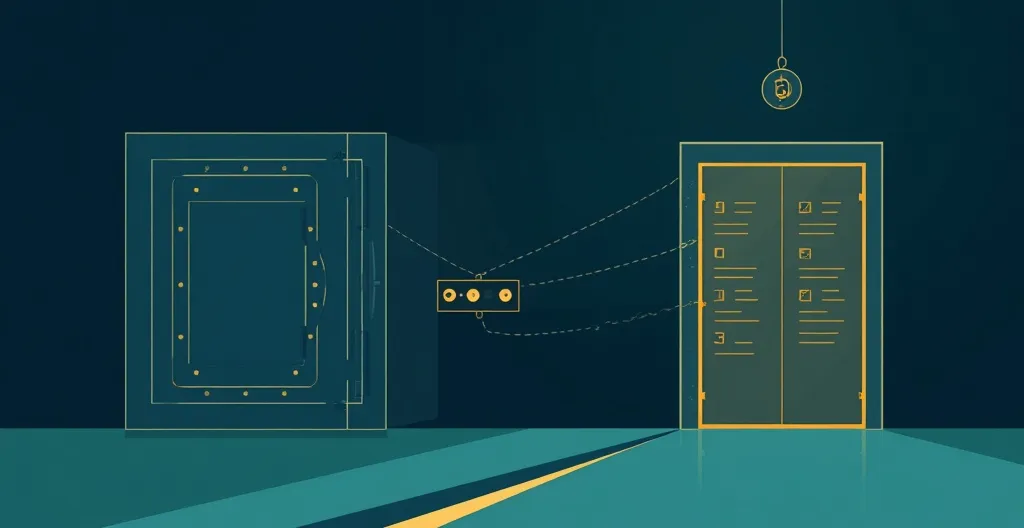
According to Coinkite and Block’s researchers, the flaw came from a firmware integration error. The wallet sometimes used a deterministic MicroPython fallback instead of the intended STM32 hardware random-number generator.
That sounds technical because it is technical, but the underlying issue is simple. The device was supposed to generate unpredictable entropy for seed creation. In some cases, it did not. And if randomness is weak at the start, the whole security model gets wobbly fast.
For anyone new to this: a random-number generator is the component that helps create unpredictable cryptographic material. Cryptographic entropy is that unpredictability. If a seed phrase is generated with poor entropy, it can be much easier to reconstruct than users assume.
Coinkite said fixed firmware now exists for every affected model and release track. But it also made the brutal part clear: updating firmware does not repair a seed that was already generated on vulnerable code.
That same harsh reality showed up in reporting that a build error in Coldcard's firmware drained $38 million in Bitcoin, a reminder that “hardware wallet” is not a magical shield if the software under the hood is busted.
Who is affected
Coinkite said the affected range includes Mk2 and Mk3 devices running firmware versions 4.0.1 through 4.1.9. Seeds created on Mk4 and Mk5 devices before standard version 5.6.0 or Edge version 6.6.0X are also covered. For Coldcard Q, the fixed releases are standard version 1.5.0Q and Edge version 6.6.0QX.
The company said TAPSIGNER, OPENDIME and SATSCARD are unaffected. That matters, because not every Coinkite product is caught in this mess.
There is also a narrow exception for some users who added enough randomness themselves. Coinkite said users who entered at least 50 fair, independent and private dice rolls before the final seed words were produced may have contributed at least 128 bits of independent entropy, which can blunt this bug alone.
That caveat matters. It means not every Coldcard seed created in the affected range is automatically doomed. But if you used fewer than 50 rolls, do not remember how many you used, or exposed the roll sequence in some way, Coinkite says you should migrate.
A BIP-39 passphrase adds another barrier, but it does not repair a flawed seed. It is extra protection, not a miracle cure. If the underlying seed was created badly, the passphrase does not rewind time and make it random again.
Users were also pushed toward the same blunt conclusion in the Coldcard Hardware Wallet Flaw Linked to $70 Million coverage: if the seed is compromised, the device model name on the box is just branding, not salvation.
What affected users should do now
The practical response is straightforward, even if it is annoying.
Generate a fresh seed on fixed firmware, make sure the device and release track match Coinkite’s guidance, and move funds from the old wallet to the new one carefully. If you are unsure whether your old seed was generated in the vulnerable range, treat it as suspect until you can verify otherwise.
That migration should be done with the same level of caution you would use for any serious wallet move: verify the destination, double-check addresses, and do not rush. A botched migration can create a second problem while you are trying to solve the first. Crypto does love doubling down on bad days.
For users following Coinkite’s own warning, the most direct guidance came through the Coldcard MK5 Launches as Bitcoin-Only Hardware Wallet with security-focused rollout, which underlines that even “better security” needs ongoing user discipline to mean anything.
Why the theft estimate matters, and why it is not final
Galaxy Research’s estimate of 1, 367.05 BTC and $88.6 million is the latest public on-chain figure, but it remains an estimate. Blockchain forensics is powerful because Bitcoin transactions are public, but it still has limits. The chain can show movement; it cannot label every victim for you.
Galaxy said the broader pattern covered 4, 585 addresses across three suspected waves. That is a lot of wallets, and it points to a systematic sweep rather than a one-off slip. Still, the total could shift as more data is analyzed or additional affected addresses are identified.
That uncertainty is not a weakness in the research. It is simply how on-chain investigation works when the evidence sits in public but the human story behind it does not.
Past coverage of how Block Exposes Coldcard Wallet Flaws That May Have Put 1, 082 BTC at risk showed the same pattern: early numbers are useful, but the final damage often looks uglier once the dust settles.
The self-custody debate gets another bruise
Bitcoin investor Anthony Pompliano said the losses show how technically demanding self-custody can be, while stressing that Bitcoin itself was not hacked. Fair enough. Self-custody gives people sovereignty, censorship resistance, and control. It also demands competence around firmware, backups, entropy, and operational security.
Bloomberg ETF analyst Eric Balchunas argued that incidents like this strengthen the case for spot Bitcoin ETFs, which let investors gain price exposure without personally managing private keys. That is also fair, but it comes with a tradeoff. ETFs reduce key-management risk, but they introduce custodial and counterparty risk. You swap one set of problems for another. Finance rarely hands out free lunches, it just changes the bill format.
The honest takeaway is not that self-custody is dead, or that ETFs are some holy escape hatch. It is that the custody model has to match the user. A technically competent Bitcoin holder who wants sovereignty may still choose self-custody. Someone who does not want to babysit seed generation and firmware may prefer a regulated product. Different tools, different risk profiles.
That caution also fits the warning raised when Claude AI Helps Recover 5 BTC After 11 Years, Raises Bitcoin security warnings, because “lost” coins and “stolen” coins often blur together once sloppy key handling enters the picture.
Key questions and takeaways
-
Was Bitcoin hacked?
No. The failure was in Coldcard seed generation, not Bitcoin’s protocol. The blockchain did what it was supposed to do. -
Is a firmware update enough?
No. If a weak seed was already generated, it cannot be repaired. Users need a new seed and a careful fund migration. -
Were all Coldcard users affected?
No. The issue is tied to specific models and firmware versions, and users who added enough private dice rolls may not be exposed by this bug alone. -
Do BIP-39 passphrases fix the problem?
No. A passphrase adds protection, but it does not restore randomness to a seed that was created badly. -
How large were the losses?
Galaxy Research estimated 1, 367.05 BTC, worth about $88.6 million, across 4, 585 addresses. That figure is still an on-chain estimate, not a final confirmed total. -
Does this make self-custody obsolete?
No. It shows the downside of self-custody when tools or users fail. The model still works, but it demands discipline, good hardware, and serious attention to security.
The hard lesson here is simple: do not assume a hardware wallet is magically safe just because it is offline. If the seed generator is broken, the whole setup is already on thin ice. Bitcoin gives people the freedom to hold their own money without asking permission. That freedom is worth defending, but only if the entropy is real.