
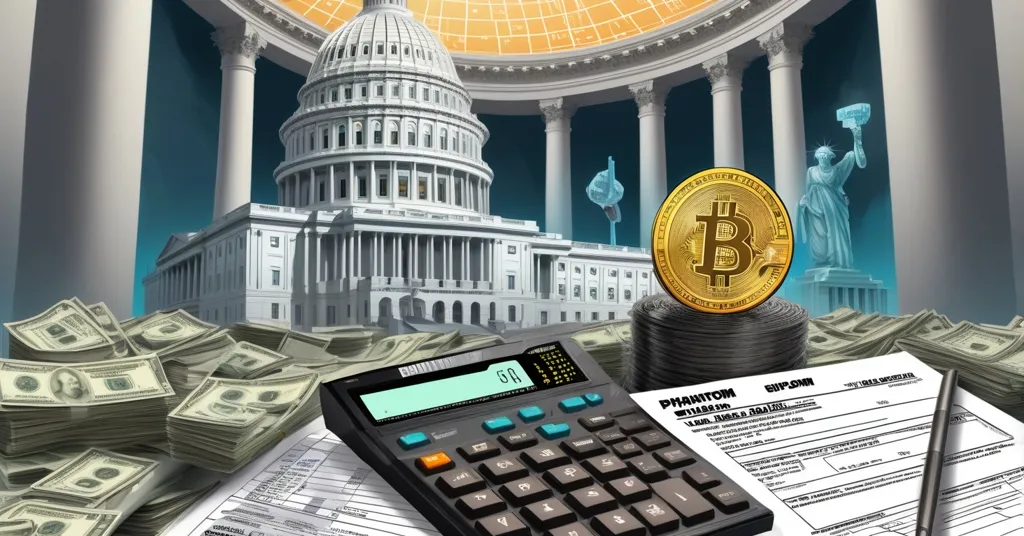
Crypto’s tax fight is back on Capitol Hill, and the industry wants Congress to fix the rules without sneaking in a five-year kill switch.
- H.R. 9175 would clarify when miners and stakers owe tax on rewards
- Crypto groups want no five-year cap on tax deferral
- Supporters say current IRS treatment creates “phantom income”
- Banks and tax critics warn the bill could give crypto special treatment
Three major crypto trade groups — the Blockchain Association, the Crypto Council for Innovation, and The Digital Chamber — are pressing Congress to pass H.R. 9175, the Tax Clarity for Mining and Staking Act, without amendments that would limit reward tax deferral to five years. In a joint letter sent June 21 to House Ways and Means leaders Jason Smith and Richard Neal, they argued that miners and stakers need a clear tax framework after years of uncertainty. Crypto lobby fights five-year cap in staking and mining tax bill
The fight comes down to a deceptively simple question: when should tax be due on mining rewards and staking rewards?
Under current IRS guidance, those rewards may be taxed when they are received, based on their market value at that moment. That can create a nasty cash-flow problem. If you earn tokens but haven’t sold them yet, you may owe tax on value you haven’t actually converted into dollars. Crypto advocates call that “phantom income” for a reason. The reward shows up, the tax bill shows up, and the cash to pay it may not.
For readers not steeped in blockchain jargon, the two systems at the center of this bill work differently. Proof-of-work networks, like Bitcoin, rely on miners using computer power to validate transactions and secure the chain. Proof-of-stake networks, like Ethereum, rely on users locking up coins to help secure the network and earn rewards. Different plumbing, same tax headache.
H.R. 9175 would let taxpayers choose how to handle those rewards: pay tax when the tokens are received, or defer tax until the rewards are later sold or otherwise disposed of. Supporters say that would make the rules more realistic and reduce the risk that U.S. participants get squeezed by a tax code built for a different era.
The industry also argues this is about keeping infrastructure in the United States. The trade groups say proof-of-work and proof-of-stake networks secure more than $1.7 trillion in value, and that this infrastructure can be “secured by Americans in America” if lawmakers stop treating reward taxation like a bureaucratic thought experiment.
That part is not just rhetoric. Cash-flow matters. If a miner earns a reward when prices are high and then the token crashes before it is sold, the IRS still may want tax on the earlier value. That is how you end up with someone owing real dollars on unrealized gains from digital assets that may now be worth a lot less. Financial genius? Hardly. More like policy with a blindfold on.
Rep. Steven Horsford proposed an amendment that would cap reward tax deferral at five years. Crypto lobbyists say that would wreck the bill’s purpose. Ji Hun Kim of the Crypto Council for Innovation said the five-year limit would “break” the legislation.
The industry’s objection is straightforward: a hard cap would reintroduce complexity, not remove it. Miners and stakers could end up tracking rewards across multiple wallets, exchanges, and accounts just to figure out when the clock runs out. That means more recordkeeping, more compliance burden, and more room for mistakes. In crypto tax land, that’s not a side effect — that’s the whole mess.
Still, the pushback from banks and tax skeptics is not a joke either.
The American Bankers Association opposes the proposal, arguing that it would favor crypto rewards over dividends, bank interest, and other income that is normally taxed every year. In their view, letting mining and staking rewards be taxed later could give digital assets a leg up that traditional savings and investment products do not get.
That concern is really about tax neutrality. If one asset class gets to delay taxes while another does not, critics say the government is no longer just setting rules — it is picking winners. The banking group says the bill would show “clear favoritism” toward crypto, and that is a fair accusation to wrestle with, not hand-wave away.
Mike Kaercher of the NYU Tax Law Center warned that reward deferral could function like a tax subsidy and raise abuse concerns. That warning deserves some respect. Whenever lawmakers build a special carve-out, clever people start looking for ways to game it. Tax law has a long history of turning into a playground for accountants with too much time and too many tabs open.
Crypto defenders counter that the current system is the real nonsense. Lawrence Zlatkin of Coinbase said the rules are confusing and difficult to comply with. He is not wrong. If the point of tax law is to collect revenue cleanly and consistently, rules that ordinary users cannot understand are not a feature. They are a failure.
The broader legislative package also includes the PARITY Act, which would direct the IRS to review small crypto transactions. That matters because the tax debate is not only about mining and staking. It is about whether digital assets should be shoehorned into rules designed for paycheck wages and stock dividends, or whether Congress is finally willing to write policies that reflect how blockchains actually work.
The bill has not moved beyond the House Ways and Means Committee, so this is still a policy fight, not settled law. But the stakes are real. If Congress wants the U.S. to remain competitive in Bitcoin mining, staking infrastructure, and broader digital asset development, it needs rules that are clear enough for normal people to follow and fair enough to survive criticism. If it wants to preserve the status quo, it can keep throwing half-baked amendments at the problem and pretending that complexity is a substitute for competence.
What is H.R. 9175?
The Tax Clarity for Mining and Staking Act would clarify when miners and stakers owe tax on rewards, and it would allow tax to be paid either when rewards are received or when they are later sold.
Why do crypto groups support it?
They say current IRS treatment creates uncertainty and can force people to pay tax before they have sold their rewards, which makes compliance harder and can hurt cash flow.
What does “phantom income” mean?
It refers to being taxed on crypto rewards before those rewards are converted into cash, even though the holder may not have liquid funds to pay the tax bill.
Why are banks opposing the bill?
They believe it would give crypto rewards more favorable tax treatment than dividends, bank interest, and other income that is taxed on a regular basis.
What would the five-year cap do?
It would limit the bill’s tax deferral option to five years, which crypto groups say would add complexity and undermine the purpose of the reform.
Is the bill law yet?
No. It has not advanced beyond the House Ways and Means Committee.
What is really being decided here?
Whether crypto rewards should be treated like a normal taxable asset with flexible timing, or whether Congress should keep them on tighter rules to avoid giving digital assets a special edge.
Could this set a precedent?
Yes. If lawmakers approve clearer rules for mining and staking, it could shape how Congress handles crypto yield, IRS reporting, and future digital asset tax policy.


