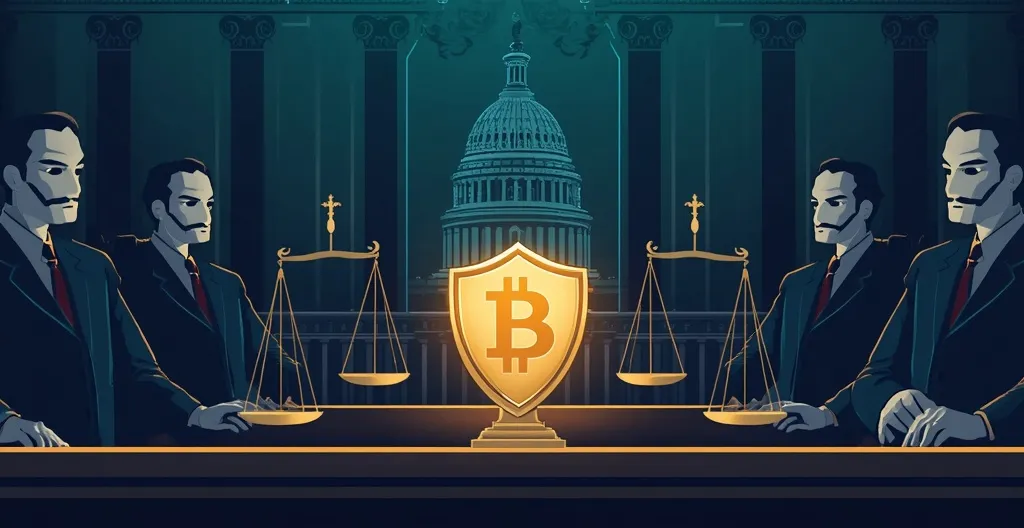
Democratic support for crypto legislation has never been unconditional. Past votes suggest possible common ground on stablecoins and market rules, but any new deal will hinge on consumer safeguards, ethics rules for public officials and clear limits on which crypto intermediaries face regulation.
- House Democrats split 78-134 on the CLARITY Act in 2025.
- Seven senators later reaffirmed support for a bipartisan version.
- Ethics rules are a stated priority, but the details remain unsettled.
- Support for stablecoin rules does not resolve the wider market-structure fight.
Past votes show support, not consensus
The House passed the Digital Asset Market Clarity (CLARITY) Act 294-134 on July 17, 2025. Among Democrats, 78 voted in favor and 134 opposed it. Every Republican who voted backed the bill.
The divide was familiar. In May 2024, 71 Democrats supported the Financial Innovation and Technology for the 21st Century (FIT21) Act, an earlier crypto market-structure proposal, while 133 voted against it. The House passed FIT21 279-136.
The Senate’s 68-30 vote for the GENIUS stablecoin bill on June 17, 2025, showed that a narrower crypto measure could win broad bipartisan support. Stablecoins are tokens designed to hold a steady value, often pegged to a currency such as the U.S. dollar. Rules for them can cover issuers, reserves, custody, disclosures and redemption.
Market structure is a broader question: how crypto assets and activities should be classified and regulated. That includes exchanges, brokers, token trading and decentralized finance (DeFi), where financial services can run through software protocols instead of conventional institutions. A vote for stablecoin rules does not settle who should oversee other crypto markets, or whether software developers should face the same duties as companies that hold customer assets or arrange trades.
What Democratic senators have said they want
On September 15, 2026, the Senate failed to invoke cloture on a motion to proceed to CLARITY. Cloture is the Senate procedure for limiting debate and moving toward action. The failed vote blocked progress at that stage, but it was not a final vote on every provision in the bill.
The next day, Senators Kirsten Gillibrand, Angela Alsobrooks, Cory Booker, Catherine Cortez Masto, Ruben Gallego, Mark Warner and Raphael Warnock reaffirmed their commitment to bipartisan CLARITY legislation. They named opportunity, regulatory certainty, consumer protection, accountability for bad actors and ethics rules for elected officials as goals.
Those are priorities, not an agreed list of amendments. The senators’ statement does not spell out the consumer protections or ethics provisions they would require. It signals a willingness to keep negotiating, not agreement on the House-passed bill’s text.
Ethics is a clear point of contention. In July, Senator Elizabeth Warren called for restrictions covering senior officials and their families. Key questions remain: who counts as a covered official or family member, which financial interests and activities would be restricted, and who would enforce the rules.
Disclosure and divestment are different approaches. Disclosure makes an interest public; divestment requires someone to sell it or otherwise give it up. Lawmakers could choose either option or set broader limits. The details available so far do not show which approach the senators would support.
Drawing the line around intermediaries
Any market-structure bill must decide which people and businesses have legal obligations. Exchanges and brokers are familiar intermediaries: they connect customers to markets and may hold assets or arrange transactions. Crypto services can be harder to classify. A company may run an interface to a protocol while users keep control of their own wallets and the underlying software processes transactions without one operator directing each one.
Custody offers one useful distinction. A custodial provider holds or controls customer assets. A noncustodial service may let users transact from wallets they control themselves. Duties should match what a provider can actually do. A service may not be able to freeze on-chain assets, yet still control access to its own website, app or other services. The practical and legal limits depend on the service’s role and control.
That distinction does not settle whether a developer, interface operator or protocol business should be regulated. A workable law would need to distinguish people who control or operate a service from those who publish software without controlling how it is used. Vague definitions invite uncertainty. Definitions that reach too far risk imposing obligations on people who cannot meet them.
How Congress divides authority between the Securities and Exchange Commission (SEC) and the Commodity Futures Trading Commission (CFTC), along with the duties attached to any new registration categories, could also become bargaining points. The details matter more than the bill’s label.
What earlier votes did and did not change
In May 2024, the Senate voted 60-38 to disapprove SAB 121, an SEC staff accounting bulletin on how certain firms account for safeguarding crypto assets. The vote did not change the law because President Joe Biden vetoed the resolution. It showed opposition to that specific accounting guidance, not agreement on a comprehensive crypto licensing framework.
The GENIUS vote likewise showed support for stablecoin legislation, not agreement on DeFi, developer liability or the full division of regulatory authority. Treating those votes as proof of a ready-made coalition for every crypto bill would confuse one area of common ground with a complete policy agreement.
Congressional hearings can scrutinize agencies and industry practices, build a public record and put pressure on lawmakers. They cannot rewrite statutory requirements on their own. A bill must pass both chambers and go to the president. If the president vetoes it, Congress needs enough votes to override the veto.
Questions and answers
-
Does the September 2026 Senate vote mean CLARITY was rejected for good?
No. The Senate failed to advance the bill at a procedural step. It did not hold a final vote on all the bill’s provisions.
-
How did Democrats vote on CLARITY in the House?
On July 17, 2025, 78 Democrats voted for the bill and 134 voted against it. The bill passed 294-134 overall.
-
What priorities have Democratic senators stated?
Seven senators reaffirmed support for bipartisan legislation focused on opportunity, regulatory certainty, consumer protection, accountability for bad actors and ethics rules for elected officials. They have not specified a final set of provisions.
-
Does support for GENIUS mean there is agreement on broader crypto rules?
No. The 68-30 Senate vote was on stablecoin legislation. It does not establish agreement on exchanges, DeFi, developer duties or broader market regulation.
-
Can congressional hearings change crypto law?
Not on their own. Hearings can inform negotiations, but statutory changes require legislation to pass both chambers and receive presidential approval, or enough votes to override a veto.
Past votes show crypto legislation can win Democratic support when lawmakers find common ground. The harder task is turning broad goals into precise rules: protecting consumers and holding businesses accountable when they control services, without imposing bank-like duties on developers or self-custody tools that lack the power to meet them.