
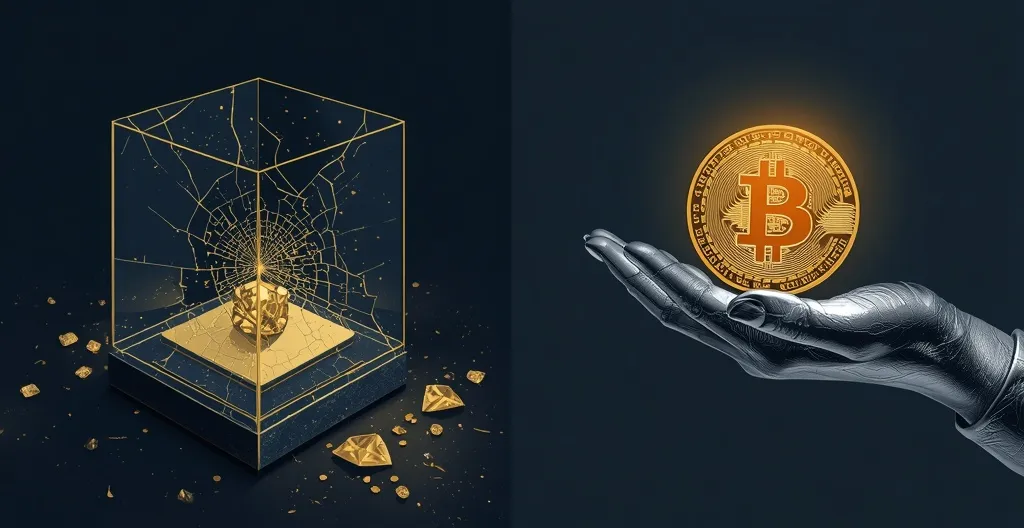
Diamonds crash to lowest prices this century as Bitcoin keeps attracting buyers who prefer transparent scarcity over old-school prestige. The headline makes a bold claim, but without a supporting data set it should be read as a broad market signal, not a precise verdict.
- Diamond prices are said to be at their weakest point in decades.
- Bitcoin is being framed as the harder, more credible scarce asset.
- The comparison is partly financial, partly cultural.
- Scarcity only works when buyers still believe the asset is worth the price.
That distinction matters. The phrase “lowest prices this century” sounds definitive, but without a named index, category, or report, nobody should pretend to know whether the claim refers to polished wholesale diamonds, natural stones, a specific size band, or the broader retail market. Diamond pricing is notoriously segmented. A 1-carat natural round brilliant is not the same thing as a Synthetic diamond, and neither behaves like a simple commodity.
That complexity is part of the problem. Diamond values depend on cut, color, clarity, carat, origin, certification, and whether the stone is natural or synthetic. That makes the market far less transparent than Bitcoin, where supply rules are fixed in code and the total supply is capped at 21 million coins. In plain English, if you hold Bitcoin yourself, you control it directly through your private keys. That is what “bearer asset” means: possession and control are the point.
Bitcoin’s supply schedule is not a marketing pitch, and it does not need a jeweler, a grading report, or a sales rep to explain why it is scarce. That said, scarcity is not the same thing as price strength. Bitcoin is still volatile, still heavily influenced by speculation, and still prone to violent swings when leverage gets squeezed or sentiment turns. Hard rules do not cancel market risk. They just make the rules clearer.
Diamonds, meanwhile, are dealing with a less flattering reality. Lab-grown stones have put pressure on natural diamond pricing, and buyers have become more sensitive to what they are actually paying for. That is a bad combination for an asset whose value has long been propped up by branding, tradition, and the old promise that “rare” automatically means “valuable.” Sometimes it does. Sometimes it just means expensive for reasons that no longer hold up. For a deeper look at the mechanics, Why Lab Grown Diamonds Are Losing Value Fast in 2026 gets into the ugly little economics that jewelry marketers would rather gloss over.
This does not mean diamonds are worthless. They still have obvious use in jewelry, and some categories remain highly prized. But the idea that diamonds are a clean, reliable store of value is harder to defend now than it was when marketing could do most of the heavy lifting. If a product’s premium depends on emotional packaging more than market necessity, it is vulnerable the moment buyers start asking uncomfortable questions.
That is where Bitcoin looks different. Its appeal is not that it is shiny or sentimental. Its appeal is that the rules are public, the supply is predictable, and the asset can be moved across borders without asking permission from a bank, retailer, or intermediary with a velvet rope. For people who care about self-custody, censorship resistance, and monetary independence, that matters more than luxury branding ever will. That is also why policies like South Carolina Passes Pro-Crypto Law Protecting Bitcoin and Kentucky Senate Passes Historic Bitcoin Self-Custody Bill matter: they are part of a broader fight over whether people get to actually hold their own money or keep renting it from gatekeepers.
Still, it would be lazy to turn this into a one-way victory lap. Bitcoin is not some magic replacement for every other asset. It does not generate cash flow, it can be wildly speculative, and plenty of people have been burned chasing pumps or getting sucked into leverage-fueled nonsense. Crypto has no shortage of grifters, and anybody pretending otherwise is selling something. Even so, adoption keeps pushing forward; hardware wallet demand has been climbing too, with Trezor Sales Soar 600% as Bitcoin Nears $100K, Self-Custody pointing to a very real shift in how some holders are thinking about custody.
So what does the comparison actually tell us? Mostly this: markets are increasingly skeptical of assets whose value depends on inherited status rather than transparent rules. Diamonds may be rare, but rarity alone does not guarantee demand. Bitcoin is imperfect, but its scarcity is verifiable, its custody is direct, and its monetary policy is not subject to a boardroom mood swing.
The bigger lesson is uncomfortable for legacy asset evangelists. A thing can be beautiful and still be a mediocre investment. It can be rare and still be overpriced. It can carry decades of symbolism and still get repriced when the market stops buying the story. Anyone still convinced luxury branding is immune to gravity should probably look at how fast sentimental pricing can collapse once buyers stop playing along.
Key takeaways
-
Why are diamond prices falling?
Diamond prices are under pressure from weaker demand in some categories and growing competition from lab-grown stones. Without a specific index or category, though, the “lowest prices this century” claim should be treated carefully. -
What does “Bitcoin surges past them” mean?
The phrase is vague. It could mean price performance, investor interest, or symbolic status, but no exact metric is provided. -
Are diamonds still a store of value?
In a narrow sense, some high-quality diamonds can hold value. But they are illiquid, highly category-dependent, and nowhere near as straightforward as assets that trade on transparent markets. -
Does Bitcoin automatically win this comparison?
No. Bitcoin has real strengths, especially fixed supply and self-custody, but it also comes with volatility and speculative risk. It is not a free lunch, just a cleaner monetary design. -
What is the real lesson here?
Rarity only matters when buyers still care. Markets reward assets with transparent rules, real demand, and usable ownership, not just a good story and a polished display case.
Diamonds are learning that scarcity alone does not guarantee value. Bitcoin’s edge is not glamour, it is verifiable rules, self-custody, and portability. That is a much tougher pitch to fake.


