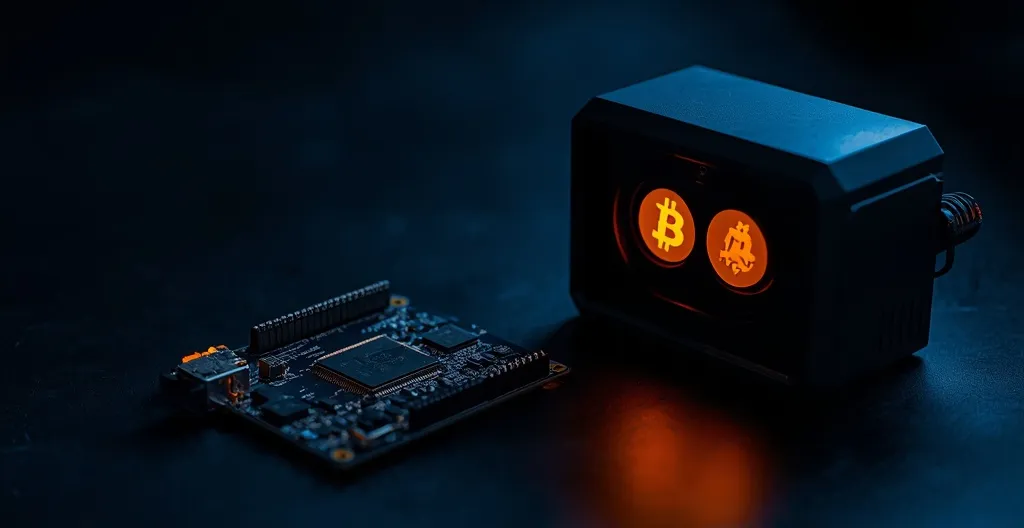
According to Pluang, Entropy32 Plus is an open-source, fully offline Bitcoin seed generator that uses radioactive decay as a physical source of randomness. That is either a clever bit of security engineering or a very expensive way to listen to the universe whisper nonsense into a Geiger counter.
- Offline Bitcoin seed generation
- Radioactive decay as an entropy source
- BIP39 seed phrases from measured decay timing
- Promising concept, not independently validated
The basic idea is simple enough. Wallet security starts with entropy, the randomness used to generate private keys. If that randomness is weak or predictable, private keys become far easier to predict or brute-force than they should be. That is how a “secure” wallet can quietly turn into a liability before a single sat is moved.
Pluang describes Entropy32 Plus as running fully offline on a custom microcontroller board, with no external software or wireless connection required. A Geiger counter captures the timing of decay events, the data is hashed with SHA-256, and the result is converted into a BIP39 seed phrase. BIP39 is the standard that turns entropy into the human-readable mnemonic words people use to back up and restore a wallet.
The offline part is the real selling point. Air-gapped key generation, meaning the device is isolated from the internet and not relying on a connected host computer, greatly reduces exposure to malware, browser exploits, cloud leaks, and wireless snooping. That matters. A lot. Bitcoin custody is one of those places where “close enough” is just another word for “please drain my wallet.”
The radioactive decay angle is more unusual. The source says the device measures decay-event timing through a Geiger counter, rather than simply relying on some vague “radioactive magic.” That distinction matters. In practical terms, the design is trying to use a physical entropy source, an unpredictable real-world process, and then normalize it through hashing before turning it into a seed phrase.
That sounds neat, and in principle it is. But neat is not the same as proven.
The biggest caveat is also the most important one: Pluang notes that the entropy quality has not yet been validated under official standards. In other words, the concept may be interesting, but the security claims are not yet backed by the kind of independent testing readers should want before trusting high-value Bitcoin custody to it.
That missing validation matters more than the marketing copy. Open source helps because it allows code and design to be inspected, forked, and audited. But open source is not a magic shield. A transparent device can still have flawed firmware, poor entropy extraction, bad assumptions about hardware behavior, or a supply chain problem waiting to bite someone in the ass.
There is also a reason Bitcoin security people get twitchy whenever hardware looks too clever. A fancy entropy source does not automatically make a wallet safer. Security depends on the full pipeline: how the randomness is measured, how it is mixed, how the seed phrase is generated, how the device displays it, and how the user stores it afterward. One weak link is enough.
Still, the concept is worth paying attention to because it points at a real problem. Bitcoin is decentralized on-chain, but wallet creation can still be embarrassingly centralized in one bad device, one sloppy workflow, or one compromised supply chain. The chain may be trust-minimized; your setup might not be. That is the part people often miss while chasing shiny hardware and Instagram-friendly self-custody theater.
For users who want an air-gapped setup and are curious about physical entropy sources, Entropy32 Plus fits a narrow but interesting niche. For everyone else, the right response is not blind excitement and not reflexive dismissal either. It is skepticism with standards: independent entropy testing, reproducible results, clear documentation, and a threat model that makes sense for real-world use.
Until that exists, the safest reading is straightforward: promising, unusual, and not yet something to trust blindly.
Related context has also appeared in coverage from Bitcoin wallet keys emerge from radioactive decay, while our own breakdown of the hardware concept, Radioactive Decay Bitcoin Seed Generator Entropy32 Plus, digs into why the claims still need hard proof before anyone gets cute with life savings.
Key takeaways
-
What is Entropy32 Plus?
It is described by Pluang as an open-source, fully offline Bitcoin seed generator that uses radioactive decay as its randomness source. -
How does it create a seed phrase?
A Geiger counter captures decay timing, the data is processed with SHA-256, and the output is converted into a BIP39 mnemonic seed phrase. -
Why does offline generation matter?
It reduces exposure to internet-based attacks, malware, and wireless compromise, which are major risks when creating wallet keys. -
Is it proven secure?
Not from the available information. Pluang says the entropy quality has not yet been validated under official standards, so the security claims remain promising but unproven. -
Does open source make it trustworthy?
It improves transparency, but it does not guarantee secure hardware, correct implementation, or safe entropy extraction. Open source is helpful; it is not a force field. -
What should users look for before trusting a device like this?
Independent entropy audits, reproducible testing, clear documentation, and a believable threat model. If those are missing, caution beats optimism every time. -
Where can readers learn the basics of seed phrases?
A practical primer like The Complete Guide to BIP39 Mnemonic Seed Phrases is a good place to start, especially for anyone who wants the boring but crucial details instead of hype. -
Why is BIP39 relevant here?
Because BIP39 is the standard used to turn entropy into the mnemonic words that back up and restore a Bitcoin wallet, and its specification lives in bips/bip-0039.mediawiki at master. -
What is the main takeaway from the radioactive-decay angle?
Physical entropy sources can be interesting and useful, but the real test is whether they are measurable, auditable, and independently validated, not just flashy enough to make hardware nerds grin. -
Is the idea of radioactive decay for seed generation new?
Variations of the concept have circulated before, including Entropy32 Plus Turns Radioactive Decay Into Bitcoin (BTC) and similar write-ups such as New Bitcoin seed generator uses radioactive decay for true, but novelty alone never equals security.