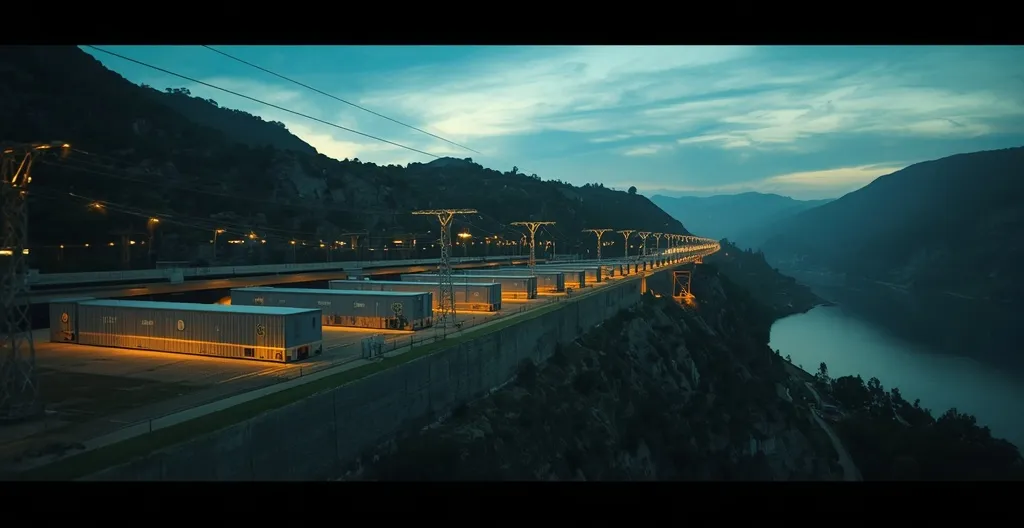
Bitcoin mining is finding an unlikely home in Ethiopia, where cheap hydropower and surplus electricity are turning a power problem into a revenue stream. The boom is real, but so is the limit: authorities have already frozen new power permits for crypto miners as the grid fills up.
- 25 firms are already operating Bitcoin mining facilities in Ethiopia.
- Nearly 20 more are waiting for access, according to Mariblock.
- The draw is low-cost hydropower and so-called stranded power, electricity that would otherwise go unused at certain times.
- New power permits have been frozen because access is now at capacity.
- The upside is foreign-currency revenue; the downside is pressure on a grid serving a country where electrification is still incomplete.
Ethiopia is not a place most people would have put on a Bitcoin mining map a few years ago. That is exactly why the story matters. Miners follow electricity, not vibes, and Ethiopia has a tempting mix of abundant hydro generation, surplus capacity, and a state utility that wants to turn spare power into hard currency.
According to Mariblock, Ethiopian Electric Power (EEP) has been selling electricity to crypto miners in foreign currency. The utility is also monetizing what it calls “stranded power, ” which is surplus electricity that would otherwise go unused during off-peak periods. In plain English: if the power is there and nobody else is using it, miners can pay to absorb it. That makes Bitcoin mining less like a mystical blockchain movement and more like a very blunt energy trade.
The numbers help explain why miners are lining up. Mariblock reports that 25 firms already operate Bitcoin mining facilities in Ethiopia, with nearly 20 more waiting for access. It also says Ethiopia generated $55 million from Bitcoin mining deals in 10 months in 2024. In the broader power sector, EEP reportedly exported nearly 7% of Ethiopia’s generated power in the past fiscal year, bringing in $338 million in foreign currency, with crypto mining companies among the largest contributors.
Those figures show why the government utility would be interested. Mining is an unusually simple customer to serve: give it power, get paid, and move on. No factory floor, no shipping containers, no long supply chain. Just electricity in, dollars out. Very modern. Very ugly. Very Bitcoin.
But the “cheap power” pitch only works until the grid starts getting crowded. EEP CEO Ashebir Balcha said:
“From our current assessment, access appears to be at capacity.”
That is the key detail. Ethiopia is not opening the floodgates wider; it is slamming on the brakes. Mariblock reports that new power permits for crypto miners have been frozen because access has reached capacity. That should put to rest any fantasy that the country is becoming some boundless Bitcoin paradise. It is becoming a market with limits, and those limits are showing up fast.
The power source matters too. Much of the appeal comes from low tariffs and hydropower, including electricity tied to the Grand Ethiopian Renaissance Dam, or GERD. Hydropower is cleaner than fossil-fuel generation, but cheap and available power is what really attracts miners. The “green” label gets thrown around a lot in crypto, but the real question is not whether the electricity is cleaner than coal. It is whether the country can afford to hand it to miners when households and businesses still need access.
That is where the story gets politically sensitive. Ethiopia still has a long way to go on electrification, with only about half of the population currently having access to electricity. So every megawatt allocated to miners is a megawatt that cannot be used elsewhere. If the public starts to feel that speculative operations are getting priority over local demand, the backlash writes itself.
This is also why “crypto powerhouse” is a slippery label. The reporting supports Ethiopia as a growing Bitcoin mining destination, not necessarily a broad crypto center with a deep trading, development, and adoption ecosystem. What is visible here is mainly mining and energy sales. That matters, but it is not the same thing as becoming a full-blown blockchain hub.
Bitcoin mining itself is straightforward once you strip away the marketing noise. Miners use specialized computers to solve expensive computational puzzles under a system called proof of work. That process secures the network and, in return, miners earn newly issued bitcoin and transaction fees. The whole operation is energy-intensive by design, which is why it clusters in places where electricity is cheap and plentiful.
The U.S. Energy Information Administration has long described cryptocurrency mining's impact on U.S. electricity demand as highly electricity-intensive and mobile. That mobility is the reason Ethiopia can attract miners quickly, and also the reason they can leave just as quickly if economics or policy shift. Governments like the revenue. They also tend to get nervous once the load gets large enough to compete with domestic needs. Funny how that works.
Ethiopia’s current approach looks pragmatic rather than ideological. The utility is trying to monetize power that might otherwise be curtailed or underused, while earning foreign currency in the process. That is a sensible move on paper. It is also fragile. Once access is maxed out, the state has to decide whether miners keep getting preferential treatment or whether power is reserved for broader economic and social needs.
The bigger lesson is simple: Bitcoin mining goes where energy economics allow it. Ethiopia has the ingredients, low-cost hydropower, surplus generation, and a utility looking for revenue. But the country also has a constrained grid and a population that still lacks universal electricity access. That means the mining boom is real, but it is not a blank check.
The money is good. The politics are harder. And if the grid gets squeezed, the miners will have to go find another cheap outlet for their hash power.
Key takeaways
-
Why are Bitcoin miners moving into Ethiopia?
Because the country offers low-cost hydropower, surplus electricity, and a utility willing to sell power in foreign currency. For a broader policy read on the tradeoffs, see Ethiopia’s Bitcoin Mining Push: State Power Play or Risky. -
How big is the mining footprint?
Mariblock says 25 firms are already operating, with nearly 20 more waiting for access. That makes Ethiopia notable, but not the center of the mining universe. -
Is Ethiopia still open to more miners?
Not right now. EEP has frozen new power permits because access appears to be at capacity. -
Does this make Ethiopia a true crypto powerhouse?
Not yet. The evidence points to Ethiopia as an emerging Bitcoin mining destination, not a broad crypto hub. -
Why does this matter for energy policy?
Because mining affects grid demand, electricity allocation, and foreign-currency earnings at a time when much of the country still lacks power access. For context on the clean-energy angle, see Ethiopia Harnesses Renewable Energy for Bitcoin Mining Amid.
Further reading
For the energy side of this Bitcoin mining boom, these sources add useful context.