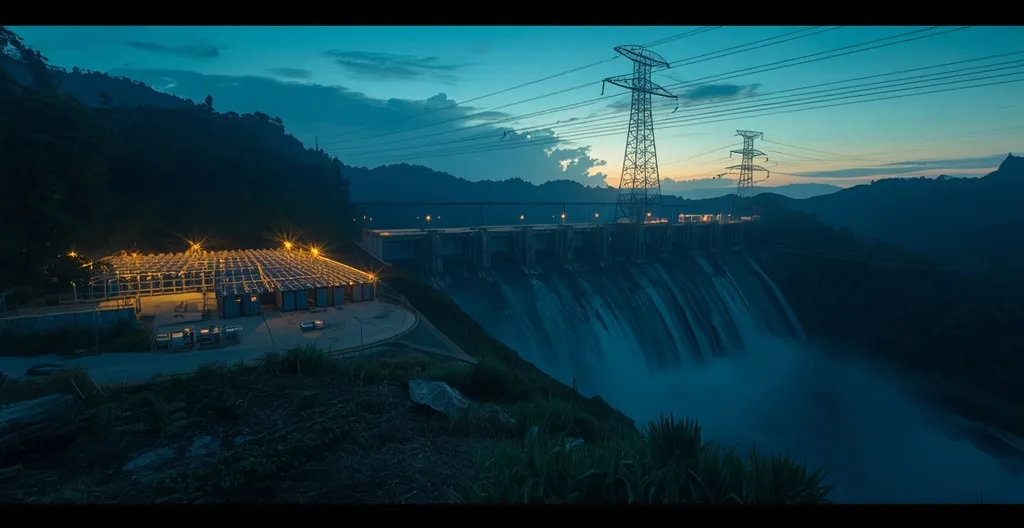
HIVE Digital Technologies has turned Paraguay’s hydropower into a serious Bitcoin mining engine, with 300 MW of capacity online and a completed 100 MW Phase 3 expansion at Valenzuela.
- 300 MW online in Paraguay
- 100 MW Phase 3 Valenzuela completed
- 24 EH/s global mining capacity surpassed
- Cheap hydropower helps, but policy risk still bites
- Mining cash flow is also funding HIVE’s AI/HPC push
According to HIVE Digital Technologies, the company has now brought its full 300 MW Paraguay capacity online, with the 100 MW Phase 3 expansion at Valenzuela completed two weeks ahead of schedule. That is not a token move. It is a major industrial footprint built around one basic truth of Bitcoin mining: electricity is everything.
For miners, the hardware gets the headlines, but power is the real boss. If your electricity costs are too high, your mining operation becomes a very expensive space heater with delusions of grandeur. Paraguay’s hydropower has given HIVE a way to scale in a lower-cost energy market while leaning on renewable generation rather than fossil-fuel-heavy grids.
HIVE’s own numbers show the scale of the push. The company said it surpassed 24 EH/s of global mining capacity in November 2025. EH/s stands for exahashes per second, a measure of how much hashing work a mining fleet can perform. In plain English, more EH/s means more ability to compete for Bitcoin block rewards.
HIVE also reported that it mined 289 BTC in October 2025, up 8% from 267 BTC in September and up 147% year over year from 117 BTC in October 2024. The company said average hashrate was 21.9 EH/s, peak hashrate hit 23.6 EH/s, and fleet efficiency came in at 17.7 J/TH. That last number means joules per terahash, a basic efficiency metric. Lower is better. Miners love lower. Their accountants love lower even more.
The Paraguay buildout matters because it supports that kind of operational math. HIVE had already said in August 2025 that it had surpassed 15 EH/s and was pushing toward 18 EH/s as Phase 2 of its Yguazú project advanced. By November, the company’s Paraguay footprint had moved well past that point. This is what execution looks like when it is backed by power access instead of PowerPoint.
Still, cheap hydropower is not a magic shield. Bitcoin mining remains brutally exposed to price swings, rising network difficulty, hardware depreciation, and policy changes. A miner can do everything right on the engineering side and still get squeezed if Bitcoin drops, difficulty climbs, or a government decides the terms need “adjusting, ” which is often bureaucrat-speak for “we found a new way to charge you.”
That risk is not theoretical. HIVE has said it faced an unexpected tariff increase on hydroelectricity in Paraguay last summer. That should be a reminder to anyone romanticizing the setup: renewable power is valuable, but it is still subject to regulation, infrastructure constraints, and politics. No jurisdiction is a permanent paradise just because the electricity is green and the spreadsheets look handsome.
Even so, Paraguay remains attractive for Bitcoin mining because hydropower can offer relatively low-cost, stable electricity. That is the core of HIVE’s strategy. The company appears to be using energy arbitrage in the most straightforward way possible: find a place with abundant power, build there, keep operating costs down, and convert that margin into BTC.
There is a broader strategic wrinkle too. HIVE is not treating Bitcoin mining as the final destination. The company says mining revenue is helping fund its expansion into AI and high-performance computing infrastructure in Canada, including Tier III+ facilities. So while Paraguay is the production base for Bitcoin, it is also part of a financing engine for a very different kind of compute business.
That makes HIVE’s play more interesting than a simple “bullish on mining” story. It is not just hoarding hashpower and hoping for line go up. It is using Bitcoin mining as a cash-generating bridge while repositioning parts of the business for AI/HPC. Whether that pivot pays off better than the mining operation itself is the real question, and nobody gets to answer that with vibes alone.
For readers who care about decentralization and hard infrastructure, the appeal is obvious. Countries with abundant power become strategic hubs for compute. Bitcoin mining can pull capital toward places that can actually support industrial-scale energy use, instead of forcing everything into overregulated or overpriced markets that like to talk about innovation while making it impossible to build anything useful.
But the skeptical view deserves equal airtime. Corporate mining disclosures are self-reported, and they usually sound better than the full mess on the ground. HIVE’s Paraguay numbers show real scale, but they do not remove the usual risks that come with mining in any single jurisdiction. Cheap watts are great until the tariff changes, the grid gets strained, or the regulatory mood shifts.
That is why the 300 MW figure matters, but not in the simplistic “all in forever” sense. It signals that HIVE sees Paraguay as a serious long-term mining base. It also shows the company is willing to commit capital where the energy economics make sense. In Bitcoin mining, that is the game: secure power, keep your machines efficient, survive the cycles, and avoid the kind of overleveraged stupidity that has buried weaker operators time and again.
Key questions and takeaways
-
Why is Paraguay such a big deal for Bitcoin miners?
Paraguay’s hydropower gives miners access to relatively cheap, renewable electricity. That can lower operating costs and make large-scale mining much more viable. -
What has HIVE actually built in Paraguay?
HIVE says it has brought 300 MW of Paraguay capacity online and completed its 100 MW Phase 3 expansion at Valenzuela. That points to a substantial operational footprint, not a vague future plan. -
What does 24 EH/s mean?
EH/s means exahashes per second, a measure of Bitcoin mining power. The higher the figure, the more hashing work a miner can do and the better its shot at earning block rewards, all else equal. -
Is cheap hydro enough to guarantee success?
No. Bitcoin price swings, rising network difficulty, hardware wear, and tariff or policy changes can still crush margins. Cheap electricity helps, but it does not eliminate the risks. -
Why does HIVE keep mentioning AI and HPC?
Because mining is also helping fund a broader pivot into AI and high-performance computing infrastructure in Canada. Paraguay supports the Bitcoin side, while the company uses mining cash flow to build the next phase. -
What is the biggest risk in Paraguay?
Policy and pricing changes. HIVE has already disclosed an unexpected hydroelectric tariff increase in Paraguay, which is a blunt reminder that even good mining jurisdictions can change the rules.
HIVE’s Paraguay expansion is a real bet on cheap hydropower, not a slogan. The upside is clear: lower-cost energy, large-scale mining, and a strong operating base. The downside is just as clear: power is king, but kings still have to deal with governments, markets, and physics.
Further reading
A few useful context pieces on HIVE’s Paraguay push, mining economics, and the latest difficulty swings.
- HIVE Digital Technologies bets big on Paraguay’s hydropower
- HIVE Digital Technologies Ltd. Management's Discussion and
- The State of Bitcoin Mining in Paraguay (2026)
- HIVE Digital Technologies (HIVE) stock price, news & overview
- HIVE Digital Boosts Bitcoin Mining by 317% with Paraguay hydro power acquisition
- Bitcoin mining difficulty drops 10% in rare downward adjustment
- Bitcoin mining difficulty plunges 10.09% as miners face price pressure and AI competition