
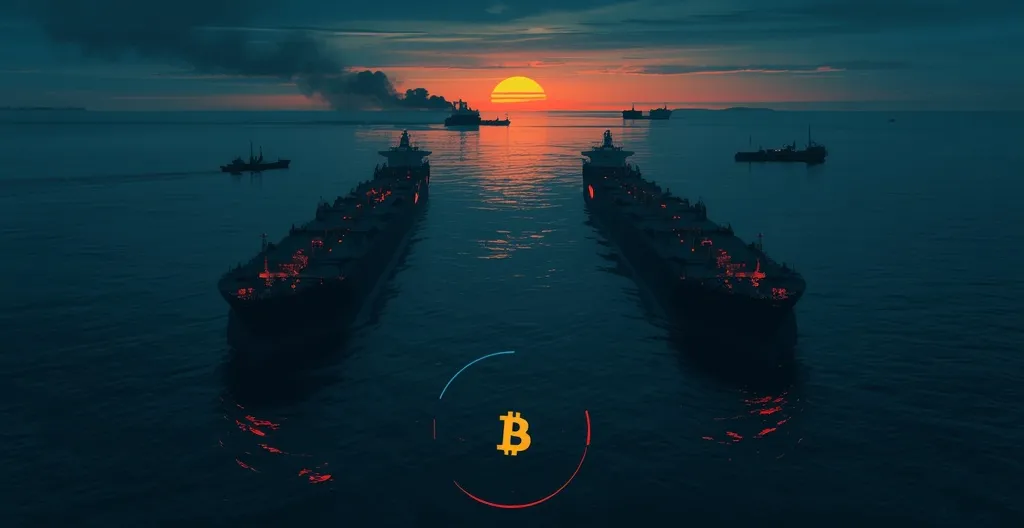
Bitcoin is not watching tanker charts for fun, but it does pay attention when the Strait of Hormuz starts flashing geopolitical warning lights. The problem is simple. The headline’s “392% traffic jump” is not verified, and without a clear source, timeframe, or definition of “traffic, ” it looks more like a juicy number than a solid market signal.
- Hormuz is a real oil chokepoint
- The 392% figure is not verified
- Bitcoin’s link to oil is indirect, not automatic
The Strait of Hormuz matters because it is one of the world’s most important oil shipping lanes. When the route gets tense, oil traders do not need an actual disaster to panic. They can start pricing in risk the moment shipping becomes harder, costlier, or more politically controlled. That is why Bitcoin (BTC) Braces for Oil Volatility as Hormuz Traffic can matter to crypto traders even when the connection feels a bit sideways.
That is the real story here. Not a clean surge in “Hormuz traffic, ” but a messy, narrow shipping workaround that appears to involve a limited number of vessels. According to the reporting summarized in the research notes, Iran establishes ‘safe’ shipping corridor for approved and said Iran has set up a de facto vetted corridor through its territorial waters, with at least nine ships using it. That is significant, but it is not the same thing as a 392% jump in overall traffic through the strait.
And that distinction matters. Markets love a neat percentage because it makes chaos look measurable. But if nobody says what was measured, vessels, AIS signals, tonnage, transits, or something else, the number is basically a suit on a scarecrow. For context, there has even been a broad 2026 Strait of Hormuz crisis reference floating around in the public record, which only underscores how fast the narrative around this chokepoint can get inflated, recycled, or dragged into geopolitical fan fiction.
The research notes point to a more specific picture. Lloyd’s List reported that Iran has created an approved transit route through its waters for vetted vessels, with the passage reportedly running near Larak Island, where IRGC Navy and port authorities inspect ships. The same reporting said several governments, including India, Pakistan, Iraq, Malaysia and China, were in talks with Tehran over the arrangement, and one tanker operator reportedly paid about $2 million for transit. If you want a sharp example of how these tensions can ripple into crypto chatter, see how Iran’s Strait of Hormuz Shipping Plan Fuels Bitcoin, USDT when sanctions pressure and logistics uncertainty start mixing in the same pot.
That does not mean the strait is “safe.” It means access is being controlled, negotiated, and monetized. Security analysts cited in the notes warned that Iranian approval does not guarantee safety, and a ship can still be delayed, detained, or seized if the political mood shifts. That is not free-flowing trade. It is a pressure valve with a toll booth attached.
The macro link to Bitcoin is real, but it is not magical. BTC does not move in lockstep with oil prices, and it certainly does not have some mystical barrel-to-blockchain converter. Instead, oil volatility can feed into broader market conditions: higher energy prices can stoke inflation fears, inflation fears can keep interest rates elevated for longer, and higher rates usually make speculative assets less comfortable to own. Crypto often gets dragged around by that mood whether it deserves it or not. On days when markets wobble, you can see things like Bitcoin slightly lower, holds at $64k amid hit to risk as investors price the mess through a broader risk lens.
That said, Bitcoin is still Bitcoin. Sometimes it sells off with risk assets. Sometimes it shrugs off the noise. Sometimes it catches a bid when investors decide they want something scarce, liquid, and outside the usual policy mess. So the honest view is not “oil up, BTC down.” It is “macro shock in one part of the world can ripple into crypto through inflation and risk sentiment, but the reaction is rarely tidy.” In worse versions of this same setup, headlines have even framed it more brutally, like Iran’s Strait of Hormuz Closure Triggers Crypto Crash, which is a reminder that markets can go from “meh” to “oh crap” very quickly.
The bigger takeaway is that shipping chokepoints still matter in a supposedly digitized world. Hormuz is one of those places where geopolitics, sanctions, and logistics collide in a way that can move energy markets fast. And energy markets still have the power to reshape the mood across everything from stocks to bonds to Bitcoin. In that sense, the broader framing in Strait of Hormuz Crisis: Bitcoin Stands Firm as Oil Prices is not wrong: when oil goes berserk, crypto does not get to pretend it lives in a vacuum.
There is also a darker layer here that deserves no sugar-coating. Sanctions and selective transit rules create gray-market logistics, where access can be sold, controlled, and weaponized. That is not healthy commerce. It is state leverage with paperwork.
For crypto readers, the practical lesson is straightforward: do not overread Bitcoin through oil, but do not ignore oil either. BTC is decentralized, but it still trades inside a centralized world of shipping lanes, inflation, central banks, and geopolitical brinkmanship. Freedom tech does not get to opt out of gravity.
Key takeaways
-
Is the 392% Hormuz traffic jump confirmed?
No. The available reporting does not verify that figure, and it does not explain what kind of “traffic” is being measured. -
Why does the Strait of Hormuz matter so much?
It is a critical oil shipping chokepoint. Any disruption, restriction, or political control there can jolt oil prices and freight costs. -
What does the Iranian shipping corridor show?
It suggests a limited, negotiated transit route for selected vessels, not a broad return to normal shipping conditions. -
How could this affect Bitcoin?
Indirectly, through oil-driven inflation fears, changing interest-rate expectations, and broader risk sentiment. -
Is Bitcoin a reliable hedge against oil shocks?
Not reliably. Sometimes the hedge narrative shows up, but in practice BTC often behaves more like a high-beta risk asset than a clean inflation hedge. -
What should readers trust most here?
The geopolitical risk around Hormuz is real. The “392%” figure is the part that needs skepticism until the underlying data is clearly identified.


