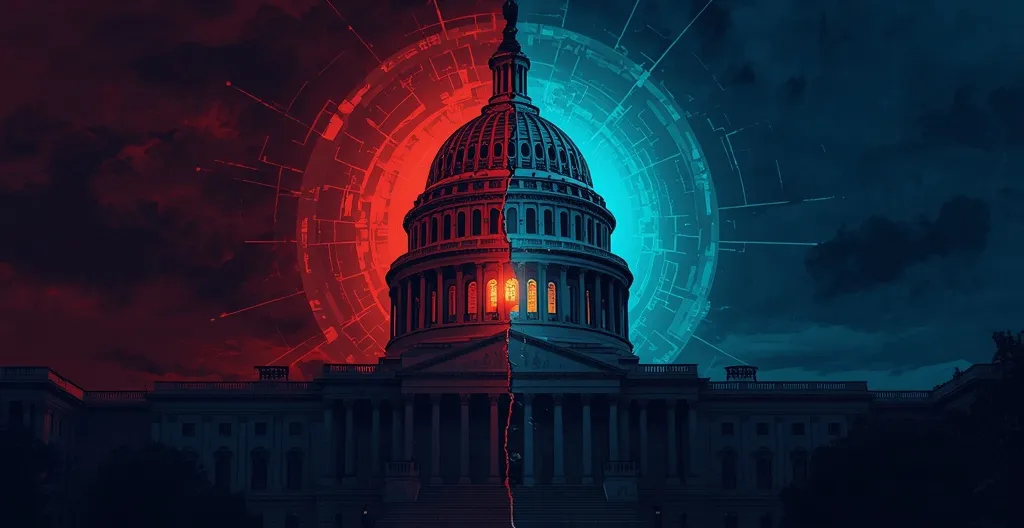
Charles Hoskinson says U.S. crypto policy is getting dragged into the partisan sewer, and if that keeps up, the CLARITY Act could take the hit.
- Partisan risk: Hoskinson says crypto is being framed as “Crypto = Trump = Corruption”
- Bill at stake: The CLARITY Act would set rules for SEC vs. CFTC oversight
- Big picture: Political branding could stall clearer U.S. crypto regulation
The Cardano founder is warning that market-structure legislation may get kneecapped not by bad policy, but by election-year tribalism. His point is pretty simple. Once crypto gets treated like a proxy war over Donald Trump, lawmakers stop debating rules and start voting their team colors.
Hoskinson posted on X:
“As predicted, the 2026 talking points are Crypto = Trump = Corruption”He also wrote that
“the left is expected to fall in line and vote against all Crypto bills.”
That is his claim, not a verified forecast. But it captures the risk clearly. If crypto becomes a political football, bipartisan progress gets much harder.
He also said:
“No progress can be made if crypto is partisan, ”and noted that he has been making the same point “for over a year in my interviews.”
The CLARITY Act is a market-structure bill, which means it is meant to define the rulebook for crypto in the United States. In plain English, it tries to answer the question that has burned the industry for years: when is a digital asset a security, and when is it a commodity?
That distinction matters because it determines which regulator gets the bigger seat at the table. Securities fall under the SEC, the Securities and Exchange Commission. Commodities fall more under the CFTC, the Commodity Futures Trading Commission. The bill is also about registration, disclosures, and how crypto intermediaries are supervised, not just a neat little jurisdiction chart for Washington to pin to the fridge. For readers who want the legal weeds, Clarifying the CLARITY Act: What To Know About lays out the basics, while this broader look at Regulation of cryptocurrency helps frame why this mess keeps recurring.
That clarity matters for builders. When nobody knows whether a token launch will be treated like a securities issue, startups spend more time paying lawyers than shipping product. Compliance costs rise, fundraising gets harder, and the safest move becomes not building in the U.S. at all. Great for paperwork. Awful for innovation.
Hoskinson’s warning is that the politics around the bill are now poisoning the process. He blamed David Sacks, Trump’s crypto adviser, and said the rollout helped tie the issue too closely to Trump-era politics and White House-linked crypto messaging. He has also taken aim at the delay itself in previous remarks, as covered in Cardano’s Hoskinson Slams CLARITY Act Delay, Demands Crypto, and later doubled down in coverage of how he sees the process being handled in Charles Hoskinson Doubts CLARITY Act Timeline, Calls for.
In his view, that is exactly how a technical policy debate turns into a mess. Crypto already took a serious reputational hit after FTX, which damaged public confidence and hardened Washington’s skepticism. Add the Trump-linked meme coin spectacle into the mix, and suddenly lawmakers who might have considered market structure on the merits see a political grenade instead.
To be fair, crypto keeps handing critics easy ammo. The industry cannot spend one day demanding respect and the next day acting like a carnival ride with a token launch button. If it wants serious regulation, it needs to stop flirting with clown economics and pretending that noise is strategy.
Still, Hoskinson’s bigger point stands: regulation should be written for the technology, not for the election cycle. If every crypto bill becomes a test of loyalty to or hatred of Trump, then the U.S. ends up choosing gridlock over clarity. And gridlock is a gift to the biggest incumbents, the biggest legal teams, and the slowest possible version of progress.
That is especially brutal for future projects. Large networks like Cardano and XRP would benefit from clearer rules, but the real damage lands on the next wave of founders trying to launch tokens, raise capital, and get listed without stepping on a regulatory landmine. When the rules are fuzzy, everyone moves slower and everyone pays more.
The CLARITY Act is not magic. It is a framework, not salvation. But frameworks matter. They tell builders where the lines are, tell regulators where their authority begins and ends, and tell the market whether it is dealing with law or with guesswork. Some critics have gone further and argued the politics around the bill could even be used against the industry later, which is why Charles Hoskinson not a fan of CLARITY Act, warns has resonated so strongly. Earlier commentary from him also drew a sharper line between regulatory politics and industry infighting, including Cardano’s Hoskinson Slams Ripple Over CLARITY Act: Selfish and Cardano Slumps as Hoskinson Slams CLARITY Act and U.S.
Hoskinson’s message is basically a warning flare: if crypto gets locked into partisan identity politics, the industry may miss its best chance at a workable U.S. rulebook. That would be a self-inflicted wound, and a dumb one. Even lawmakers and policy shops trying to untangle the text have been forced into uncomfortable questions about how far the bill goes, what it leaves vague, and whether it can survive the sausage factory intact, precisely the kind of context covered in Cookie Consent and Privacy Management and Cardanos Founder Warns Democrats Will Kill Clarity Act.
Here’s what matters most.
Key questions and takeaways
-
Why is Hoskinson worried about the CLARITY Act?
He believes partisan framing could sink it, especially if Democrats start seeing crypto as a Trump-aligned issue instead of a regulatory one. -
What does the CLARITY Act do?
It is a U.S. market-structure proposal meant to define when a digital asset falls under SEC oversight versus CFTC oversight, while also setting broader registration and disclosure rules. -
Why does that matter so much?
Because legal clarity affects everything from token launches to exchange listings to fundraising. Without it, builders face uncertainty and higher compliance costs. -
Is Hoskinson saying the bill is already dead?
No. He is warning that partisan politics could derail momentum and make passage much harder. -
What is the biggest risk for U.S. crypto?
Prolonged uncertainty. If lawmakers keep turning crypto into a culture-war issue, the U.S. risks rewarding the biggest incumbents while punishing new builders.
The bottom line is ugly but straightforward: crypto does not benefit from becoming a partisan mascot. If the industry wants real rules, it has to stop being used as campaign sludge. Otherwise, the next serious U.S. crypto framework may die not from bad law, but from stupid politics.