IREN Stock Gains as Bitcoin Miner’s AI Pivot Draws Nvidia and Microsoft Deals
IREN is being priced less like a scrappy Bitcoin miner and more like an AI infrastructure landlord, and the market is rewarding the pivot. Shares rose 3.18% to $59.96 as investors leaned into the company’s move from cyclical BTC mining toward contract-based AI cloud and high-performance computing revenue.
- IREN shares: up 3.18% to $59.96
- Business shift: Bitcoin mining to AI cloud and HPC infrastructure
- Big names: reported Microsoft and Nvidia agreements
- Reality check: rich valuation, dilution, and execution risk still loom
That’s the headline: IREN is no longer being treated like a plain-vanilla Bitcoin miner. Investors are betting that power capacity, data centers, and AI compute contracts can deliver steadier revenue than the boom-bust economics of mining Bitcoin for a living. And yes, the market loves a new narrative almost as much as it loves ignoring the bill that comes with it.
IREN, listed on NasdaqGS, traded between $58.00 and $61.51 on volume of roughly 38.0 million shares, after closing above its prior $58.11 finish. Over the past 52 weeks, the stock has swung from $9.825 to $76.87, which is exactly the sort of range that reminds investors miner-to-AI names can be exhilarating one month and deeply annoying the next.
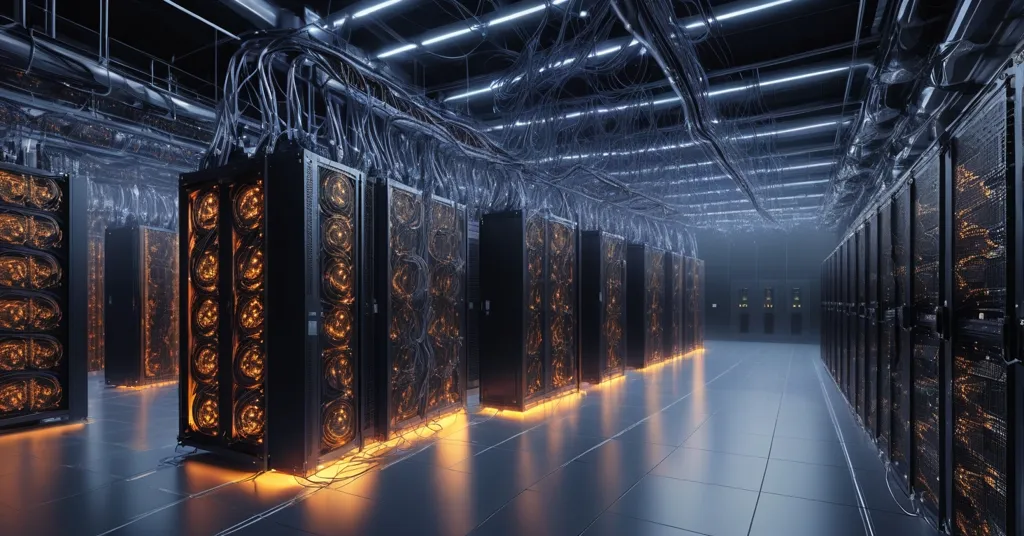
The company says it controls around 5 gigawatts of power capacity. That’s a serious asset in both Bitcoin mining and AI data centers. In practical terms, it means IREN has the kind of energy footprint that can support large-scale compute operations, which is increasingly valuable as AI buyers chase more capacity and less downtime. Power is the prize. The GPUs, racks, and networking gear are just the hardware theater around it.
For readers less familiar with the terminology, high-performance computing, or HPC, refers to large-scale computing used for demanding workloads such as AI model training, inference, and complex simulations. AI cloud is similar in spirit: companies rent out compute power, often with long-term contracts, instead of relying only on the unpredictable economics of Bitcoin mining. That difference matters. Bitcoin mining revenue depends heavily on network difficulty and BTC price, while AI infrastructure can be anchored by contract demand if customers actually stick around and pay.
The market’s enthusiasm picked up after reported commercial ties with Microsoft and Nvidia. A Microsoft-linked agreement covering about 200 megawatts of IT load was cited as a major catalyst. IT load simply means the amount of power available for customer equipment, like servers and GPUs. If fully ramped, the contract is expected to generate an annualized revenue run-rate of around $1.94 billion.
That figure is eye-catching, and that’s the point. It suggests the company may be transitioning from a volatile mining business into something closer to a utility-like compute provider. But “annualized revenue run-rate” is not the same thing as guaranteed cash in the bank. It’s a snapshot of what revenue could look like if the current pace is sustained. Markets love run-rates right up until the ramp stumbles.
Then there is Nvidia, the AI chip kingpin that knows exactly where the compute bottlenecks live. IREN disclosed a five-year AI cloud agreement with Nvidia valued at about $3.4 billion. Nvidia also reportedly holds conditional warrants to purchase up to 30 million shares at $70 each. Those warrants matter because they signal a form of alignment: if IREN executes, Nvidia gets exposure beyond the contract itself. Conditional warrants are basically equity rights tied to certain conditions, which is corporate finance’s way of saying, “we’ll pay if this actually works.”
“IREN’s pivot from cyclical Bitcoin mining toward contract-based AI cloud/data center infrastructure”
That one sentence captures why the stock has caught fire. Bitcoin mining can be brutal: margins get crushed by rising network difficulty, halvings, energy costs, and the broader mood of the BTC market. AI data center demand, by contrast, has increasingly favored long-duration contracts and capacity buildouts. In plain English, miners are trying to turn volatile block rewards into more predictable infrastructure revenue. That is not nonsense. It can be a smart evolution. But it is also hard, capital-intensive, and very easy to oversell.
The numbers behind the AI side are growing fast, at least from a small base. Quarterly AI cloud revenue reportedly rose from about $4 million a year earlier to roughly $34 million, an increase of more than 750%. That is real growth, and it helps explain why the market is willing to re-rate the stock. Still, investors should keep perspective: a huge percentage gain from a small starting point is impressive, but it does not automatically justify a premium multiple or erase the need for execution.
Trailing 12-month revenue was cited at around $757 million, while IREN’s P/E ratio sat near 137. That is not cheap, not close, not even “we’ll pretend it is if we squint.” Simply Wall St was cited as suggesting a fair multiple of about 78, which still leaves the market pricing in a lot of future success. Valuation is the real debate here. The bullish camp sees a scarcity asset with power, land, and growing AI demand. The skeptical camp sees a richly priced stock that still has to prove it can build, fill, and monetize the infrastructure at scale.
Fourteen analysts were cited with an average 12-month price target near $81, implying roughly 32% upside from the latest close. That sounds decent on paper, but analyst targets are often just a polite way of saying “we think this story has room to keep running.” They are not a substitute for actual cash flow, and they certainly do not immunize investors against a capex-heavy grind.
The other thing investors should not ignore is dilution. IREN’s share count reportedly increased about 55% year over year to around 332 million shares. That’s a big jump, and it matters. More shares outstanding means each existing share owns a smaller piece of the company unless growth outruns dilution. For shareholders, that’s the sort of math that can turn a good-looking chart into a less thrilling reality. Revenue growth is nice; revenue growth after a share-count explosion is a different animal entirely.
This is where the “miner-to-data-center” trade gets tricky. The pitch is seductive: reuse energy assets, sign AI contracts, collect higher-margin revenue, and ride the AI wave. Sometimes that works. Sometimes it becomes a very expensive promise wrapped in a nice PowerPoint deck. The hard part is not announcing a pivot. The hard part is building enough infrastructure on time, sourcing equipment, financing the capex, managing power delivery, and keeping customers happy once the contracts become real operations instead of press-release fuel.
The Microsoft and Nvidia links matter because they lend credibility to the transition. They suggest IREN is not just saying “AI” because it’s a trendy buzzword that makes stock traders sit up like labradors hearing a treat bag. But even with those relationships, the usual risks remain: execution delays, power constraints, equipment shortages, financing pressure, and the possibility that the market has already priced in too much perfection.
There’s also a broader market context worth noting. Bitcoin miners have long had a structural advantage in one very specific area: they already own power access and data-center-like infrastructure. That makes them far better positioned than random startups trying to jump into AI hosting from scratch. But the flip side is that miners are also used to operating in an industry where the economics can turn ugly fast. So when they pivot, they are not leaving risk behind; they are simply exchanging one set of headaches for another. At least the new headaches come with more flattering valuation multiples.
- What is driving IREN’s stock higher?
Investors are buying into the company’s shift from Bitcoin mining to AI infrastructure, especially after reported commercial momentum tied to Microsoft and Nvidia. - Why do Microsoft and Nvidia matter?
They act as credibility signals. If large, serious buyers are involved, it suggests IREN’s power and data-center capacity may have real demand behind it, not just a shiny narrative. - Is IREN still mainly a Bitcoin miner?
Operationally, the company has mining roots, but the market is increasingly valuing it as an AI cloud and high-performance computing provider. - How big is IREN’s infrastructure base?
IREN says it controls around 5 gigawatts of power capacity, which is a substantial foundation for both mining and AI compute operations. - Is the stock cheap?
No. A cited P/E ratio around 137 suggests investors are already paying up for a lot of future growth. - What are the biggest risks?
Execution risk, heavy capital spending, dilution, customer ramp delays, and the chance that AI infrastructure expectations get ahead of reality. - Is IREN a crypto token or blockchain project?
No. It is a publicly traded infrastructure company, not a token launch or blockchain coin.
One final clarification is worth making because crypto circles love confusion almost as much as they love ticker symbols: IREN is not a token, not a chain, and not some new DeFi gimmick. It is a real company trying to turn power, compute, and existing infrastructure into a more durable business. If it executes, the move from Bitcoin mining to AI infrastructure could be a smart adaptation. If it stumbles, investors may discover that “AI exposure” is just another expensive buzzphrase with a bigger electricity bill attached.