
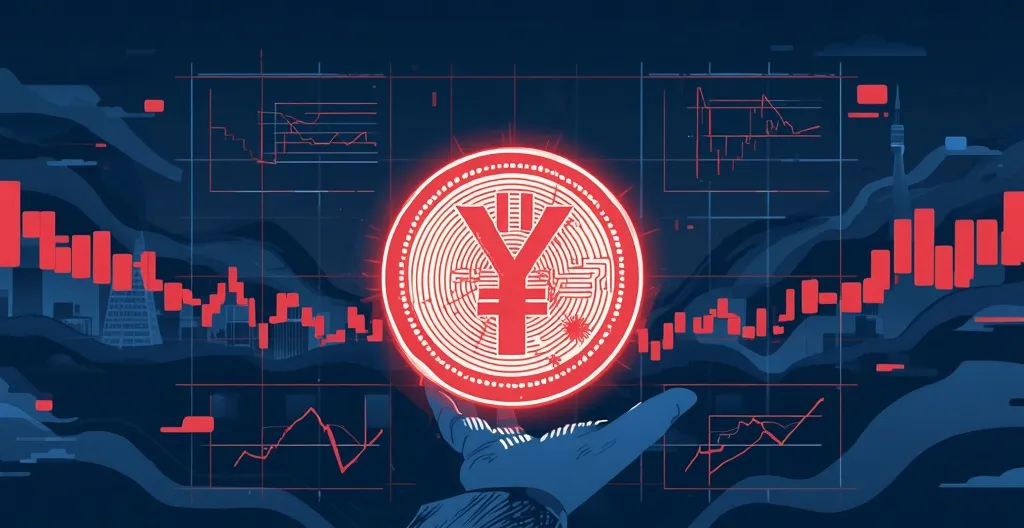
Japan deploys $59B yen intervention and eyes Fed repo is not supported by the material available here. What can be said with confidence is simpler: yen volatility has been a recurring problem, and Japan’s authorities have every reason to care when the currency starts moving in a disorderly way.
- $59B intervention: unconfirmed
- Fed repo facility angle: unconfirmed
- Yen volatility: the real backdrop
- Japan’s policy toolset: intervention, warnings, liquidity management
That matters because a weak or swinging yen is not just a trader’s toy. It can raise import costs, squeeze households through higher prices for energy and food, and put pressure on policymakers who would rather not be seen watching the currency get hammered in real time.
Japan’s Ministry of Finance is usually the authority associated with foreign-exchange intervention, with the Bank of Japan often acting as the operational agent. In plain English, that means the state can step into the FX market to buy yen and support the currency, or sell it if it wants the opposite effect. It is not subtle, and it is rarely free.
The problem is that the headline’s biggest number, the reported $59 billion intervention, is not backed up by any accessible supporting detail here. There is no official Ministry of Finance statement, no usable Reuters text, and no confirmed breakdown showing whether that figure refers to a single day, a cumulative amount, or even a converted yen amount. Without that context, the number is more fireworks than fact.
The same caution applies to the reference to the Fed repo facility. A repo facility, short for repurchase agreement facility, is a short-term liquidity tool that helps provide funding against collateral. It is part of central-bank plumbing, not a standard FX intervention mechanism. So if the claim is that Japan is “eyeing” it, that needs hard sourcing, not loose market chatter dressed up as certainty.
That distinction matters. FX intervention and liquidity support are related only in the broadest sense. Intervention is about currency direction. Repo operations are about funding markets. Mixing them together because both sound technical is how sloppy headlines get away with sounding smarter than they are.
For readers who do not spend their lives staring at interest-rate charts, the yen’s weakness has often reflected a basic macro split: U.S. rates have been higher than Japan’s, which pulls capital toward dollars and away from yen. When that gap stays wide, intervention can slow the move, but it usually cannot erase the underlying pressure for long. Governments can throw sand in the gears. They cannot repeal arithmetic.
That is why official intervention often buys time rather than fixing the problem. It can break a one-way move, scare off some speculators, and calm the market for a while. But if the rate differential and funding dynamics still favor dollar strength, the pressure tends to return. Traders know this. Policymakers know this. The market still makes them say it out loud anyway.
What Japan is likely trying to manage
Japan has long been sensitive to abrupt yen moves, especially when they are one-directional and fast. A messy decline in the currency can become a political issue just as quickly as a market issue, because households feel the higher cost of imported goods long before economists finish writing about it.
That is where verbal intervention, or jawboning, comes in. Officials may signal discomfort with currency moves before actual intervention happens. It is the policy equivalent of clearing your throat before swinging the bat. Sometimes the warning alone is enough to cool things down. Sometimes it just gives traders a new headline to fade.
For crypto markets, the yen matters because it sits inside the broader global liquidity machine. Big moves in major currencies can affect risk sentiment, dollar strength, and the appetite for leveraged trades. Bitcoin is often pulled into that same current, sometimes as a risk asset, sometimes as a hedge, sometimes as both in the same session, because markets love contradiction almost as much as they love leverage.
Still, it is worth not turning every yen headline into a grand collapse narrative. A weak yen does not automatically mean systemic failure. An intervention does not automatically mean success. Often it means officials are trying to stop a disorderly move before it turns into an uglier problem.
And no, a big dollar figure by itself does not magically prove anything. A headline can look imposing and still be undercooked. Finance journalism is full of numbers that sound huge until someone asks the embarrassingly simple question: huge compared with what, exactly?
Key questions and takeaways
-
Did Japan deploy a $59 billion yen intervention?
That claim is not verified by the material available here. No official statement or usable source text confirms the number, so it should be treated as unconfirmed. -
What is yen intervention?
What is foreign exchange intervention? Who decides and It is when Japanese authorities step into the foreign-exchange market to influence the yen’s value, usually through the Ministry of Finance with help from the Bank of Japan. -
What is the Fed repo facility?
It is a Federal Reserve liquidity tool tied to repurchase agreements, used for short-term funding against collateral. It is not the same thing as FX intervention. -
Why does yen volatility matter?
Sharp yen moves can raise import costs, pressure households, and signal stress in global funding and rate markets. They can also ripple into broader risk sentiment. -
Can intervention fix a weak yen on its own?
Usually not for long. It can slow or disrupt a move, but if the underlying rate gap still favors the dollar, the pressure often comes back.
The clean read here is straightforward: Japan may be under renewed pressure to manage yen volatility, but the headline’s biggest claims are not properly substantiated in the material available. Until firmer sourcing appears, the $59 billion figure and the Fed repo facility reference should be treated carefully. In FX, as in crypto, the market loves a dramatic story, but the plumbing is where the truth usually lives.
Please provide the HTML content so I can extract or
US Treasury informed banks that it may intervene in
US Treasury on Yen Crisis: Is Bitcoin a Viable Escape from
Bank of Japan’s Rate Delay: Could It Fuel Bitcoin Adoption


