
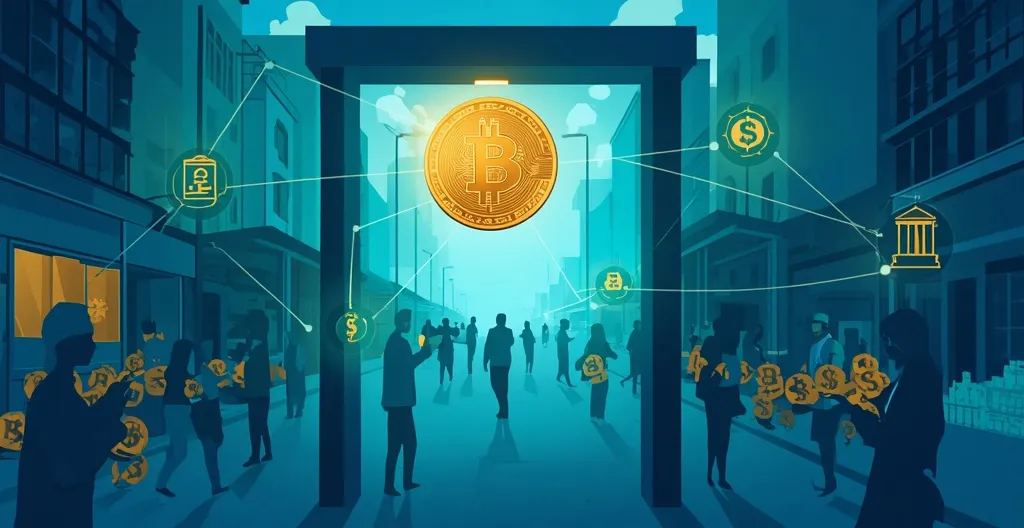
KuCoin Pay is pushing crypto payments deeper into the real economy, linking digital assets with local banking and mobile money rails in Bangladesh, Mexico, and Zambia.
- New markets: Bangladesh, Mexico, Zambia
- Local rails: bKash, Nagad, SPEI-compatible transfers, MTN, Airtel
- Main pitch: crypto and stablecoins for everyday payments, not just trading
- Reality check: this is KuCoin’s claim, not proof of adoption
KuCoin Pay Expands Crypto Payment Capabilities in June 24, 2026, saying it is expanding its transfer-based crypto payment capabilities into Bangladesh, Mexico, and Zambia, tying digital assets to payment systems people already use every day. The company says the goal is simple: make crypto and stablecoins more useful for real-world financial activity by routing payments through local banking, mobile money, and transfer rails instead of forcing users into clunky crypto-only workflows.
That matters because payment adoption usually fails on friction, not philosophy. If using crypto feels like filing paperwork with a wrench, most people will take the easier route and keep using the app that works.
KuCoin Pay Connects Digital Assets With Local Banking says the rollout connects digital assets with bKash and Nagad in Bangladesh, SPEI-compatible bank transfer routes in Mexico, and MTN and Airtel in Zambia. The company says it does this through one unified technical entry point that identifies suitable local payment routes.
Plain English version: KuCoin wants to act as a payment gateway that routes crypto-linked value through the local rails users already trust. The release does not say whether those rails are direct integrations, partner arrangements, or broader compatibility claims, so that distinction still matters. Marketing copy loves to blur that line. Reality usually does not.
What KuCoin Pay is selling here is a merchant solution. The company says it helps businesses accept cryptocurrency payments for online and in-store purchases, and that it supports more than 50 cryptocurrencies, including KCS, USDT, USDC, and BTC.
That list tells you something important about where crypto payments are heading. Bitcoin remains the flagship asset in the space, but stablecoins are usually the workhorses when the goal is actual spending. If you want to pay for something without dragging price volatility into the middle of checkout, a dollar-linked asset tends to make a lot more sense than a coin that can move while the cashier is still staring at the screen.
Alicia Kao, Managing Director of KuCoin, framed the expansion this way:
“Crypto is emerging as a new asset class with growing relevance in the real economy, and payments are one of the most important ways for this value to reach users.”
“Through KuCoin Pay, we are building trusted and localized connections between digital assets and existing banking, mobile money and transfer rails.”
“By integrating crypto with the financial systems people already use, we are helping digital assets move beyond holding and trading into practical financial activity, while supporting more inclusive and future-ready financial ecosystems in high-growth markets.”
That basic thesis is sound. Trading is not adoption. Payments are adoption. If crypto only exists as something people buy and dump on exchanges, it stays a speculative asset with a lot of loud opinions and not much everyday use. If it can move through familiar rails and into real commerce, it starts to look more like infrastructure.
But there is a big difference between a clean announcement and a product people actually use. The release does not spell out which banks, merchants, or payment providers are directly involved beyond the named rails. It also does not say whether users can move value both from crypto into local payment systems and back again, what fees look like, how settlement works, or how broad the rollout is at launch in each market.
That missing detail is not a small issue. In crypto payments, the hard parts are always the boring parts: compliance, liquidity, conversion speed, and onboarding friction. If the system is slow, expensive, or awkward, merchants will not care how elegant the branding looks. They want payments that clear, settle, and do not create a support nightmare.
The three markets KuCoin chose are at least strategically sensible. Bangladesh has deep mobile money usage, which makes bKash and Nagad relevant rails to target. Mexico’s SPEI system is the country’s real-time bank transfer infrastructure, so compatibility there is a logical move. Zambia has strong mobile money usage through networks like MTN and Airtel, which makes it another plausible place for transfer-based crypto payments.
In other words, KuCoin is not trying to bulldoze existing financial behavior. It is trying to piggyback on it. That is often the smarter strategy. Crypto firms love to talk about disruption, but the winning move is usually less glamorous: make the thing people already use a little less painful and call that progress.
The real reason stablecoins keep showing up in these products is practical, not ideological. For payments, stablecoins are usually far more useful than volatile assets like BTC. Bitcoin still matters enormously as hard money and a long-term reserve-style asset. But for day-to-day commerce, stablecoins often do the heavy lifting because they reduce the price drama that makes users nervous and merchants annoyed.
That does not make Bitcoin irrelevant. It means Bitcoin and stablecoins tend to serve different jobs. BTC is the monetary base and settlement story. Stablecoins are the checkout counter. Different tools, different jobs, same broad push toward more open financial rails.
The bigger challenge is whether users and merchants will care enough to adopt this in practice. A payment system can be technically clever and still go nowhere if local regulation is messy, if liquidity is thin, if users need too many steps to complete a transfer, or if the merchant experience is just another half-baked fintech maze. Crypto has a long history of promising “frictionless” payments while delivering something that feels suspiciously like a tax audit in a trench coat.
Key takeaways and questions
- What is KuCoin Pay expanding?
KuCoin Pay says it is expanding transfer-based crypto payment capabilities into Bangladesh, Mexico, and Zambia, connecting crypto and stablecoins with local banking and mobile money rails. - Does this help merchants or just traders?
It is meant for merchants. KuCoin Pay describes itself as a merchant solution for accepting crypto payments online and in-store, not just a trading feature for speculators. - Why are local rails like bKash, Nagad, SPEI, MTN, and Airtel important?
Because people already use them. Plugging crypto into familiar payment networks lowers the barrier to entry and makes the experience less alien. - Is this mainly a Bitcoin payment push?
No. BTC is listed among supported assets, but stablecoins like USDT and USDC are likely the more practical tools for payments because they are less volatile. - Does the announcement prove real adoption?
Not yet. It proves KuCoin has made a specific product announcement, but adoption will depend on fees, settlement speed, compliance, partner depth, and whether the service actually works smoothly for real users. - What is the main limitation right now?
Limited public detail. The release is specific about markets and rails, but it does not fully explain the mechanics, partner structure, or launch scope.
The bullish case is easy to understand. Crypto does not become a serious financial tool by sitting in wallets and on exchanges forever. It becomes serious when it can move through the real economy, through rails people already trust, and into everyday use.
The skeptical case matters just as much. Crypto companies have spent years announcing the future while leaving the messy operational details somewhere between “coming soon” and “please trust us.” In payments, those details are the whole game. If this rollout is fast, cheap, and usable, it has a shot. If not, it becomes another neat press release gathering dust while the real world keeps using the rails it already knows.
Further reading
A few related reads worth keeping on the radar:


