
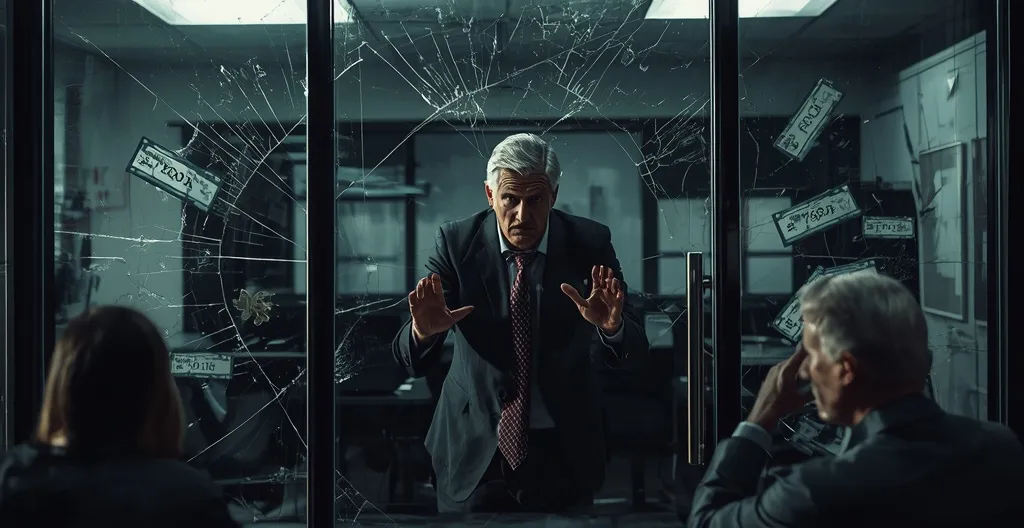
Federal prosecutors say Linqto founder William Sarris ran a years-long scheme that inflated private-share prices, misled customers about “market” pricing, and pulled in more than $450 million before the platform collapsed into bankruptcy.
- William Sarris, 75, was arrested after an indictment was unsealed
- More than 13, 000 customers were allegedly misled
- Artificial scarcity and oversized markups were allegedly used to boost prices
- Linqto later filed for bankruptcy, according to prosecutors
The Justice Department says Sarris, the founder of [Linqto Inc.](https://www.wsj.com/finance/regulation/founder-of-private-company-investment-firm-charged-with-defrauding-investors-3f4b6158), is accused of running the scheme from 2020 through 2025. Prosecutors allege the platform sold access to private-company shares while disguising inflated prices as legitimate “market” prices, even though there was no open exchange to back that up.
That is the ugly part of private-market investing. When price discovery is murky, the intermediary controls a lot of the story. If that intermediary decides to get creative, retail investors can end up paying for the privilege of being played.
According to federal prosecutors, Linqto marketed itself as a way for ordinary investors to buy exposure to private companies before they went public. That pitch can be real enough in principle. But private shares are illiquid, harder to value, and far less transparent than public stocks. That gives a platform room to set prices, restrict supply, and present the whole thing as more orderly than it really is.
The indictment says Sarris exploited that opacity by manufacturing false scarcity and pushing customers toward prices they were told were “market” rates. Prosecutors allege he then layered on markups that his lawyers had warned could run afoul of the law.
Here’s the plain-English version: a markup is an added amount above the underlying price. In some securities transactions, markups can exist. The problem here, according to prosecutors, is that the pricing was hidden, the scarcity was fake, and the spreads were extreme enough to turn the platform into a machine for overcharging customers.
Deputy U.S. Attorney Sean S. Buckley said the markups in some cases exceeded 200%. That means the price could have been more than triple the underlying amount. If proven, that is not a “fee structure.” That is a corporate smash-and-grab dressed up as innovation.
The charges against Sarris include securities fraud, broker-dealer fraud, wire fraud, and conspiracy. Prosecutors also charged conspiracy to defraud the United States and conduct involving unregistered investment company transactions.
Each of the two securities fraud counts, the broker-dealer fraud count, and the wire fraud count carries a maximum penalty of 20 years in prison. The conspiracy counts carry additional penalties.
Prosecutors say the scheme was not a one-off mistake or a little accounting wobble. They allege it ran for five years, affected more than 13, 000 customers, and generated more than $450 million. They also say Sarris had a personal incentive to keep the pricing game going because he held a significant stake in Linqto.
That matters. If the founder stands to benefit from pushing prices higher, the conflict of interest is obvious. Customers think they are getting access to a scarce private asset at a fair price. Management, meanwhile, may be sitting on the other side of the table, quietly cheering every extra dollar extracted.
One of the more serious allegations came in January 2025. Prosecutors say that when Linqto came under financial pressure, Sarris sold shares allocated to customers’ holdings to help meet revenue targets without telling those customers.
If that claim is proven, it suggests the company was not just squeezing customers on price. It may also have been tampering with customer allocations to keep the business afloat. That is the kind of conduct that makes regulators reach for every enforcement tool they have and then some.
Linqto later filed for bankruptcy, according to the government’s account. For customers, that usually means recovery gets messy fast. Bankruptcy can slow restitution, complicate claims, and turn straightforward losses into a long fight over paper rights, transfers, and whatever assets are left to distribute.
The case also exposes a broader truth about private-market platforms. “Pre-IPO access” sounds glamorous, and sometimes it is a legitimate way to broaden investor access. But it is also a perfect sales pitch for opacity. If a platform controls supply, pricing, and disclosure, investors are being asked to trust the house not to shave the deck.
That trust is exactly what prosecutors say Sarris abused.
The Justice Department says Joseph Endoso, described as Sarris’s former second-in-command, already pleaded guilty on August 27, 2026 and is cooperating. In fraud cases, a cooperating insider can be devastating for a defense because emails, records, instructions, and internal pricing data tend to tell a much less flattering story than the sales pitch.
To be clear, the indictment is not a verdict. Sarris is presumed innocent unless prosecutors prove the case in court. But the allegations are unusually specific: fake scarcity, hidden markups, “market” pricing that allegedly was not market pricing, and a January 2025 move that prosecutors say diverted shares tied to customers’ holdings.
That combination is why this case matters beyond one company. Retail investors keep getting sold the dream of privileged access. Sometimes that’s just marketing noise with a fancy logo. Sometimes it works. And sometimes it turns into a private-market hustle where the people closest to the product use that informational advantage to bleed customers dry.
Key takeaways
-
What is Linqto alleged to have done?
Prosecutors say the platform inflated private-share prices, manufactured scarcity, and charged excessive markups while telling customers they were paying “market” prices. -
How many customers were affected?
Federal prosecutors say more than 13, 000 customers were deceived. -
How much money is involved?
The Justice Department says the alleged scheme generated more than $450 million from 2020 through 2025. -
Why does the 200% markup claim matter?
A markup that large suggests the alleged pricing gap was not minor. It points to extreme overcharging, not ordinary brokerage economics. -
Why is bankruptcy a big deal here?
Bankruptcy can make customer recovery much harder, especially if assets were moved, reallocated, or commingled before the collapse. -
What does Endoso’s guilty plea change?
A cooperating insider can strengthen prosecutors’ case by providing internal records and firsthand evidence of how the pricing and allocation process worked.
The big lesson is simple: private-market investing is not automatically investor-friendly just because it sounds exclusive. If the price is hidden, the supply is manipulated, and the middleman gets too much control, the “access” pitch can become a very expensive illusion.
Further reading
A few filings, rulings, and follow-ups that help put the Linqto mess in sharper focus:
- Linqto Founder Faces Federal Charges Over Alleged
- Former Executives Charged in $450 Million Fraud Scheme
- Understanding Google Tag Manager: A Comprehensive Guide
- Member Regulatory Requirements for Private Placements
- Guide to Broker-Dealer Registration
- US charges two former Linqto CEOs over $450 million 'pre-
- Ripple CTO Exposes Pre-IPO Share Truth Amid Linqto’s
- DeFi Technologies Lawsuit Exposes Crypto Transparency
- SEC Charges Mining Automatic and Zan Shaikh in Alleged $22M


