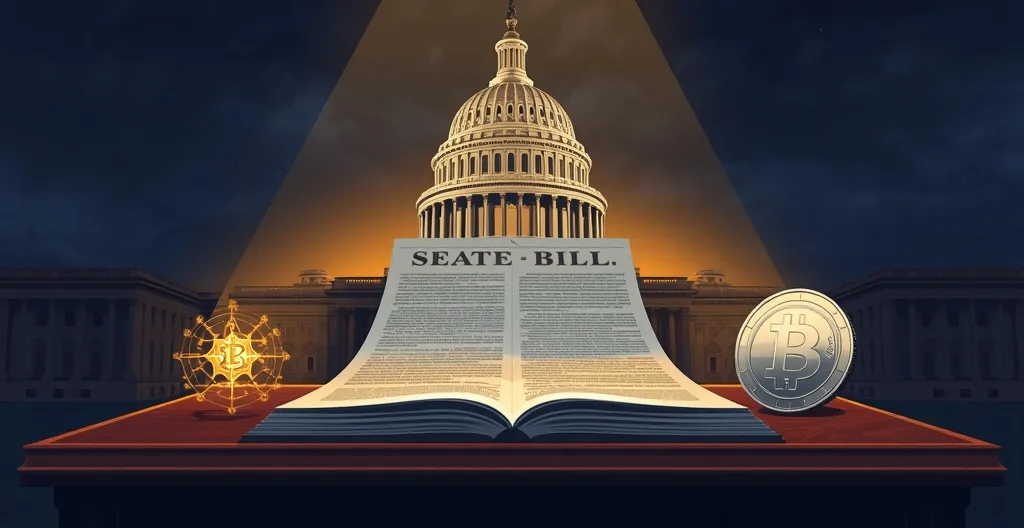
Senator Cynthia Lummis released the final 635-page draft of the CLARITY Act on September 14, 2026, setting up a high-stakes Senate vote that could decide whether U.S. crypto policy gets real structure or more of the same mush.
- 635-page final draft released ahead of a Sept. 15 procedural vote
- 60 votes needed; Senate Republicans hold 53 seats
- More than 120 Democratic changes folded in, including ethics rules
- Stablecoin “circuit breaker” added for deposit-flight concerns
- Developer protections expanded without weakening CFTC authority
The final text was released by Lummis, along with Senators John Boozman and Tim Scott, after more than a year of bipartisan talks. The goal is clear enough: make the bill acceptable to enough Democrats to clear the Senate’s 60-vote procedural hurdle on September 15.
That hurdle is the whole game. With 53 Republicans in the chamber, the bill cannot advance on GOP votes alone. If Democrats keep their distance, the legislation stalls, and Washington gets to keep pretending regulatory ambiguity is a strategy.
The revised draft reflects that reality. According to the summary circulating with the release, the text now includes 126 major changes requested by Democrats; another description says more than 120 Democratic changes were incorporated. The source material does not explain the mismatch, but the broader point is obvious: this version was heavily rewritten to win votes, not just polished for show.
The biggest concession is on ethics. President Trump reportedly agreed to tougher restrictions that would require federal lawmakers, judges, and their spouses to either sell major crypto holdings or place them in a blind trust. A blind trust is an arrangement where assets are managed without the owner’s control or day-to-day knowledge. That is the point if you want to avoid the very obvious conflict-of-interest problem hanging over crypto policymaking.
That issue has been one of the ugliest undercurrents in Washington’s crypto debate. If the same people writing the rules also have meaningful exposure to the assets being regulated, the public is right to ask whether the process is clean. Crypto does not need lawmakers acting like part-time referees and full-time bagholders.
The ethics package is described as adopting around 80% of the Tillis-Gallego proposal, and it would also give state attorneys general a role in enforcement. That adds another layer of accountability beyond federal agencies, though it also raises the familiar risk of uneven enforcement across states.
Another major addition is a stablecoin safeguard the draft calls a “circuit breaker.” Stablecoins are crypto tokens designed to hold a stable value, usually by tracking the U.S. dollar. Under the proposed language, the Treasury Secretary could step in if large amounts of bank deposits start moving into stablecoins, a move meant to protect the deposit base that community banks and local lenders rely on.
In practical terms, the concern is simple: if people and businesses shift money out of bank accounts and into dollar-linked tokens too quickly, some banks could feel real pressure. That matters for lending, liquidity, and credit flow. A circuit breaker may sound dull, but it is basically a policy brake pedal for a scenario regulators fear could turn messy fast.
The flip side is obvious too. Give Treasury a broad intervention tool and you also create room for overreach, political discretion, and the kind of caution that can smother legitimate payment innovation before it gets off the ground. Stablecoins can improve settlement speed and lower payment friction. The trick is not turning sensible guardrails into a choke chain.
The draft also tightens the rules around blockchain development. It modifies the Blockchain Regulatory Certainty Act, a proposal aimed at keeping software builders from being treated as money transmitters simply for creating or maintaining blockchain tools. “Money transmitter” is a legal category that can trigger registration and compliance obligations, which is fine for payment processors and custodians, but absurd if applied too broadly to people writing code.
Under the new text, developers would get a civil safe harbor, meaning protection from certain civil lawsuits. The bill also makes clear that these protections do not weaken the Commodity Futures Trading Commission’s authority over derivatives markets or alter rules for prediction markets, where people trade on the outcome of future events.
That distinction matters. A protocol developer is not the same thing as an exchange, broker, or dealer. But crypto has a bad habit of blurring that line whenever accountability shows up. Protecting builders from being dragged into the wrong legal bucket is sensible. Pretending that all software is too decentralized to regulate is just a convenient excuse with better branding.
The Agriculture Committee provisions add another layer of market oversight, including stricter rules on affiliate trading and conflicts of interest involving digital commodity exchanges, brokers, and dealers. The draft also says state consumer protection laws still apply, which is important because crypto firms love jurisdiction shopping when they can and “innovation” speeches when they get caught.
Lummis framed the vote in blunt terms. She said a “no” vote would mean rejecting new ethics rules, leaving Americans without stronger market protections, and risking U.S. leadership in digital assets. Her line was even sharper:
“Democrats got what they wanted; now they need to take yes for an answer.”
That is not exactly the language of a careful rapprochement, but it does capture the mood. Supporters clearly believe they have already made the hard compromises and are now asking Democrats to admit it.
Senator Lummis Releases CLARITY Act Final Draft Ahead of the vote, and market watchers are treating the latest revisions as the best shot yet at getting the bill over the line.
Kalshi traders appear to think the changes improved the bill’s odds. After the final draft was released, the market priced passage at 44%, up from 18% earlier. That is a meaningful jump, though prediction markets are still just probabilities, not prophecy. If they were always right, Washington would already be a ghost town and half the lobbyists would be flipping burgers.
For Bitcoin holders, the bill matters even if it is broader than BTC alone. Clearer rules for developers, exchanges, and market structure could reduce one of the biggest bottlenecks on U.S. adoption: legal uncertainty. Bitcoin does not need hand-holding, but it does benefit when the regulatory state stops treating every crypto activity like a suspicious side quest.
At the same time, the downside is real. Big crypto bills often promise clarity and deliver new gray areas, turf fights, and enforcement headaches. A statute this long can clean up some confusion while creating fresh opportunities for lawyers to stay employed until the heat death of the universe.
The coming vote will show whether the final draft is enough to bridge the gap between consumer protection, developer freedom, and political reality. If it passes, it could become a serious step toward a more coherent U.S. framework for digital assets. If it fails, the industry gets another reminder that in Washington, even “clarity” can end up buried under procedure.
That failure would not just be a procedural embarrassment. It could also leave crypto developers stuck in legal limbo, exactly the kind of mess that keeps innovation parked in the prosecutors’ crosshairs instead of in the open market where it belongs.
For a deeper look at that risk, see Lummis Warns CLARITY Act Failure Could Put Crypto and what happens when Congress punts on basic rules.
Lummis has also linked the broader policy fight to America’s fiscal mess, arguing that Bitcoin could matter as a pressure valve against long-term debt decay. It is a spicy point of view, but not a crazy one given the size of the U.S. balance sheet and the political appetite for pretending deficits are someone else’s problem.
That angle is explored further in Lummis Ties Bitcoin to U.S. Debt as CLARITY Act Nears, where Bitcoin is framed less as a speculative toy and more as a monetary escape hatch.
There is also a timing problem hanging over the whole effort. If lawmakers drag their feet, the United States could be left waiting years for a coherent digital asset framework while other jurisdictions race ahead with cleaner rules and faster capital formation.
That delay risk is the subject of Lummis Warns CLARITY Act Delay Could Push U.S. Crypto Rules, a warning that the current slog could easily spill into the next decade if Congress keeps playing procedural dodgeball.
Key questions and takeaways
-
What changed in the final CLARITY Act draft?
It adds tougher ethics rules, stablecoin safeguards, stronger consumer protections, and expanded developer protections after more than a year of bipartisan negotiations. -
Why are the ethics rules such a big deal?
Because lawmakers and judges holding crypto while regulating crypto is a conflict-of-interest headache. The draft would force major holders to sell or use blind trusts. -
What is the stablecoin “circuit breaker”?
It would let Treasury step in if bank deposits start moving into stablecoins at a scale that could strain banks and tighten credit. -
Do the developer protections mean no regulation?
No. The bill aims to keep blockchain developers from being treated like money transmitters just for building software, but it does not weaken CFTC authority over derivatives or prediction markets. -
Is the bill likely to pass easily?
No. The Senate needs 60 votes to advance it, and with only 53 Republicans, Democratic support is still required. -
What is the biggest risk if the bill passes?
The main risk is that it could still leave loopholes, trigger regulator turf wars, or create new complexity that blunts the very clarity it promises.