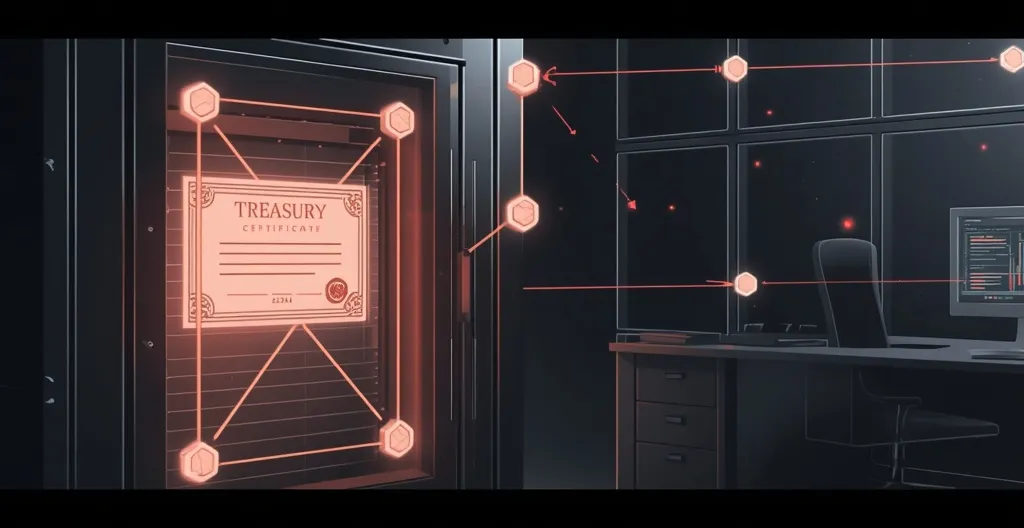
Lynq and ZeroBeta Connect Tokenized Treasuries to a Collateral Workflow on Avalanche
Lynq and ZeroBeta say their new integration will let eligible tokenized U.S. Treasuries support borrowing or digital-asset trading margin while continuing to accrue interest. The announcement outlines how the platforms are meant to work together, but does not identify an institution that has completed a transaction through the integration.
- ZeroBeta’s BlueShift calculates risk requirements and sends collateral instructions.
- Lynq holds eligible assets on its Avalanche settlement network and carries out those instructions.
- The companies say pledged holdings can continue accruing interest.
- Usage, financing terms and asset-specific legal arrangements have not been disclosed.
How the Lynq and ZeroBeta integration is designed to work
The integration links Lynq’s settlement and collateral platform with BlueShift, ZeroBeta’s risk-management system. Lynq’s institutional settlement infrastructure is built on Avalanche.
The platforms have separate roles. BlueShift calculates exposure and margin requirements, then sends collateral instructions to Lynq. Lynq holds the assets on its network and carries out instructions to pledge collateral, add to a pledge or release some of it.
For secured borrowing, BlueShift can instruct Lynq to pledge eligible tokenized Treasury holdings to a lender. It can also call for more collateral or request a partial release when values cross agreed thresholds. The companies have not disclosed those thresholds.
For digital-asset trading, BlueShift calculates the margin required for open positions and new orders. Margin is collateral posted to support a trading position and help cover potential losses. Tokenized Treasuries could meet those requirements, with Lynq handling the resulting collateral movements.
Lynq says its collateral lock function places eligible holdings in escrow while they continue accruing interest. The company says its Yield-in-Transit technology calculates and distributes interest in real time.
That description does not mean every tokenized Treasury earns the same return, or that interest is paid out immediately as cash. The announcement does not explain the yield mechanics, applicable rates, asset eligibility rules or conditions that could affect accrual. Nor does it detail the legal status of the escrow arrangement or identify the custodian of the underlying securities.
“Institutions shouldn’t have to choose between using an asset as collateral and continuing to earn interest on it, ” said Lynq CEO Jerald David.
What remains unproven
The announcement describes an intended workflow, not evidence of completed borrowing or trading activity. The companies have not named a lender, exchange or trading desk that has used the integration, and have disclosed no amount of collateral pledged through it.
Key financing terms are missing, too. The companies have not published borrowing rates, margin requirements or collateral haircuts, the discounts applied to an asset’s value when calculating how much financing or margin it can support. Without those details, institutions cannot tell from the announcement how much capital a given Treasury holding could unlock.
Lynq says assets on its platform have topped $89 million and that it has onboarded more than 40 institutional digital-asset firms. Those figures cover Lynq’s network as a whole, not the ZeroBeta integration.
Lynq identifies tZERO Securities as its operator, describing it as an SEC-registered broker-dealer and a member of FINRA and SIPC. Lynq says its network was developed by Arca Labs, Tassat Group and tZERO Group. These details identify the organizations involved, but they do not establish the rights attached to a particular tokenized Treasury, guarantee redemption or protect holders against investment losses. The announcement does not specify the custody, redemption or legal arrangements for holdings used in this workflow.
Those distinctions matter. A token is a digital representation of an asset or claim. The term “tokenized” alone does not tell you who owns the underlying security, what rights the token carries or what happens if a transaction is disputed.
Other efforts to use tokenized assets as collateral
Aave has also announced plans for an Avalanche real-world asset credit hub where eligible institutions could borrow USA₮ against approved tokenized financial assets. The proposed design uses specialized markets with separate collateral terms and borrowing limits, linked to shared liquidity. Tokenized Treasuries and money market funds were named as possible collateral categories, subject to governance and risk review.
Aave’s proposal is separate from Lynq’s integration. Aave had not named the first collateral assets or given a launch date in its announcement. The plan does not show that institutions are already borrowing against those assets through the hub.
In a separate example, BNY described a completed tokenized Treasury repo transaction with Citadel Securities. Citadel bought a two-year Treasury note through BNY on Tradeweb. A tokenized representation settled within minutes on BNY’s private ledger. BNY said Citadel pledged the security in an overnight triparty repurchase agreement and received cash from the bank.
A repo is short-term secured financing in which a security is pledged in exchange for cash. In a triparty repo, a third-party agent handles operational tasks such as administering the collateral and related settlement. BNY did not disclose the transaction’s value or financing rate. It said it expects to extend traditional settlement operating hours for Fed-eligible securities and U.S. triparty transactions into European and Asian trading hours during 2027.
BNY’s transaction used a private ledger and was separate from Lynq’s Avalanche-based network. The examples show different ways to connect tokenized financial assets with financing workflows. They do not prove that the assets, legal structures or settlement arrangements are interchangeable.
Key questions about tokenized Treasury collateral
-
What is the Lynq and ZeroBeta integration designed to enable?
The companies say eligible tokenized Treasury holdings can support secured borrowing or digital-asset trading margin while continuing to accrue interest. The announcement does not confirm that a transaction has been completed through the connection.
-
Who calculates risk and moves the collateral?
ZeroBeta’s BlueShift calculates requirements and sends instructions. Lynq holds the assets on its settlement network and carries out pledges, top-ups and releases.
-
Have institutions used the integration?
The companies have not named a lender, exchange or trading desk that has completed a transaction through it, or disclosed the amount of collateral pledged.
-
What financing terms have been disclosed?
The announcement provides no borrowing rates, collateral haircuts, margin requirements or agreed thresholds.
-
Do Lynq’s network figures show adoption of this integration?
No. Lynq reports more than $89 million in platform assets and more than 40 institutional digital-asset firms onboarded, but those figures cover its network as a whole.
Tokenized Treasuries could help institutions use familiar financial assets across digital settlement and trading systems. The real test is whether the rights, custody, liquidity and risk terms are clear, and whether counterparties are willing to transact.