Moscow Exchange Plans 22% VAT on USDT Trades in December
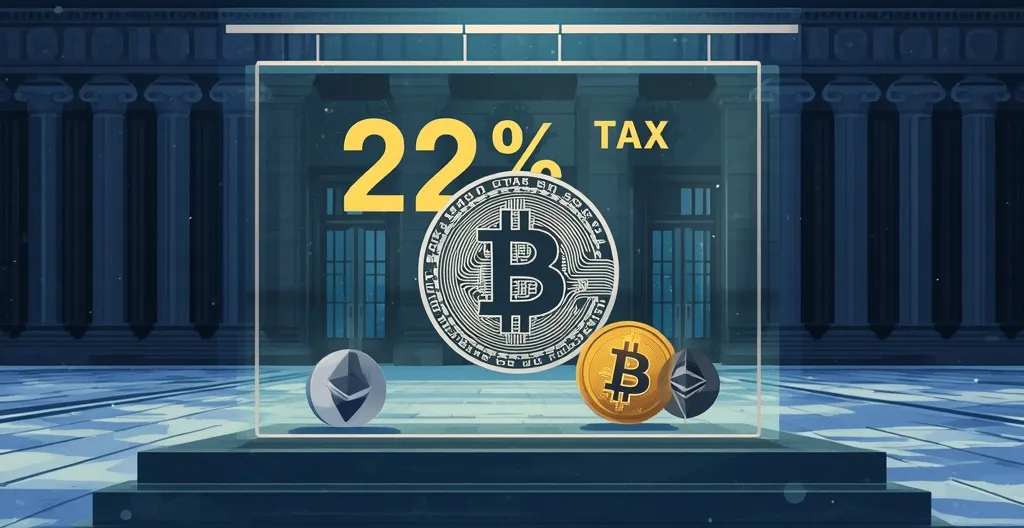
Moscow Exchange’s National Clearing Centre plans to apply Russia’s standard 22% VAT rate to USDT purchases, sales and swaps from Dec. 1 through Dec. 31, 2026. The clearinghouse says the tax code does not directly address foreign digital instruments, so it has asked Russian authorities for guidance.
- December only: The stated VAT period runs from Dec. 1 to Dec. 31, 2026.
- Different classifications: Bitcoin and Ether are classified as digital currencies, while USDT is a foreign digital instrument.
- Tax treatment unresolved: The NCC’s plan is not a final ruling from the Federal Tax Service or Finance Ministry.
- Access will vary: Brokers are expected to join in stages. Investors without qualified status reportedly face an annual purchase limit.
Why USDT is treated differently
Moscow Exchange’s FAQ says USDT transactions will be subject to VAT during the first month of trading. The NCC, the exchange’s clearinghouse, plans to apply the 22% rate that the Federal Tax Service identifies as Russia’s standard VAT rate for 2026, crypto.news reported.
The difference comes down to legal classification. A Bank of Russia directive categorizes Bitcoin and Ether as digital currencies, while USDT is a foreign digital instrument. Article 146 of Russia’s Tax Code is cited as exempting sales of digital currencies from VAT. That reported exemption does not settle the treatment of USDT, which falls into a different category.
The NCC says the Tax Code has no provision that directly addresses VAT on foreign digital instruments. RBC reported that the clearinghouse plans to apply the standard rate to reduce the risk of tax claims against trading participants while it seeks guidance from the Federal Tax Service and the Finance Ministry.
This is the NCC’s stated approach, not a published ruling from either authority. The clearinghouse says it will update participants if it receives guidance or lawmakers adopt an exemption for trades made before Jan. 1, 2027. The December notice says nothing about what will apply afterward.
What the 22% calculation tells traders, and what it doesn’t
Cointelegraph, citing the NCC notice, reported an example in which a 100, 000-ruble USDT purchase would incur 22, 000 rubles in VAT, bringing the total to 122, 000 rubles before broker fees.
That calculation assumes the 100, 000 rubles are a pre-tax amount, with VAT added on top. The reported materials don’t explain the tax base or exactly how VAT will be collected for every transaction type. Treat the figure as an illustration of the reported calculation, not a firm estimate for every purchase, sale or swap.
Broker access and investor limits
Moscow Exchange plans to offer Bitcoin, Ether and USDT trading through its existing securities-market infrastructure. Customers would use brokerage accounts, while digital depositories handle custody. Brokers are expected to join in stages, and each will decide when its customers can start placing orders.
The setup the exchange has described doesn’t establish exactly what legal product customers will receive, whether they will hold the tokens directly, or what withdrawal rights they will have. Account-based settlement is not a promise of direct on-chain custody or withdrawals.
According to crypto.news, the Bank of Russia’s register listed 30 authorized crypto exchange operators as of Nov. 18, 2026, including Sberbank and VTB. That’s a snapshot from a specific date. Being listed as an operator, having trading rules approved and accepting customer orders are separate steps.
Reports say domestic exchanges may conduct organized crypto trading from Nov. 22, 2026, if the Bank of Russia approves their rules. Requirements include recording orders and completed trades, calculating price indicators and reporting trading activity to the central bank.
Investors without qualified status may buy up to 300, 000 rubles’ worth of crypto per calendar year through each broker, according to the exchange’s rules as reported by crypto.news. They must pass a knowledge test and receive a risk notice. The exchange lists no purchase cap for qualified investors, but that doesn’t exempt them from other requirements. They, too, must meet the testing and risk-notice conditions.
Settlement runs through exchange accounts
Moscow Exchange says trades will be settled through trading accounts at a digital depository, rather than by matching transfers between public-blockchain wallets for each trade. For trades scheduled to settle the same day, the exchange expects clearinghouse settlement cycles about every 30 to 60 minutes.
These are planned operating details, not a record of how the system performs in practice. They also leave open how tokens are sourced, held, redeemed or transferred outside the exchange.
Sanctions raise questions, not automatic conclusions
The U.S. Treasury sanctioned Moscow Exchange and the NCC in June 2024. In December 2023, Tether announced that its wallet-freezing policy covers addresses on the U.S. Office of Foreign Assets Control sanctions list, including addresses added later.
Those facts make counterparties and custody important questions for a USDT market. But the reported information doesn’t establish how the sanctions or Tether’s policy would affect trades in the planned depository system. On their own, these facts don’t prove that particular trades will be blocked, or that they will proceed unaffected.
Key questions about Moscow Exchange’s USDT VAT
-
Which USDT trades are planned to face VAT?
The NCC plans to apply VAT to purchases, sales and swaps from Dec. 1 through Dec. 31, 2026.
-
Is the 22% treatment settled law?
No final ruling from the Federal Tax Service or Finance Ministry has been reported. The NCC says the Tax Code does not directly address VAT on foreign digital instruments and that it has requested guidance.
-
How much tax could apply to a 100, 000-ruble purchase?
The reported example adds 22, 000 rubles, bringing the total to 122, 000 rubles before broker fees. That assumes VAT is added to a pre-tax trade value. The reported materials don’t establish the tax base for every transaction.
-
What is the annual limit for investors without qualified status?
They may buy up to 300, 000 rubles’ worth of crypto per calendar year through each broker. They must also pass a knowledge test and receive a risk notice.
-
What happens after December?
The NCC notice covers December only. The reported information leaves the treatment from January 2027 onward unresolved.
Tax uncertainty is only one part of the launch. Customers will also want to know which brokers offer access, what instrument they will hold and what custody and withdrawal rights come with it. Moscow Exchange has outlined the trading and settlement framework, but those details matter just as much as the headline VAT rate.