
Nscale’s reported $103 billion in contracted revenue is a huge number, but it is not the same thing as cash, booked earnings, or even guaranteed future profit. Read it as a sign of demand and ambition, not a victory lap.
- $103B contracted revenue reportedly shown ahead of a possible IPO
- $45B Anthropic compute deal appears to be a major driver
- AI infrastructure business built on power, land, and GPUs
- Illustrative numbers are not the same as formal financial guidance
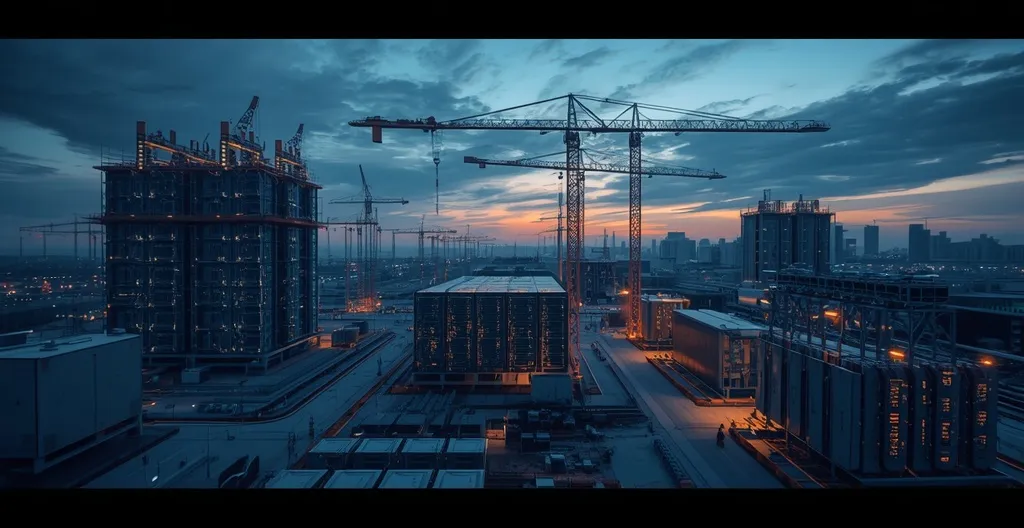
Nscale is an AI infrastructure company, not a lightweight software startup with a glossy pitch deck and a lot of buzzwords. It describes itself as “a complete AI cloud platform, ” with services spanning cloud, dedicated GPU infrastructure, data centers, and energy and power systems. In plain English, it is trying to build the physical backbone that lets AI run at industrial scale.
According to Error extracting content referenced in the materials provided, the company has shown investors roughly $103 billion in contracted revenue ahead of a possible IPO. That figure is eye-watering, but the key phrase is contracted revenue. That means signed future commitments, not money already earned and sitting in the bank. That distinction matters, because Wall Street has a long history of treating backlog like treasure when it can just as easily turn into a very expensive headache.
The biggest jump appears to have come from a $45 billion compute agreement with Anthropic, which reportedly pushed Nscale’s contracted revenue from about $51 billion to $103 billion. The materials also note that the figures may have been described as “illustrative” rather than formal guidance. That is a serious caveat. Illustrative numbers can help in investor presentations, but they are not the same thing as audited revenue or hard promises written into a filing.
That’s the first credibility check here. A giant number can be real in the sense that contracts exist, while still being wildly fragile in the sense that execution has not happened yet. Backlog is not revenue. Revenue is what survives the buildout, the billing cycle, and the accounting rules.
Nscale’s business model sits in the part of AI that people love to celebrate and hate to fund: the ugly, capital-hungry infrastructure layer. The hype lives in the model demos. The money gets burned on power, cooling, chips, land, and construction.
The research notes point to Nscale’s Monarch campus in Mason County, West Virginia, where the Anthropic allocation is reportedly tied to about 460 megawatts of capacity in a six-year deal, with service beginning in late next year. The site is said to span 2, 250 acres, with Phase 1 targeting 1.35 gigawatts of AI-compute capacity and a longer-term power runway above 8 gigawatts.
Those are utility-scale numbers. A megawatt is a lot of power. A gigawatt is the kind of figure that makes you stop thinking like a startup founder and start thinking like a grid operator. In this business, “growth” often means transformers, substations, liquid cooling, and a race to get enough electricity to keep GPUs fed. The real bottleneck is electricity.
That is also why the headline figure deserves skepticism without dismissing the underlying signal. AI demand is real. The scramble for compute is real. Long-term contracts for capacity, power, and racks are becoming valuable assets in their own right. But a huge contracted number can still hide a mountain of risk: permits, supply chain delays, construction overruns, utility interconnect problems, and customers who want capacity yesterday instead of two years from now.
The IPO angle raises the pressure even further. Public-market investors tend to be less forgiving than private ones when slide-deck math meets engineering reality. If Nscale does move toward an offering, it will have to prove it can turn those contracts into functioning infrastructure and then into recognized revenue, without torching capital faster than it can raise it.
The headline also describes Nscale as Nvidia-backed, but that label should be handled carefully. Based on the materials provided, the exact nature of Nvidia’s role is not fully confirmed here. “Backed” can mean investment, partnership, supply support, or just loose marketing language. Those are very different things, and finance writing gets sloppy fast when people pretend otherwise.
Still, the broader message is clear: AI infrastructure is increasingly looking less like traditional software and more like a mix of utilities, industrial development, and compute logistics. The companies that control access to power, land, and GPU supply may end up with serious leverage. The catch is that this leverage comes with monstrous capex requirements and very little room for mistakes.
There is a real bullish case here. If AI usage keeps expanding, firms that can secure power and deliver compute at scale could become essential. In that world, the plumbing matters as much as the models, and maybe more. Whoever owns the plumbing can charge for the water.
There is also a very real bearish case. Big backlog numbers can flatter a company long before they prove anything. A $103 billion figure may impress investors, but it does not pay for substations, cooling systems, or server deployments by magic. If the buildout slips, the number shrinks in importance fast. Reality has a nasty habit of showing up with a wrench.
So the sane reading is neither euphoria nor dismissal. Nscale’s reported backlog suggests genuine demand for AI compute and a business trying to position itself in one of the most important infrastructure races in tech. But the number should be treated as a promise, not a finish line.
Key questions and takeaways
-
What does “contracted revenue” mean?
It refers to revenue committed through signed agreements, usually for future delivery. It is not the same as cash received or revenue already recognized under accounting rules. -
Why is the $103 billion figure important?
Because it suggests Nscale has booked a massive amount of future business tied to AI compute demand. Ahead of an IPO, that kind of backlog can heavily influence investor attention and valuation. -
What role does Anthropic play in this number?
The materials say a $45 billion compute agreement with Anthropic appears to be a major driver of the jump from about $51 billion to $103 billion. It is presented as a reported commitment, not a guarantee of immediate revenue. -
Why does power matter so much?
AI data centers are brutally power-hungry. Without electricity, cooling, land, and hardware, even the biggest contracts are just expensive signatures on paper. -
Should investors treat this as guaranteed revenue?
No. The materials suggest some of the figures may have been “illustrative, ” which means they should be treated as forward-looking and conditional, not as booked earnings. -
Why does the IPO matter?
Public markets demand more transparency and less hand-waving. If Nscale lists, it will have to prove that the contracts can be delivered, the infrastructure can be built, and the revenue can actually show up.
If Nscale can turn the backlog into working infrastructure and billed compute, it could become a serious force in the AI buildout. If not, the $103 billion figure will age like a very expensive press release.
It is also part of a broader pattern that has pulled in other players: Riot Platforms reportedly signs $9.1B Anthropic AI compute commitments, and IREN Stock Jumps as Bitcoin Miner Pivots to AI shows how miners and data-center operators are chasing the same compute gold rush. The trend is obvious: if you already have cheap power and warehouse-grade infrastructure, AI looks a lot more attractive than praying for the next block subsidy halving miracle.
But there is a darker side to this compute race too. Governments are already showing they want control over who gets access to the best models and infrastructure. That same appetite for control is visible in moves like US Bans Foreign Nationals from Anthropic’s Fable 5 and related restrictions, a reminder that AI is not just a business story, it is becoming a geopolitical and censorship story too. Anyone pretending otherwise is selling fairy dust.
For background on the reporting and source materials behind this number, the public filing reference DRS/A is worth checking alongside broader coverage from Anthropic and Nscale strike $45 billion cloud deal, sources say. And for readers who want to compare the claims with the company’s own positioning, A Complete AI Cloud Platform is the marketing pitch Nscale itself is putting forward, which, as always, should be read with one eyebrow raised and the other hand on the receipts.
Further reading
A quick backgrounder on the AI giant tied to the reported compute demand:


