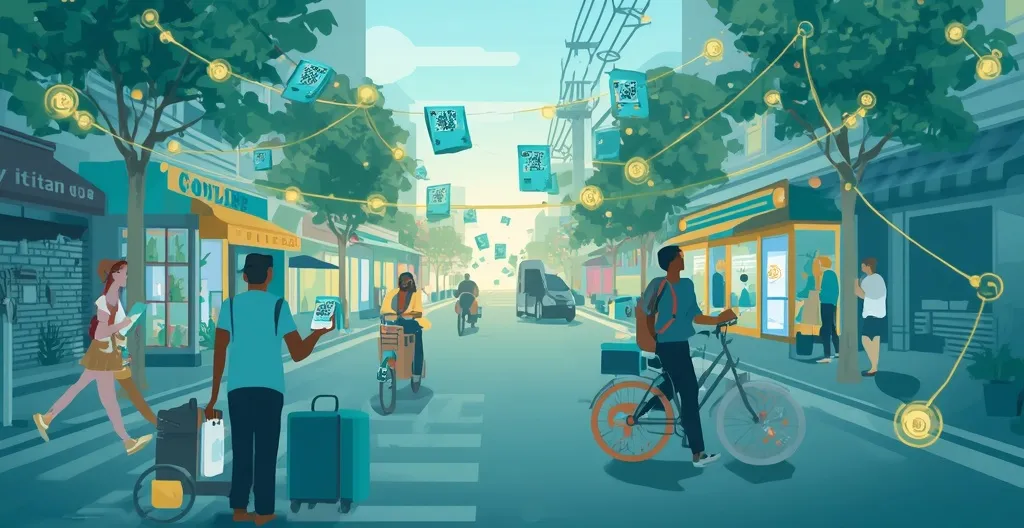
The Philippines has already beaten its digital payments target, with electronic transactions now accounting for 64.7% of total retail payments, while PESONet and InstaPay pushed more than PHP 19 trillion through the country’s payment rails in just the first seven months of 2026.
- 64.7% of retail payments were digital in 2025
- PESONet and InstaPay handled PHP 19.16 trillion ($310 billion)
- QR Ph topped cards in transaction count for the first time
- The BSP is forcing cheaper, more interoperable transfers
That puts the Philippines ahead of the 60% to 70% digital payments target set in the Philippine Development Plan for 2023 to 2028, according to the Bangko Sentral ng Pilipinas Payments and Settlements. The central bank said digital payments rose from 57.4% of total retail payments in 2024 to 64.7% in 2025.
This is not just a feel-good milestone. It shows a real shift in how money moves across the country, with less dependence on cash, more account-to-account transfers, and a payment system that is starting to look less like a patchwork and more like infrastructure.
The main rails behind that change are PESONet and InstaPay, the two electronic fund transfer systems under the BSP’s National Retail Payment System. PESONet is generally used for larger, non-instant transfers, while Instant payment is built for real-time, low-value payments.
From January to July 2026, combined transfer values through PESONet and InstaPay jumped 45% to PHP 19.16 trillion, or about $310 billion, from PHP 13.23 trillion in the same period last year. Combined transaction volume more than doubled to 4.98 billion from 1.95 billion.
That jump in volume matters. When transaction counts grow faster than value, it usually means the rails are being used more often for everyday payments, not just a few large transfers. In other words, this is not just bigger money moving around. It is more people using digital payments more often.
PESONet’s transfer value rose 32.2% to PHP 9.65 trillion from PHP 7.30 trillion a year earlier, while its transaction volume increased 15% to 76.4 million from 66.2 million. InstaPay also grew sharply, with transfer value climbing 60% to PHP 9.51 trillion from PHP 5.93 trillion and transfers processed rising to 4.9 billion from 1.88 billion. For a broader look at the numbers, see Philippines Digital Payments Surge Following Interbank Fees and Philippines digital payments hit $310B in 2026.
July 2026 was particularly strong. PESONet and InstaPay transfers totaled PHP 3.07 trillion, or $49 billion, for the month, up 46% from PHP 2.1 trillion in July 2025. Transaction volume rose from 373.3 million to 773.2 million.
The policy backdrop is doing a lot of work here. BSP Circular No. 1238, which took effect on July 4, requires banks and BSP-supervised financial institutions to keep fees for person-to-person transfers between banks or e-wallets close to the fees charged for transfers within the same institution. The BSP and Malacañang have also urged banks to lower or waive interbank fees.
That sounds dry, but it is the kind of rule that can change user behavior fast. If it costs more to send money to another bank or e-wallet than to someone using the same app, people get boxed into silos. The BSP is trying to make sure basic transfers do not become a toll road with too many toll booths. The central bank has also drawn a hard line on pricing, as seen in reports like BSP stands firm on transfer fee rules.
BSP Governor Eli Remolona Jr. said the central bank will keep working with industry and government partners to expand digital payments for the benefit of Filipinos and the broader economy.
“The BSP continues to work closely with industry and government partners to expand digital payments to benefit more Filipinos and the economy as a whole, ”, BSP Governor Eli Remolona Jr.
He also tied the growth directly to interoperability.
“A lot of the growth is due to our insistence on interoperability, ensuring that a growing number of businesses and service providers are on one system. That brings in more users, which makes the network more valuable for everyone in it, including consumers, businesses, banks, e-wallets, and other platforms.”, BSP Governor Eli Remolona Jr.
Interoperability is just a fancy word for different payment systems working together instead of existing as little gated kingdoms. It is one of the most important ingredients in payment adoption because it creates network effects: the more institutions, merchants, and users share the same rails, the more useful those rails become.
The BSP’s 2025 Report on the Status of Digital Payments helps explain why the shift has become so broad. It said digital payment accounts rose 69.4%, while the number of merchants and businesses accepting digital payments increased 36.3%. That is the kind of growth that matters because it happens on both sides of the checkout: more people can pay digitally, and more places can accept it.
The Philippines is also moving beyond cards faster than many markets expected. QR Ph transactions exceeded debit and credit card transactions for the first time in 2025, with 2.47 billion transactions worth PHP 1.16 trillion, or $18 billion. The BSP says the rise reflects a growing preference for interoperable and account-based payments.
That is a meaningful change. Cards still matter, but they are no longer the default benchmark for digital payments in the Philippines. QR-based transfers and account-linked payments are taking a bigger share of everyday use, which fits a system built around cheaper rails and lower friction rather than card network fees and plastic-first habits.
The BSP also said PESONet transactions have surpassed check payments. That is not exactly shocking, given that checks are slow, clunky, and generally better suited to a museum than a modern payment stack. Still, it confirms that older payment habits are fading faster than some institutions would like.
There is another important piece in the background: access. The Inquirer reported that banks have been signing up new customers after the BSP required supervised institutions to accept the national ID as sufficient proof of identity for deposit and transaction accounts. That matters because digital payments are only as useful as the number of people who can actually open and use accounts. The push for inclusion has also been central to coverage like Philippines Smashes 2024 Digital Payment Goals: Blockchain and Philippines’ Financial Revolution: Fintech and Blockchain.
The broader direction is hard to miss. The BSP is using regulation to push the market toward lower fees, broader access, and better interoperability. That is the opposite of the usual finance industry trick where friction gets monetized and sold as “premium service.”
There is a real counterpoint here, though. Faster digital-payment growth does not mean everyone wins automatically. Banks lose some fee income. Smaller players may struggle to keep up. Infrastructure has to scale cleanly. And the Philippines is not magically cash-free just because digital payments are growing quickly.
Cash-lite is the right description. Cashless is not.
Still, the direction is clear. The country has already surpassed its target, QR Ph is gaining ground, and PESONet and InstaPay are moving massive amounts of money. That is what a real payments shift looks like: not a hype cycle, but millions of repeated choices by users who want cheaper, faster, less annoying ways to move money. The same logic is now showing up elsewhere too, including in experiments like Wyoming Launches State-Backed Stablecoin on Solana to.
Key questions and takeaways
-
Has the Philippines surpassed its digital payments target?
Yes. The BSP said digital payments reached 64.7% of total retail payments in 2025, above the 60% to 70% target in the Philippine Development Plan for 2023 to 2028. -
What is driving the growth in PESONet and InstaPay?
The BSP points to interoperability, lower or waived fees, and broader acceptance by banks, merchants, and e-wallet providers. More users on the same rails makes the network more useful for everyone. -
Why do interbank fee rules matter?
Because high fees between banks or e-wallets discourage use and trap users inside closed systems. BSP Circular No. 1238 is meant to keep those charges close to same-institution transfer fees. -
Does QR Ph overtaking cards mean cards are dead?
No. It means QR-based, account-linked payments are becoming a bigger part of the mix. Cards still matter, but they are no longer the only serious digital-payment rail in the Philippines. -
Is the Philippines now cashless?
No. It is moving toward a cash-lite economy, not a cash-free one. Cash is still around, but digital payments are becoming much more central to everyday transactions.
Further reading
One more official update worth keeping on hand: