What is real-world asset tokenization? RWAs on the blockchain explained
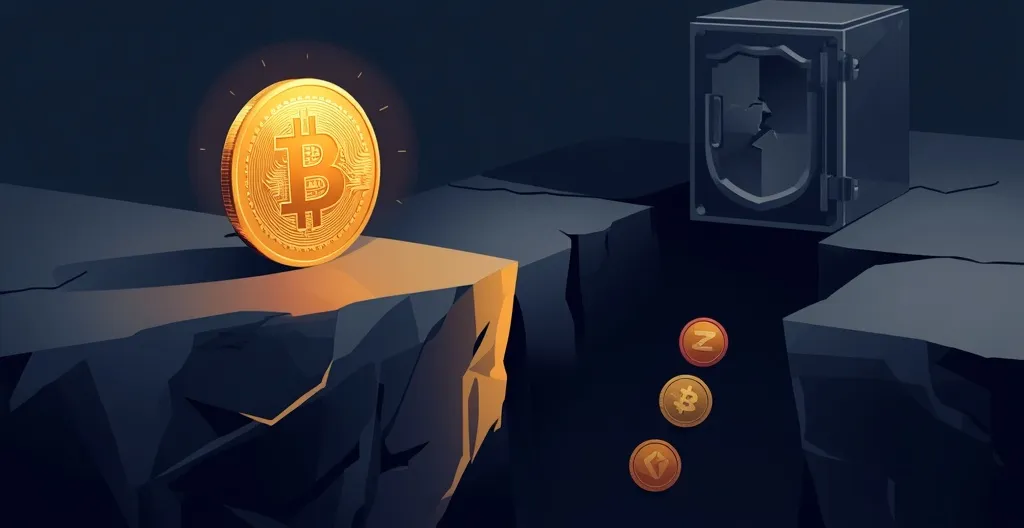
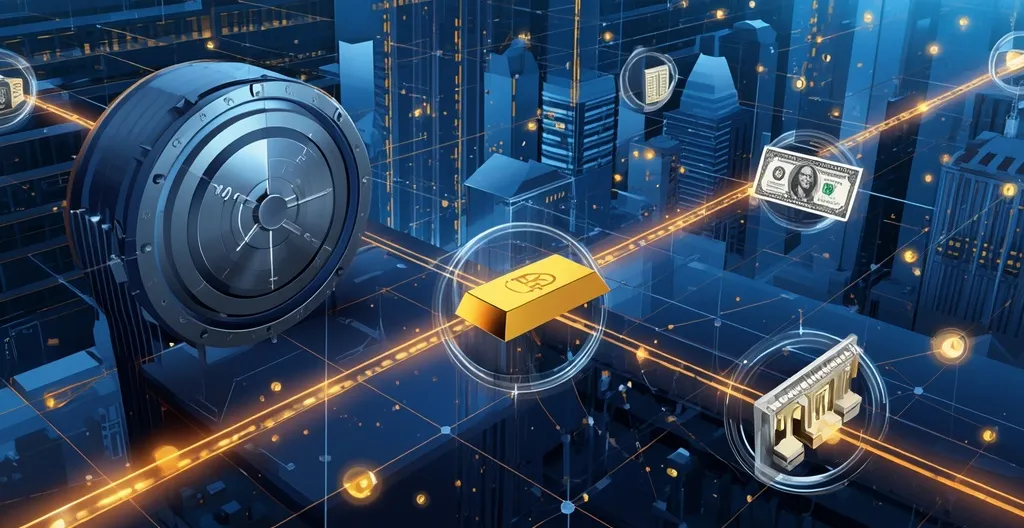
A Treasury bill, a vault of gold, a private credit claim, even a piece of real estate can be represented by a blockchain token, but that token is not the asset itself. It is a legal and economic claim on something that still lives off-chain, and that distinction is where the whole game is won or lost.
- RWAs put traditional assets on blockchain rails
- Big finance is already involved, BlackRock, JPMorgan, and Franklin Templeton among them
- The upside is real: faster settlement, fractional access, and programmable finance
- The risks are just as real: custody, legal enforceability, liquidity, and regulatory headaches
Real-world asset tokenization, or RWA tokenization, means creating a blockchain token that represents rights tied to an off-chain asset. Depending on the legal setup, that token might represent beneficial ownership, a debt claim, cash-flow rights, or redemption rights against a custodian, trust, or special purpose vehicle.
That legal wrapper matters more than the marketing would like to admit. A token can move on-chain in milliseconds, but if the underlying structure is weak, the claim behind it can be little more than a fancy IOU with a blockchain logo slapped on top.
That is why the blunt version of the thesis is this: tokenization changes the wrapper, not the underlying exposure.
How tokenized RWAs actually work
The basic structure is simple. A traditional asset, say a Treasury bill, a loan pool, or a bar of gold, is held by a custodian or placed inside a legal vehicle such as a special purpose vehicle, or SPV. A token is then issued on a blockchain to represent the holder’s rights to that asset or to the cash flows it generates.
In many cases, the token is restricted. It may be whitelisted, meaning only approved wallet addresses can hold or receive it. It may also come with redemption rules, transfer limits, identity checks, or administrative controls that let the issuer pause transfers or blacklist addresses.
That means these systems are often much more controlled than the average crypto native asset. The blockchain handles the record and transfer logic. The legal system handles the actual rights. Both layers matter. Miss one, and the whole contraption gets wobbly fast.
Many tokenized assets use familiar standards like ERC-20, the common format for fungible tokens on Ethereum and compatible chains. The token format is the easy part. The hard part is everything around it: custody, enforcement, redemption, compliance, and jurisdiction.
Bankruptcy-remoteness is one of the more important terms here. It refers to legal structures designed to keep the underlying asset insulated from the issuer’s other debts if the issuer goes bust. Without that protection, holders may end up fighting over legal scraps while the blockchain keeps humming along, blissfully unaware that the paperwork is on fire.
Why major institutions are testing tokenization
Traditional finance does not usually embrace new infrastructure unless it sees a real payoff. Tokenization offers several, at least in theory.
BlackRock CEO Larry Fink has been one of the loudest institutional voices pushing the idea. In his chairman’s letter, he said:
“Tokenization could help accelerate that future by updating the plumbing of the financial system, making investments easier to issue, easier to trade, and easier to access.”
He has also described tokenization as “the next generation for markets” and spoken about “one general ledger on which all assets are tokenized.” That is not a cypherpunk manifesto. It is Wall Street talking about better plumbing, lower friction, and wider distribution.
And honestly, that is the part that makes sense. Institutions care about:
Faster settlement. Moving ownership records on-chain can reduce back-office friction and shorten settlement cycles.
Fractional access. Expensive assets can be split into smaller units, which can lower the minimum buy-in.
Programmability. Smart contracts can automate compliance checks, coupon payments, and redemption flows.
Operational efficiency. Tokenized products can make issuance and transfer easier to manage, at least inside permissioned systems.
That is why firms like BlackRock, JPMorgan, and Franklin Templeton have become some of the most visible names in the sector. JPMorgan has been active on blockchain-based transaction infrastructure, and Franklin Templeton has issued tokenized products such as BENJI. BlackRock’s tokenized money market fund, BUIDL, has become a flagship example of the institutional push.
Other big names such as Goldman Sachs, HSBC, and UBS have also explored tokenized issuance or related pilots. The pattern is clear: this is no longer just crypto-native experimentation. It is becoming a business line for TradFi firms that want the benefits of blockchain without surrendering control of the rails.
How big is the market?
According to the data cited, tokenized real-world assets crossed $30 billion on-chain in 2026, up from roughly $5.5 billion in early 2025. The same figures put tokenized US Treasuries near $12.9 billion, private credit around $19 billion, and tokenized gold at about $5.5 billion.
Those figures are not directly interchangeable. They may come from different category definitions and can overlap depending on the data methodology, so they should be read as category estimates rather than neat, additive slices of one perfectly stacked pie.
Still, the direction is hard to ignore. Private credit appears to be the largest category in the available data, and RWA activity is concentrated in familiar, institution-friendly assets like Treasuries, credit, and gold. That makes sense. These are products with clear legal claims, clear yield narratives, and a strong fit for tokenization’s strongest pitch: better market plumbing.
BlackRock’s BUIDL fund is said to have surpassed $2.5 billion in assets, which gives a sense of how much demand there is for tokenized, yield-bearing products when the issuer is large, trusted, and plugged into the existing financial system.
That is also the uncomfortable truth for some crypto purists: a lot of tokenized RWAs are still very much TradFi products, just with blockchain-based issuance or transfer mechanics. The chain is new. The asset, the legal structure, and the compliance wrapper often look very familiar.
The upside: what tokenization can genuinely improve
Tokenization is not just marketing fluff. In the right setup, it can improve the way financial assets are issued, moved, and used.
Faster settlement is one obvious gain. Traditional finance often moves slower than it should because of legacy back-office systems, reconciliation steps, and multiple intermediaries. Blockchain rails can streamline some of that work.
Fractional ownership is another. Tokenization can divide high-value assets into smaller pieces, making them easier to distribute to smaller investors or into new market segments.
Programmability matters too. Smart contracts can automate functions like coupon distribution, compliance checks, redemption rules, and reporting. That is not sexy, but finance runs on boring machinery. Boring machinery that works is usually a good thing.
There is also a composability angle. In crypto, that means one system can plug into another like Lego bricks. A tokenized Treasury or tokenized gold position can, in theory, be used as collateral, liquidity, or yield-generating exposure inside decentralized finance systems.
That is the real promise: not just digitizing old assets, but making them useful in new ways.
And to be fair, this is no longer just a theory deck. Tokens representing traditional assets are already being issued and transferred on-chain in measurable volumes. Some of the most notable examples include products such as Figure HELOC Token on Provenance, along with gold-backed tokens like XAUT and PAXG.
The downside: what can go wrong
Here is the uncomfortable reality: a tokenized asset is only as strong as the legal and operational structure underneath it.
If the underlying asset is Treasury-backed, the holder still faces government debt and interest-rate risk. If it is private credit, the borrower can still default. If it is gold, the token still depends on the custodian who actually holds the metal. The blockchain does not make those risks disappear. It just gives them a new interface.
The biggest failures tend to come from the boring but decisive parts of the stack:
Custody risk. If the custodian fails, gets hacked, or mismanages the asset, the token’s value can break away from the real-world backing.
Legal risk. If the contract language, trust structure, or SPV setup is weak, redemption rights may be hard to enforce in court.
Regulatory risk. Tokenized securities still have to deal with securities laws, identity rules, and jurisdictional fragmentation.
Liquidity risk. A token can be technically transferable and still trade in a shallow, permissioned market with very few real buyers.
Operational risk. Some systems rely on administrative keys, which are privileged controls that can freeze transfers, block addresses, or change contract behavior. Handy for compliance. Also a giant reminder that “decentralized” is doing some heavy lifting in the pitch deck.
There is also oracle risk in some designs. An oracle is a system that feeds external data into a smart contract. If that data is wrong, manipulated, or delayed, the contract can make bad decisions. Not every RWA setup depends on an oracle, but where they do, it is another place where things can go sideways.
So yes, tokenization can modernize the rails. No, it does not repeal legal reality. Courts, custodians, and regulators still matter. Annoying, but true.
DeFi integration is still limited
The most interesting crypto-native angle is the connection between RWAs and decentralized finance. In theory, tokenized Treasuries, tokenized credit, and tokenized gold could be used as collateral or yield-bearing assets inside DeFi.
In practice, that part of the market remains small relative to the broader tokenized RWA universe. The figures provided say only about $2.5 billion of the roughly $30 billion RWA market is actually active in DeFi.
The exact number depends on how “active in DeFi” is measured, whether that means used as collateral, traded on decentralized exchanges, or deployed in lending protocols, but the direction is clear enough. Most tokenized RWAs are still living inside permissioned systems, not roaming free across open DeFi.
That is a big deal. It means the current market is still more crypto-enabled TradFi than DeFi-native capital markets. For all the talk of on-chain finance, a lot of these products are still gated by compliance rules, transfer restrictions, and investor eligibility checks.
Could that change? Sure. But for now, institutions want control, and control is not exactly DeFi’s favorite hobby.
Why the hype needs a reality check
Tokenization is one of the few parts of blockchain that can be defended without pretending every asset should become a speculative casino chip.
It solves real problems in issuance, recordkeeping, settlement, and access. It also creates new opportunities for products that can be split, moved, and automated more efficiently than their legacy equivalents.
But the hype often gets sloppy. A token does not automatically create liquidity. It does not automatically create safety. It does not automatically create decentralization. And it certainly does not turn a regulated financial claim into magic internet money just because it lives on Ethereum or another chain.
That is why the most useful way to think about RWAs is as infrastructure. Sometimes the infrastructure is genuinely better. Sometimes it is just a shinier spreadsheet with a lawyer attached. Both can be true.
Key questions and takeaways
-
What is a tokenized real-world asset?
It is a blockchain token that represents rights to an off-chain asset such as a Treasury bill, loan, gold bar, or fund interest. The token is a claim on the asset or its cash flows, not the asset itself. -
Does tokenization remove intermediaries?
No. It often changes which intermediaries matter. Custodians, issuers, transfer agents, compliance providers, and legal wrappers still sit underneath the token. -
Why are big institutions interested?
Because tokenization can make assets easier to issue, easier to trade, and easier to access, according to BlackRock’s Larry Fink. It can also reduce some of the operational friction that makes traditional finance such a bureaucratic slog. -
Are tokenized RWAs the same as stablecoins?
No. Stablecoins are tokenized claims on reserves, while RWAs cover a much broader set of assets such as credit, funds, commodities, and other off-chain instruments. They are related, but not the same bucket. -
Do tokenized RWAs compete with Bitcoin?
Not directly. RWAs bring traditional assets on-chain, while Bitcoin is a native crypto asset with very different monetary properties and use cases. They can coexist without pretending to be the same thing. -
What is the biggest risk?
Legal enforceability. If custody, redemption rights, or bankruptcy protections are weak, the blockchain token can look impressive while the actual claim underneath it is fragile. -
Can RWAs be used freely in DeFi?
Only in limited cases so far. Most tokenized RWAs still operate in permissioned environments, so open DeFi composability remains restricted.
The tokenized RWA market is no longer a side hobby for crypto insiders. It is becoming a real institutional category, and the numbers point to growing demand. That does not make the sector safe, open, or magically decentralized. It just means the plumbing is getting upgraded, one regulated token at a time.
That is worth paying attention to. Just not with blinders on.
Further reading
A few useful resources for digging deeper into RWAs, tokenization, and the institutional circus now piling into the space.
- Latest Transactions
- Tokenization of Real-World Assets: Legal Frameworks, Market Dynamics, and Policy Pathways for a Decentralized Financial Future
- Tokenization in data security
- Asset Tokenization in the US: A Practical Guide
- Wall Street Titans BlackRock and Apollo Dive into DeFi with RWA Tokenization Boom
- Paydax at $0.015: DeFi’s Next Big Thing or Another Risky Gamble
- Ethereum Under Pressure: BlackRock Credit Woes and Pepeto Hype Shake DeFi Confidence