RLUSD reaches Coinbase. How does its dollar backing work?
Claims that Coinbase added Ripple’s RLUSD stablecoin have not been confirmed in a Coinbase notice or product documentation. If the reported rollout goes ahead, it would give the token wider access. But a token designed to track $1 is not the same as an unconditional, instant dollar payout.
- Standard Custody & Trust Company, a Ripple subsidiary, issues RLUSD.
- Ripple says reserves include dollar deposits, short-term U.S. Treasuries and cash equivalents.
- Selling, converting and redeeming RLUSD are separate ways to get dollars.
- Coinbase’s listing, supported networks and conversion terms remain unverified.
What is known about the Coinbase claims?
The reported announcement says Coinbase added RLUSD to its retail app, Coinbase Exchange and Coinbase Prime on October 28, with deposits and withdrawals on XRP Ledger, Ethereum and Base. It does not specify the year, and Coinbase documentation does not confirm the listing or network details.
The same report says users can convert U.S. dollars and other supported dollar stablecoins into RLUSD at a 1:1 rate. Without confirmed product terms, that should not be taken as an unconditional offer to every customer. Eligibility, supported assets, fees, limits and processing times all matter.
Before sending funds, check Coinbase’s current deposit instructions for the exact asset and network. A deposit sent using an unsupported network or token contract may not be credited and could be unrecoverable. Pay particular attention to Base: CoinGecko identifies XRP Ledger and Ethereum as RLUSD’s native issuance networks, but that alone does not establish the status of any Base representation.
RLUSD collateral support on Coinbase Global Exchange has also been described as a future plan, not a live feature. Its timing, eligible products and margin rules have not been confirmed. Using a token as collateral is separate from buying, selling or depositing it.
Who issues RLUSD, and what backs it?
Ripple identifies Standard Custody & Trust Company, its New York subsidiary, as RLUSD’s issuer. Ripple says the company operates under a limited-purpose trust company charter granted by the New York Department of Financial Services.
Ripple says RLUSD reserves consist of dollar deposits, short-term U.S. Treasuries and cash equivalents. In July 2025, it named BNY as the stablecoin’s primary reserve custodian. A custodian holds assets under an agreement. That role is different from issuing tokens, processing redemptions or providing a place to trade.
These reserve categories describe the intended backing, but they do not show the exact assets and liabilities on a given date. A dated reserve attestation can offer a snapshot of specified holdings. It is not the same as a full audit of every part of an issuer’s operations. The reserve description also does not establish how quickly, or on what terms, an individual holder can receive dollars.
When RLUSD moves between wallets, control of the token changes hands. The transfer does not move reserve assets or create a new dollar deposit for the recipient. Issuance and redemption are separate processes. Issuance creates tokens through the issuer’s channels, while redemption returns tokens for dollars under the issuer’s terms.
The available product details do not establish the eligibility rules, minimums, fees or processing times for direct RLUSD redemption. Do not assume every wallet holder can redeem directly with the issuer just because the token is designed to track the dollar. RLUSD redemptions through Securitize show one specific arrangement. They do not prove that all holders have the same access.
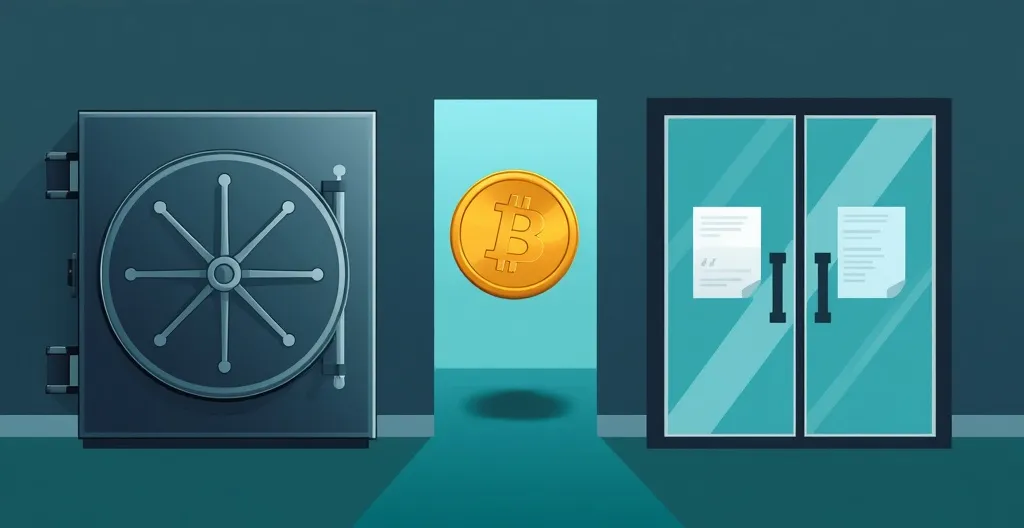
Three different routes from RLUSD to dollars
- Sell on a market: A holder sells RLUSD to another participant. The price depends on buyers, sellers and available liquidity, so it can rise above or fall below $1.
- Convert through a platform: A platform may let users convert RLUSD into dollars or another supported asset. The platform’s eligibility rules, fees and processing times apply.
- Redeem with the issuer: An eligible customer returns tokens through the issuer’s redemption process and seeks dollars under its terms.
Each route can involve different counterparties and timing. A blockchain transfer may settle outside ordinary banking hours, while a dollar payout may still depend on banking operations. The token can move around the clock. The banking system may not.
What does RLUSD’s market capitalization tell us?
Ripple has said RLUSD’s market capitalization topped $2.4 billion after the token launched in December 2024. That figure measures the value of tokens outstanding at the time. It does not show where they were held, whether Coinbase customers deposited them or how many were newly issued.
Market capitalization, trading volume, transfers and payments measure different things. A transfer may simply move tokens between a person’s own wallets. Trading volume records market activity, not necessarily purchases of goods and services. None of these figures alone proves recurring payment use.
Total supply also does not guarantee deep liquidity on every network or venue. Ripple has said it would provide liquidity on Base, but has not specified the amount or duration of that support. A large market-cap figure cannot tell you how easily a customer could sell a sizable amount during a market disruption.
Key questions about RLUSD and Coinbase
-
Is RLUSD available on Coinbase?
Claims say Coinbase added it to the retail app, Exchange and Prime on October 28, but Coinbase documentation does not confirm the listing. Check with Coinbase directly for the year and current availability.
-
Which networks can Coinbase customers use?
The reported rollout names XRP Ledger, Ethereum and Base, but Coinbase’s support for those networks has not been verified. Check the platform’s current deposit instructions and token details before transferring.
-
Who issues RLUSD?
Ripple identifies Standard Custody & Trust Company, a Ripple subsidiary, as the issuer. Ripple says BNY is the primary reserve custodian.
-
Does selling RLUSD equal redeeming it?
No. A sale depends on market buyers and price. Issuer redemption follows separate terms and eligibility rules, and a platform conversion is a different route.
-
Does RLUSD’s market capitalization prove Coinbase inflows or payment adoption?
No. Market capitalization does not show where tokens are held or how they are used. It also cannot distinguish new issuance from existing tokens moving between platforms.
-
Is Coinbase Global Exchange collateral support live?
It has been described as a later-stage plan, not confirmed live access. Its timing and product rules remain unverified.
Access is only one part of the dollar promise
If confirmed, a Coinbase rollout would give RLUSD another distribution channel. That could make the token easier to access and trade, but it would not prove deep liquidity, universal redemption at par or sustained payment use.
For customers, the checks are straightforward: confirm the token and network, read the platform’s conversion terms, and understand whether getting dollars means selling, converting or redeeming. A stablecoin’s dollar backing matters. So do the rules and systems that connect those reserves to the person holding the token.