
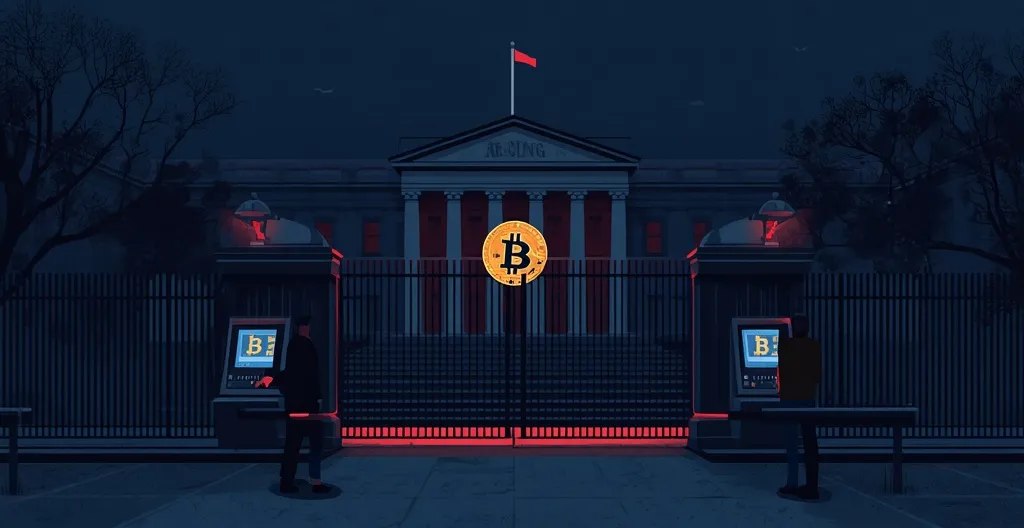
Russia’s State Duma has approved a crypto bill in second and third readings, moving toward a tightly controlled market, but the law still needs further approval before it becomes reality.
- Licensed crypto trading is being formalized.
- Retail users face a qualification test and purchase caps.
- Crypto payments for goods and services inside Russia remain banned.
- Cross-border use is being expanded while offshore access is being squeezed.
Russia’s State Duma has backed a bill that would create a licensed domestic framework for crypto trading, while keeping crypto out of everyday payments inside the country. The move brings digital assets under formal supervision, but it does so on Moscow’s terms: permissioned access, tighter retail controls, and a harder line on unlicensed foreign exchanges.
The law is not enacted yet. It still needs approval from the Federation Council and President Vladimir Putin. If it clears those steps, the main provisions are set to take effect on Sept. 1, with a transition period running until July 1, 2027.
That transition matters. This is not a full-throttle embrace of Bitcoin freedom. It is a state-managed lane for crypto, with the guardrails welded on. The message is clear enough: yes to controlled use, no to a retail free-for-all, and absolutely no to crypto becoming a parallel payment system in the supermarket queue.
What the bill would allow
The framework would permit buying and selling crypto through licensed Russian intermediaries. The categories named in the material include brokers, asset managers, exchanges, digital depositories, and registered crypto exchangers. In plain English, trading would be allowed, but only through approved gatekeepers that operate inside the country’s regulatory box.
Only highly liquid digital assets approved under Bank of Russia criteria are expected to qualify. Bitcoin and Ethereum are the clearest likely candidates. Stablecoins such as USDT and USDC are treated separately under the bill as foreign digital instruments, which means regulators appear to see them more like cross-border settlement tools than straightforward domestic crypto assets.
That distinction matters. USDT may be useful in international trade, but that does not make it a blank check for retail use. Regulators tend to love stablecoins right up until those stablecoins start behaving like money people can move without asking permission.
What stays banned
The bill does not lift Russia’s ban on cryptocurrency payments for goods and services inside the country. So no, this does not mean Russians will suddenly be paying for coffee, groceries, or metro rides with Bitcoin. Crypto is being treated as a regulated asset and settlement tool, not as everyday money.
That line in the sand is central to the whole framework. Russia is willing to legalize crypto where it helps with visibility, taxation, and cross-border settlement. It is not willing to let digital assets become a retail payment rail that sits outside state control. The state wants the utility without the chaos. A very on-brand approach, frankly.
What retail users face
Retail investors would need to pass a qualification test before trading. They would also face an annual purchase limit of 300, 000 rubles through each licensed intermediary.
That is not a broad-market crypto regime. It is a tightly managed access model that keeps ordinary users on a short leash while giving more room to professional or qualified investors. Those investors are treated as more experienced market participants, and the available reporting suggests they may face looser rules, though sources differ on whether that means no limits at all or simply much higher ones.
Either way, the direction of travel is obvious: retail gets tested, capped, and supervised; institutions get the better seats. That may reduce fraud and speculative blowups, but it also leaves a sour taste if you were hoping for a genuinely open market.
The bill also includes a 48-hour cooling-off period for certain transfers. That is a classic anti-fraud measure designed to slow down rushed or suspicious transactions. It may help stop scams and bad decisions, but it also adds friction for legitimate users. Regulators call that protection. Users usually call it a bureaucratic pain in the neck. Both can be true at once.
Russia’s push against offshore exchanges
The framework also tightens the screws on unlicensed overseas exchanges. According to Andrey Tugarin, founder of GMT Legal, users will no longer be able to fund foreign trading platforms directly through Russian banking channels after July 1, 2027.
“users will no longer be able to fund foreign trading platforms directly through Russian banking channels after that deadline.”
That points to a broader effort to corral crypto activity into domestic, licensed rails and away from offshore venues. The exact enforcement mechanics still matter here, but the direction is unmistakable: Russia wants more control over where money goes and who sits in the middle of the transaction.
In other words, the state is not just building a legal on-ramp. It is also trying to close some of the exits.
Why the state would want this
Supporters of the bill will argue that it brings crypto into the light. It creates formal oversight, gives legitimate businesses a route to use digital assets, and helps reduce fraud, money loss, and pure fly-by-night nonsense. There is a real policy logic there. Regulated rails are easier to supervise than a shadow market full of half-broken promises and Telegram hustle.
There is also a geopolitical angle that cannot be ignored. Russia has been under pressure from sanctions and payment restrictions, and crypto’s role in foreign trade has become more strategically interesting as a result. The bill expands room for exporters, importers, miners, depositories, and exchangers involved in cross-border trade. That is where the real utility seems to be: settlement, not shopping.
That does not mean every use case is about sanctions evasion. But it does mean the government clearly sees digital assets as a practical tool for trade friction, not just as a speculative toy for retail punters chasing the next moonshot.
Why critics aren’t impressed
Sergey Mendeleev, founder of Exved, criticized the framework as “more restrictive than supportive.” That criticism lands because the structure does look heavily tilted toward major financial institutions and regulated players.
“more restrictive than supportive”
Retail users get a test and a cap. Offshore access gets squeezed. Licensed intermediaries get the privileged lane. If you are a domestic crypto business that was hoping for a broad, permissionless market, this does not look like liberation. It looks more like a state-approved funnel.
And that is the central tension. Regulators want visibility, fraud control, and taxable activity. Crypto users want open access, fast settlement, and fewer gatekeepers. Those goals do not naturally get along. One side calls it order. The other calls it a cage with better branding.
What this really means for Bitcoin and the wider market
Bitcoin and Ethereum appear likely to fit the “highly liquid digital assets” bucket, but the bill is not a victory lap for open crypto adoption. It is a controlled on-ramp with a big asterisk attached.
For BTC holders, the upside is that Russia is not banning crypto outright. It is creating a legal domestic structure around it. For anyone expecting broad retail freedom, though, this is a hard no. The framework is selective, permissioned, and deeply suspicious of crypto behaving too much like uncensored money.
Stablecoins like USDT and USDC add another layer of nuance. They are heavily used in trading and cross-border settlement because they are designed to stay close to fiat value. But under this bill, they are being treated as foreign digital instruments, not a simple retail green light. That makes them useful, politically sensitive, and very much under scrutiny.
The bigger question is whether this regulated system will actually pull users onshore or simply encourage more people to route around it. People have a long and glorious history of resenting financial babysitting. If the legal path is too narrow, some users will keep using the messy offshore routes anyway.
Key takeaways
-
Is Russia legalizing crypto?
Partly. Russia is allowing licensed crypto trading, but crypto payments for goods and services inside the country remain banned. -
Can ordinary Russians buy crypto freely?
No. Retail users must pass a qualification test and face an annual 300, 000-ruble purchase limit through each licensed intermediary. -
Will Bitcoin and Ethereum be allowed?
They are the clearest likely candidates under the bill’s “highly liquid digital assets” framework, but the final list depends on Bank of Russia criteria. -
What happens to stablecoins like USDT and USDC?
They are classified as foreign digital instruments, which suggests a more complicated role than straightforward domestic retail crypto. -
Can Russians still use offshore exchanges?
That window is narrowing. The framework points toward tighter banking restrictions, with July 1, 2027 a key deadline in the transition period. -
Who benefits most from this bill?
Licensed intermediaries, larger financial players, and cross-border trade users appear to benefit most. Critics argue ordinary users are being boxed out.
Russia is not embracing crypto as a free-market revolution. It is trying to domesticate it, tax it, and keep it on a short leash. That may help with oversight and trade settlement. It may also leave plenty of users looking for a way around the fence.
Further reading
A few related angles worth keeping on the radar:
- Russia Passes Crypto Bill With Retail Buying Limits and
- Russia's Crypto Regulation Bill Heads to Final State Duma
- Russia Limits Crypto Buyers, Yahoo Finance Coverage
- Russia Passes Comprehensive Crypto Law with $3, 800 Cap for
- Russia's First Comprehensive Crypto Law Is Two Votes
- Russia Greenlights Crypto for Global Trade: State Duma
- Bitcoin Dominates US Payments, Stablecoins Rule Asia in CoinGate’s 2025 Report
- Trump Signs Order to Boost Bitcoin, Ban CBDCs, and Promote Stablecoins
- Cambodia Embraces Stablecoins Amid Bitcoin and Ether Ban


