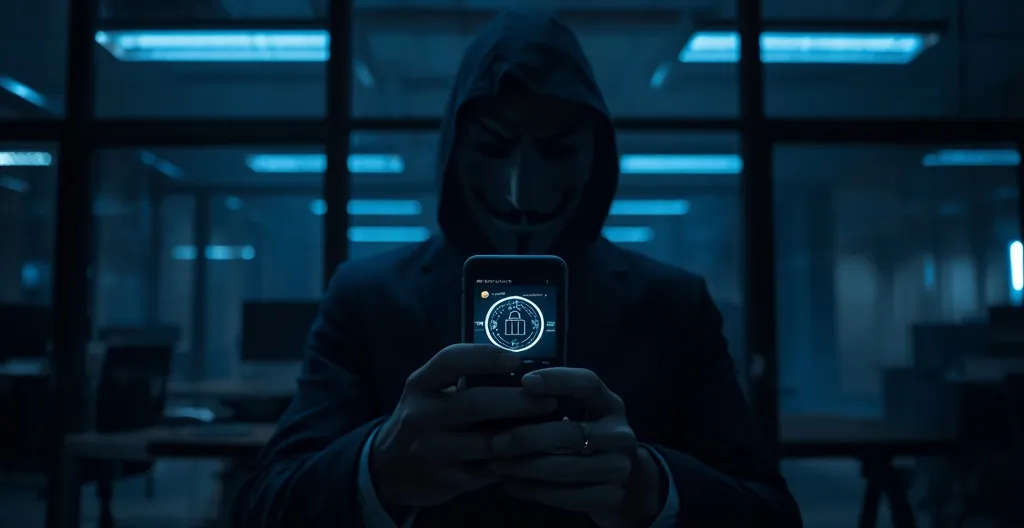
The SEC is said to have charged two investment advisors in an alleged $15 million crypto fraud that used WhatsApp to communicate with victims, but the available source material does not independently verify the underlying case details.
- Claimed enforcement action: SEC charges involving two investment advisors
- Alleged size: $15 million
- Messaging app involved: WhatsApp
- Verification caveat: no direct SEC filing or corroborating report was included
WhatsApp is a private messaging and calling app with end-to-end encryption. That means only the sender and recipient can read the messages, not even WhatsApp. For ordinary people, that privacy is useful if you do not want every conversation dragged into public view. It is also exactly the kind of setup scammers love, because private chat can make it easier to run a pitch away from normal oversight.
That does not mean encrypted messaging is shady by default. The tool is neutral. The abuse is human. Privacy is a feature, not a confession. The problem is the person on the other end waving around fake returns, fake urgency, and fake legitimacy like a carnival barker with a terminal case of greed.
The headline claim is simple enough. The SEC is reported to have charged two investment advisors in connection with a crypto-related fraud allegedly worth $15 million, with WhatsApp used as part of the communication trail. But the materials provided do not include the actual SEC complaint, a docket number, or a clearly attributable release confirming the identities of the advisers or the exact nature of the charges.
That matters. A $15 million figure sounds precise, but without context it can mean several different things: investor losses, funds raised, alleged proceeds, or the size of a broader scheme. Those are not the same number. Crypto headlines love tossing around a big dollar amount and hoping nobody asks what it actually measures. That is sloppy at best and deceptive at worst.
The source text also looks thin and promotional, with generic talk about compliance, security, liquidity, and institutional frameworks instead of hard case details. That does not prove the claim is false. It does mean readers should treat it cautiously until the underlying filing or a reputable report confirms it.
From a broader enforcement angle, the alleged case would fit a familiar pattern if confirmed. Regulators have long gone after investment fraud, misleading fundraising, and digital-asset schemes that rely on hype instead of disclosure. Crypto is not special in that sense. It just gives scammers a fresh coat of paint and a new buzzword to slap on the same old con.
There is also a real tension here that crypto people should be honest about. Strong privacy tools are essential in a world that keeps normalizing surveillance and central control. At the same time, the same tools can be used to hide fraud, coordinate boiler-room sales tactics, and push victims into private channels where there is less public accountability. That tradeoff is real, not theoretical.
For investors, the practical lesson is boring but useful. If an “opportunity” arrives in a private chat and comes wrapped in urgency, exclusivity, or promises of easy gains, assume the pitch is guilty until proven otherwise. Verify names. Check public filings. Look for registered entities. And if someone tells you not to tell anyone, that is usually not a sign of genius. It is a sign to back away slowly.
The bigger issue is not WhatsApp itself. It is the familiar crypto scam playbook wearing a modern mask. Whether the app is encrypted, the token is “revolutionary, ” or the advisor sounds polished, none of that substitutes for proof, disclosures, and oversight. Decentralization should reduce gatekeepers, not eliminate standards.
Until the actual SEC filing or a credible corroborating report is in hand, this should be treated as an unverified enforcement claim rather than a fully locked-down case report. In a market already drowning in nonsense, that distinction is not optional.
Key takeaways
-
Is the SEC case confirmed from the available material?
No. The materials do not include a direct SEC filing or a reputable corroborating report, so the core claim remains unverified here. -
Why does WhatsApp keep showing up in fraud cases?
Because it offers private, encrypted communication that can help bad actors move conversations away from public scrutiny and ordinary oversight. -
Does encryption mean fraud?
No. Encryption is a privacy tool, not proof of wrongdoing. It can protect legitimate users just as easily as it can help scammers hide. -
What does the $15 million figure actually mean?
The source material does not say. It could refer to losses, funds raised, or alleged proceeds, and those are very different things. -
What should investors take from this?
Be extremely skeptical of private-message investment pitches, especially ones promising outsized returns, secrecy, or urgency. If it smells like a hustle, it probably is.
Further reading
A few related pieces that help round out the fraud, enforcement, and privacy angle.
- SEC Charges Two Investment Advisors in $15 Million WhatsApp Crypto Fraud
- Understanding the Impact of Climate Change on Global Markets
- Securities Enforcement Roundup
- SEC Charges Multiple Entities in Fraud Schemes Totaling at Least $15 Million
- Meta’s $4M WhatsApp Bug Bounty: Boosting Security Amid Regulatory Wins
- Bitsonic CEO Shin Jin-wook Gets Second Jail Term for $115K Crypto Fraud
- SEC Accuses Texas Man of $12.3M Crypto Fraud Using AI Trading Bot Promises