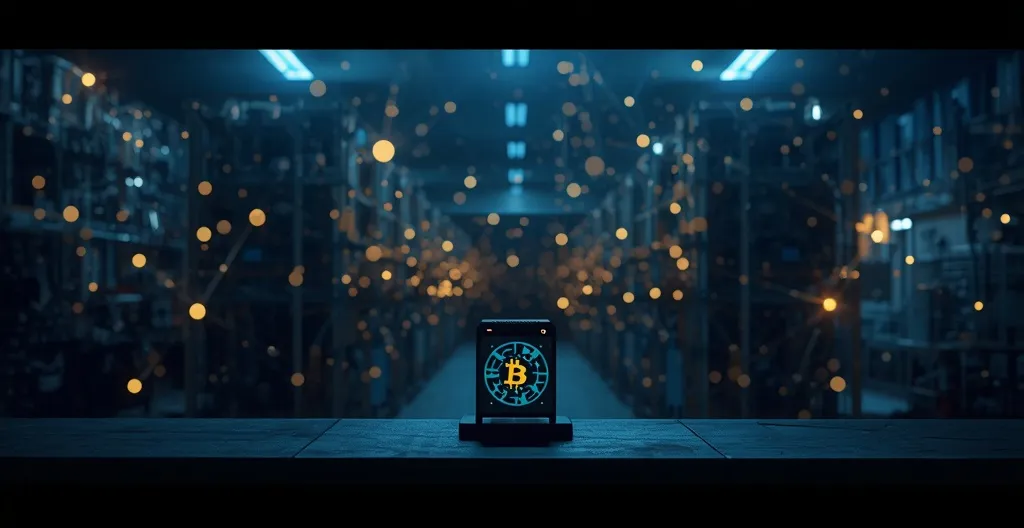
A cheap Bitaxe turned into an expensive lesson in Bitcoin probability after a solo miner found block 957, 382 and earned 3.1382 BTC, worth about $200, 000 at the time.
- Block 957, 382 was found by a solo Bitaxe miner
- Reward: 3.1382 BTC, including fees
- Hashrate: about 995.2 GH/s, just under 1 TH/s
- Odds: CoinDesk estimated roughly one block every 18, 000 years at that rate
The payout included the standard 3.125 BTC block subsidy plus about 0.0132 BTC in transaction fees. That is the fixed protocol reward, plus the extra fees users attach to transactions so miners have an incentive to include them in a block.
The miner reportedly ran a Bitaxe device at about 995.2 gigahashes per second through Public Pool, a solo-mining service that lets a miner keep the full block reward if luck breaks the right way. Public Pool said this was the second block found by a single Bitaxe through its hosted service.
This is the point where the numbers stop sounding like a hobby and start sounding like a lottery ticket.
At roughly 995 GH/s, the odds are brutal. CoinDesk estimated a machine running at that speed would find a block only once in 18, 000 years on average. That is not a promise, not a forecast, and definitely not a retirement plan. It is what happens when Bitcoin’s randomness runs into a machine that is tiny by network standards.
For readers new to the jargon: hashrate is the amount of computing power devoted to mining. More hashrate means more attempts at solving a block. Solo mining means mining without a normal payout-sharing pool. If you win, you keep the whole block reward, but if you don’t, you get nothing. That “nothing” can last a very, very long time.
Bitaxe devices are popular because they are cheap and accessible, often selling for roughly $60 to $150. They have a place in the ecosystem. Hobbyists like them, decentralization nerds like them, and anyone who enjoys the idea of a regular person taking a shot at Bitcoin’s base layer probably likes them too. But as an income strategy, they are wildly impractical. Fun? Sure. Sensible? Not remotely.
That contrast is the whole story. Bitcoin mining is designed so that even small participants can, in theory, find blocks. In practice, industrial miners dominate because scale matters, electricity costs matter, and probability does not care about your dreams. A Bitaxe is not competing with a warehouse full of Antminers on equal footing. It is buying a very tiny slice of a very large raffle.
Still, solo mining has been showing up in the numbers more often lately. According to CoinDesk, solo miners found 24 Bitcoin blocks in the past 12 months, up 41% from the previous year. That does not mean home mining suddenly became a solid business. It means a few more lucky shots landed, which is exactly the sort of thing randomness does when people mistake it for a trend.
The recent dip in Bitcoin mining difficulty also gives small miners a slightly better shot. On July 11, difficulty fell 5% to 127.17 trillion at block 957, 600, following a 10.09% drop in June. Bitcoin adjusts difficulty every 2, 016 blocks to keep average block times near ten minutes. When network hashrate drops, difficulty can ease, which improves the odds for everyone a little bit, including hobby miners.
Little bit is doing a lot of work there. A 5% difficulty drop does not magically make a 995 GH/s device profitable in any reliable sense. It nudges the math at the margin. The gap between a Bitaxe and industrial mining remains enormous, and no amount of motivational tweeting changes that.
The comparison is still useful, though. Solo mining services such as Public Pool and CKPool exist because plenty of people want the chance to mine independently without joining a standard pool that splits rewards among participants. A solo pool preserves the full upside, but the downside is savage variance. One lucky block can be life-changing. The other 99.999999% of the time, the hardware just warms the room.
That is also why this kind of win matters beyond the novelty. It shows that Bitcoin’s proof-of-work system is still open enough that tiny operators can participate directly if they want to. That is part of the point of a permissionless network: no gatekeeper, no permission slip, no middleman deciding who gets to play.
There is a darker, more practical side too. Mining economics are unforgiving, and when margins tighten, some miners look for better returns elsewhere, including AI and high-performance computing workloads. That is mostly a larger-operator story, not a Bitaxe story, but it reflects the same hard reality: compute goes where it is paid best. Sentiment does not pay electricity bills.
None of that makes this win less real. It just keeps it in perspective. A solo Bitaxe finding a Bitcoin block is a genuine event, but it is also an extreme outlier. It is proof that the system allows tiny players to win, not proof that tiny players should expect to win.
Key takeaways
-
Was this a normal mining payout?
No. It was an extreme long-shot win. A low-cost Bitaxe almost never finds a block, which is exactly why the payout is so large when it does. -
Does a lower difficulty make solo mining worthwhile?
Not really. A difficulty drop slightly improves the odds for everyone, but it does not turn a tiny home miner into a dependable money printer. -
Why use a solo pool like Public Pool?
A solo pool lets a miner keep the full block reward if luck hits. That means no reward splitting, but also brutal variance and long stretches of nothing. -
What does the 3.125 BTC subsidy mean?
It is the fixed block reward Bitcoin currently issues for finding a block, before transaction fees are added on top. -
Is Bitaxe hardware a realistic income source?
For most people, no. It is better viewed as a hobby device, a decentralization tool, and a lottery ticket than a steady revenue machine.
Bitcoin still lets a tiny machine take a swing at the same block reward as the big boys. The odds are absurd, the math is merciless, and that openness is exactly what makes the system worth defending.
Further reading
A few extra angles on solo mining, home setups, and why the odds are brutal but the upside still matters.
- Solo Bitcoin miner earns $200K block reward with $150 Bitaxe
- Understanding the Impact of Climate Change on Global
- Solo Bitcoin Miner Wins $263K with Compact Bitaxe, Boosting Decentralization
- Home Bitcoin Mining Guide: Set Up and Profit in 2024
- Bitcoin Mining Difficulty Drops 10% in Rare Downward Adjustment