South Korea Proposes Separate Rules for Token Sales and Exchange Listings
South Korea’s proposed framework would require token offerings and exchange listings to go through separate disclosure processes. As of Nov. 27, 2026, the proposal has not created a working route for domestic token sales.
- Issuers or brokers would disclose offerings before soliciting buyers.
- Platforms would have a separate reporting duty when seeking to list tokens.
- The waiting period, review standard and supply definitions are still unsettled.
- Payment tokens would have their own licensing and reserve rules.
A proposal, not a functioning ICO route
South Korea’s Financial Services Commission (FSC) announced its domestic initial coin offering (ICO) ban in September 2017. An ICO is a token sale used to raise funds. On Nov. 24, 2026, the FSC, led by Chair Lee Eok-won, presented a proposal to set disclosure requirements for domestic token offerings.
The proposal is not law, and there is no operational filing procedure yet. The National Assembly’s National Policy Committee is scheduled to hold a hearing on Dec. 3. That is a legislative milestone, not the date domestic ICOs automatically become permissible.
Under the proposal, an issuer or broker soliciting token acquisitions would file a white paper. It would describe the party conducting the solicitation, the project, the intended use of funds, the issuance volume and relevant risks. The document would be accepted and made public before solicitation, followed by a waiting period.
The FSC’s English announcement says solicitation would begin “after having a cooling-off period, ” but does not say how long the period would last. It also does not make clear whether acceptance means a completeness check, a substantive review or some other procedural step. Acceptance should not be taken as regulatory endorsement of a project or a guarantee of its commercial prospects.
The proposal appears to cover offerings solicited by issuers or brokers, rather than establish a blanket process for every token. The final legislation will need to define which activities count as solicitation, including prelaunch promotions and the role of third parties.
Why a token sale and a listing are separate
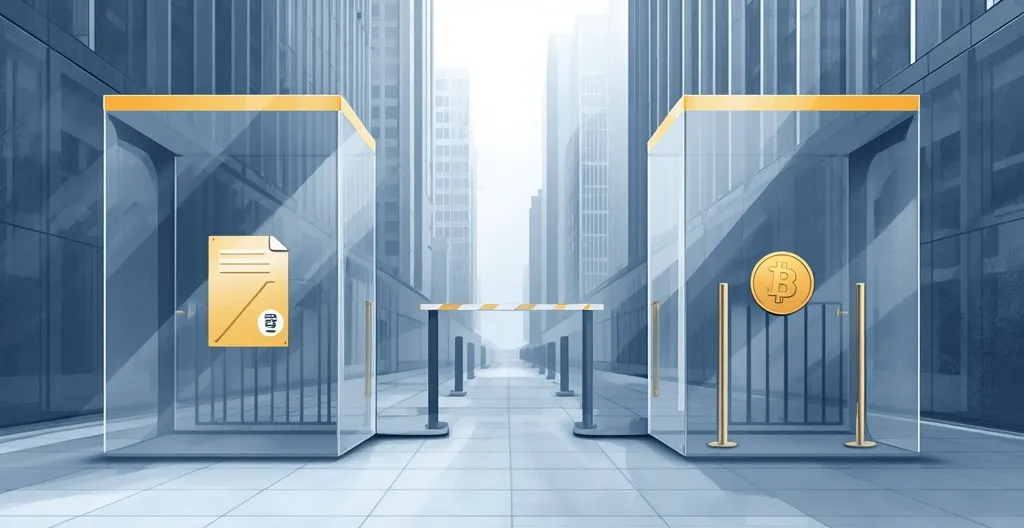
A primary offering raises funds for a project or another party. Secondary trading comes later, when buyers and sellers exchange tokens. The proposal treats these as separate events, which may involve different parties and records.
A platform seeking to list a token would have its own reporting duty. The FSC’s summary says the report would cover the token, issuer, risks and supply information. The summary does not say where the report would be filed, whether it would be public or exactly when it must be submitted. A platform report would not amount to regulatory approval of a listing.
The distinction matters in a market where a token can be created in one jurisdiction, sold through an entity in another and traded on platforms elsewhere. Mapping South Korea’s digital asset regulatory landscape outlines the wider policy context for these cross-border arrangements. In a 2019 publication, the FSC said financial supervisors reviewed 22 companies over three months in 2018, drawing on voluntary responses and materials such as white papers and promotional documents. The agency reported that many used overseas entities, including in Singapore, even though their underlying businesses were Korean.
Those findings document cases that supervisors encountered. They do not show how common offshore structures were across the entire market. The FSC put the amount raised in the offerings it discussed at roughly KRW 566.4 billion, with an average of around KRW 33 billion. Its breakdown by offering size covered 17 cases, fewer than the 22 companies reviewed. The figures reflect what supervisors could document in that review.
The FSC has also cited two specific examples. It said an unnamed platform business established a foundation abroad before its token reached Korean exchanges in May 2025. In another case, described in the agency’s Korean-language release, an unnamed stablecoin’s local market price rose to 4.2 times its reference after trading support began amid limited supply in September 2026. The FSC said the price stabilized after eight hours. The agency did not identify the token or specify the market and benchmark behind the comparison, so this should be treated as a reported case, not a typical outcome.
Supply disclosures can change how a token looks
Issued supply is the total number of tokens created or issued. Circulating supply refers to the units considered available in circulation under the reporting method used. Some issued tokens may remain locked or otherwise unavailable to trade, so the two figures may differ.
That difference affects valuation comparisons. In a hypothetical example, a token priced at KRW 500 with 20 million units circulating would have a circulating value of KRW 10 billion. If its maximum supply were 100 million, a fully diluted calculation using that maximum would be KRW 50 billion. The figures answer different questions, and neither is meaningful without a clear supply definition and measurement date.
According to the FSC’s summary, the proposal would require immediate disclosure of material changes in issuance or circulation, as well as events such as a cyber incident or system malfunction. Those updates will help only if the final rules say how supply must be measured and verified, and whether earlier filing versions will remain available for comparison.
The FSC’s proposal also provides for liability for damages tied to material falsehoods or omissions. The summary describes strict liability for parties with disclosure duties, including covered executives. The final legal text will determine who is covered, how responsibility is divided among issuers, brokers and other parties, and what purchasers must establish to bring a claim.
Payment tokens would have a separate rulebook
The proposal defines a payment token by reference to a single currency and its use for payments. That category may overlap with what people commonly call stablecoins, but the terms are not automatically identical. The final rules will determine the legal definition and scope.
Domestic payment-token issuers would need at least KRW 5 billion in equity. Initial participation would be limited to consortiums more than 50% owned by banks in aggregate, though a technology company could still be the largest individual shareholder. Issuers would also need plans for issuance and redemption, including limits and reserve management. The proposal would restrict venues from listing or providing certain services for payment tokens whose issuance plans had not been authorized or reported.
These issuer requirements are separate from the proposed minimum capital figures for licensed service providers. The FSC’s English release gives indicative minimum equity of KRW 2 billion for a provider handling all types of digital assets and KRW 1 billion for one dealing only in stablecoins. A presidential decree would set the specific amounts.
How South Korea’s proposal compares with MiCA
The European Union’s Markets in Crypto-Assets Regulation (MiCA) offers a point of comparison, not a direct equivalent. Under MiCA Article 8, relevant materials must be notified at least 20 working days before publication in specified circumstances. That differs from South Korea’s proposed waiting period after disclosure and before solicitation.
MiCA Article 13 also gives certain covered retail buyers a 14-day withdrawal right, subject to conditions and exceptions. That is a right after purchase, unlike South Korea’s proposed cooling-off period before solicitation. Whether Korean rules will include withdrawal, refund or other buyer protections remains to be decided.
What lawmakers still need to clarify
The framework’s effectiveness will depend on practical details: what regulators review, how long buyers must wait, which parties verify disclosures, how token supply is defined, and how the rules apply to legacy tokens and overseas projects. The Dec. 3 hearing is a chance to address those questions before disclosure becomes paperwork that leaves buyers no better informed.
As of Nov. 27, 2026, South Korea has proposed a path for domestic token offerings, but has not opened one. The final rules will determine whether that path delivers useful information and accountability, or merely adds another filing to a cross-border market that is difficult to police.
For wider context on the regulatory push, see South Korea’s 2026 crypto crackdown.
Key questions and answers
-
Has South Korea lifted its domestic ICO ban?
No. The FSC presented a proposal on Nov. 24, 2026, but there is no working filing route yet.
-
Would a token offering automatically receive an exchange listing?
No. The proposal gives platforms a separate reporting duty when seeking to list a token. An offering and a listing are distinct steps.
-
How long would buyers have to wait after disclosure?
The proposal includes a cooling-off period before solicitation, but the FSC’s English announcement does not specify its duration.
-
Does acceptance of a white paper mean the regulator approves the project?
Not necessarily. The proposal’s acceptance and review standards are still unclear. Acceptance should not be treated as an endorsement or a guarantee of success.
-
Would payment tokens follow the same rules as other offerings?
No. The proposal sets out a separate licensing, reserve and redemption regime, including a KRW 5 billion equity threshold for domestic payment-token issuers.