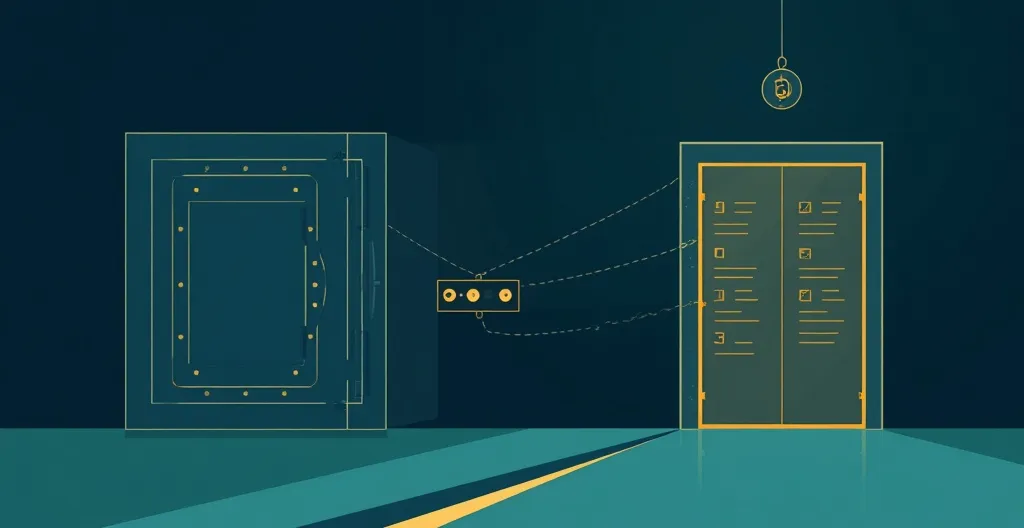
Stacks is positioning Bitcoin for a new kind of machine-to-machine economy, where AI agents can interact with BTC-secured, onchain systems rather than just sit on the sidelines.
- Stacks says AI agents can transact in its Bitcoin-secured ecosystem
- The claim appears to mean BTC-adjacent or BTC-denominated activity, not clearly native Bitcoin L1 transfers
- Identity, payments, and DeFi-style actions are part of the setup
- Security and permissioning are the real test, not the buzzwords
The title is doing a lot of work here, so precision matters. Based on the available material, Stacks is not clearly claiming that autonomous bots are freely sending native Bitcoin transactions on the main Bitcoin network like some kind of untamed financial gremlin. The stronger reading is that Stacks is letting AI agents operate inside a BTC-secured, onchain environment, with onchain actions, BTC-related activity, and programmable execution.
That distinction is not just nerd nitpicking. It separates a real technical development from marketing fog dressed up as Bitcoin maximalism.
Stacks is usually described as a Bitcoin layer that extends Bitcoin’s usefulness without turning Bitcoin itself into a bloated smart-contract circus. Bitcoin stays the base layer: conservative, secure, and stubborn in the way money should be. Stacks adds programmability on top, which is exactly the sort of place where AI agents start to make sense.
AI agents are software systems that can act with some autonomy. They can make decisions, trigger workflows, and interact with services without a human clicking every step. In crypto, that can mean payments, identity registration, DeFi execution, or treasury actions, but only if the permissions, guardrails, and custody setup are sane.
According to Stacks.co, there is already a Bitcoin AI agent ecosystem on Stacks. One example it highlights is Trustless Indra, described as an autonomous agent exploring Bitcoin-native AI. Stacks says it is building dev tools, x402 APIs, and open infrastructure for other agents.
The same ecosystem page says Trustless Indra holds ERC-8004 on-chain identity #1, owns the arc0.btc BNS name, and has earned 2, 689 heartbeats in BTC. That last one sounds like the kind of metric only crypto could invent with a straight face, so a little translation helps.
BNS is a naming system in the Stacks ecosystem, similar to a blockchain username. ERC-8004 is being positioned as an on-chain identity standard for agents, with a mainnet launch targeted for 2026 according to Stacks. And x402 is part of a broader push toward machine-readable payments, the sort of plumbing that lets software pay software without a human babysitting every transfer.
Stacks also says agents in its ecosystem can earn Bitcoin through Dual Stacking, trade on decentralized exchanges such as Bitflow, register identities, and search for yield opportunities onchain. It points to Prompt to DAO as well, an AI agent that can create AI-led collectives on Stacks with a single prompt.
Useful? Potentially. Overhyped? Also potentially. Crypto has a long and dishonorable tradition of turning “interesting infrastructure” into “please clap for my dashboard.”
The broader trend is real, though. The Block Research has described AI agents in crypto moving from simple automation, things like social bots and on-chain data analysis, into a more transactional phase involving DeFi protocols, cross-chain systems, and smart contracts. The important detail is that, in most cases, the heavy AI reasoning still happens off-chain, while execution happens on-chain.
That architecture matters. It means the AI is usually not “living” on the blockchain. It is thinking elsewhere, then using blockchain rails to execute a limited set of actions. That is a much more realistic model than the sci-fi version where a fully autonomous wallet spirit wanders through DeFi with no leash and no handler.
Chainalysis has framed this shift as agentic payments: AI systems initiating payment transactions under predefined controls. That phrase does a lot of the heavy lifting. Predefined controls are the point. Spend limits, velocity limits, human approval gates, audit trails, all the boring stuff that keeps a clever tool from becoming a fast and expensive mistake machine.
There are credible use cases here. AI agents can already be useful for automated treasury management, programmatic service payments, DeFi execution, identity-based coordination, and machine-to-machine commerce. For Bitcoin specifically, the appeal is straightforward: if a Bitcoin-secured layer can add programmability without sacrificing the asset’s core settlement strengths, that opens a practical niche Bitcoin itself was never designed to fill.
But the wording still needs a hard eye.
“Transact with BTC onchain” can mean a few different things: moving BTC between wallets, paying for services in BTC, earning BTC, interacting with BTC-denominated systems, or settling activity through Bitcoin-secured infrastructure. The supplied material supports the last bucket far more comfortably than it supports a clean, literal claim that AI agents are independently sending native Bitcoin mainnet transactions.
That may sound like splitting hairs. It isn’t. In crypto, the hair is usually where the bodies are buried.
The security side is where the fantasy gets reality-checked. Galaxy points to obvious failure modes: bad data, malicious smart-contract triggers, misread logic, and flawed execution paths. If an AI agent can move value, then whoever controls the permissions controls the blast radius. Without strict guardrails, “autonomous finance” is just a polished way to say “we automated the mistake.”
That is also why the current wave of AI-agent systems tends to be narrower than the hype suggests. Most are not sovereign economic beings. They are software systems operating under policies, keys, and constraints set by humans. That is not a flaw. That is how you keep the thing from draining itself into a phishing scam before breakfast.
There is a useful bigger picture here. Bitcoin does not need to become Ethereum to be relevant. It needs layers and tools that let it serve as the money base while other systems handle the messy logic. Stacks is trying to occupy that layer: Bitcoin-secured, programmable, and increasingly aimed at AI-agent workflows.
If that sounds ambitious, it is. But it also has a believable technical shape, which is more than can be said for a lot of crypto projects that lead with a token and back into a use case later.
How Agentic AI Will Reshape Payments in broader payment systems is exactly the kind of question that shows why this matters beyond crypto’s usual hype machine.
Key questions and takeaways
-
What did Stacks enable?
Stacks is presenting AI-agent functionality inside its Bitcoin-secured ecosystem, including identity, naming, payments, and other onchain actions. The available material does not clearly prove native Bitcoin layer-1 transfers by agents. -
Are AI agents really transacting with BTC?
They appear to be interacting with BTC-related or BTC-denominated systems in the Stacks ecosystem. That is not the same thing as verified autonomous native BTC transfers on Bitcoin mainnet. -
Why does this matter?
It pushes Bitcoin closer to being a programmable economic base, not just a passive settlement asset. That opens the door to automated commerce, machine-to-machine payments, and smarter onchain workflows. -
What is the biggest risk?
Security. If AI agents get wallet permissions without strong controls, they can be tricked, misled, or simply make bad decisions at scale. -
Why is this happening now?
Agentic commerce, machine-readable payments, and onchain automation are becoming more practical, and crypto projects are racing to build the infrastructure before someone else owns the layer. -
Is this just hype?
Not entirely. The broader AI-agent trend is real, and the move toward agentic payments is backed by industry research. But the exact Stacks claim should be read carefully, because the strongest evidence points to Bitcoin-secured, Stacks-based activity rather than dramatic native BTC automation.
The direction is clear enough: Bitcoin is increasingly being paired with programmable layers that make it useful for more than passive holding. If Stacks can deliver real tools, real controls, and real developer traction, this could become a meaningful Bitcoin-native automation niche. If not, it will join the crypto graveyard of clever ideas with shiny demos and no users.
The money-robot era is coming either way. The real question is whether it arrives with guardrails or as a very expensive mess.
For readers tracking the wider market backdrop, AI Agents and Altseason Surge as Bitcoin Eyes $100K Amid is a useful snapshot of how these narratives are colliding across crypto.
And because Bitcoin-native experimentation is rarely one-dimensional, Stacks Pushes Bitcoin Staking Model for BTC Yield Without shows how the network keeps trying to widen Bitcoin’s utility without turning it into a clown car of centralized yield schemes.
There is also the less flattering side of all this corporate and treasury positioning. Strategy Doubles Down: Stacks Bitcoin and USD Amid $17B is another reminder that Bitcoin exposure can cut both ways when balance sheets and market volatility collide.
If you want the broader debate over why these systems matter at all, decentralized technology is still the big arena where freedom, privacy, and automation are colliding with the old financial order.