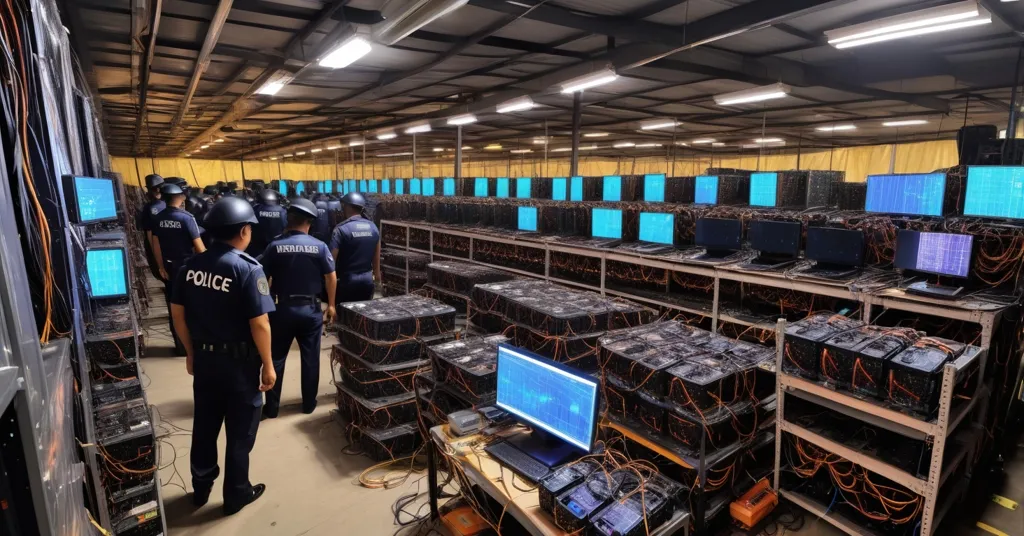
Thailand has shut down an illegal Bitcoin mining operation and seized 315 mining rigs across five provinces, a reminder that crypto may be global, but the electricity meter and the law still run on local terms.
- 315 Bitcoin mining rigs seized
- Operation spread across five provinces
- Thai authorities targeted illegal mining activity
- Energy theft and unlicensed operations remain a major industry stain
The raid is a clean example of the difference between legitimate Bitcoin mining and a dirty, covert setup trying to game the system. Mining rigs are specialized computers that solve Bitcoin’s proof-of-work puzzles and help secure the network. That is the legitimate side of the business. But once miners start dodging permits, abusing power infrastructure, or stealing electricity, it stops being innovation and starts looking like a budget crime series with fans whirring in the background.
According to the reported enforcement action, Thai authorities moved against an illegal Bitcoin mining network operating across five provinces, hauling away 315 rigs. The size and spread of the seizure suggest this was not some hobbyist setup in a garage. It was an organized operation with enough scale to attract attention, and enough nerve to think it could stay hidden.
Why does that matter? Because Bitcoin mining is power-hungry by design. The whole proof-of-work system depends on miners expending electricity to compete for block rewards and validate transactions. That mechanism is what makes Bitcoin resilient and hard to censor. It is also why rogue mining operations are so often tied to electricity theft, grid abuse, or shady industrial setups that dump costs onto everyone else.
For ordinary people, the issue is simple: if a mining operation is paying its power bills, following local rules, and operating transparently, that is a business. If it is siphoning electricity or sneaking rigs into multiple provinces like some kind of cross-border hamster wheel of fraud, that is theft dressed up as tech entrepreneurship. No amount of Bitcoin branding changes that.
The seizure also highlights a broader reality facing the crypto mining industry. Legitimate miners, especially those operating at industrial scale, already deal with volatile Bitcoin prices, rising difficulty, and razor-thin margins. They do not need shady actors making the sector look like an energy parasite convention. When enforcement comes down on illegal operations, it can protect local grids and reduce abuse, but it can also create suspicion around the entire industry if regulators are sloppy or overbroad.
That tension is not unique to Thailand. Across Asia and elsewhere, governments are increasingly willing to tolerate crypto activity until it collides with local infrastructure, tax rules, or energy policy. Then the hammer comes out. Fair enough, honestly. Decentralization does not mean “do whatever you want and let someone else pay for it.” It means open networks, voluntary participation, and clear consequences when people try to cheat the system.
There is also a useful counterpoint here: crackdowns like this should not be confused with hostility to Bitcoin itself. Bitcoin is not the problem. The network is doing what it was designed to do. The problem is criminal behavior hiding behind mining hardware. In that sense, enforcement against illegal operations can actually strengthen the credibility of the legitimate mining sector by separating honest operators from the clowns trying to run a free-load industrial scheme on someone else’s dime.
For readers new to the term, hashrate refers to the computing power miners contribute to the Bitcoin network. More hashrate generally means more competition, more security, and more energy consumption. That is part of the tradeoff. Bitcoin’s critics love to scream about electricity use, but they often ignore the flip side: that energy expenditure is what helps make the system decentralized and resistant to control. The trick is not pretending energy use is irrelevant; it is building mining operations that are legal, efficient, and transparent rather than sneaky and predatory.
Thailand’s move is also a warning shot to anyone trying to build an underground mining farm and hoping nobody notices. Once the rigs are in place, the power draw tends to leave a paper trail. Utilities notice unusual consumption patterns. Neighbors notice odd heat and noise. Regulators notice missing permits. And when the whole setup spans five provinces, the idea that it will stay invisible starts to look less like a strategy and more like wishful thinking.
The bigger lesson for Bitcoin is not that mining is under threat, but that bad actors still keep trying to exploit the space. That should surprise nobody. Bitcoin attracts builders, speculators, libertarians, technologists, and, yes, frauds with a power cable and a bad idea. The protocol can survive that. The reputation of the industry, however, takes a hit every time someone abuses the system and calls it “decentralization.”
Thailand’s seizure of 315 mining rigs is a local enforcement win, but the signal travels farther than the border. Bitcoin mining is legitimate when it is lawful, transparent, and paid for. The moment it turns into energy theft and regulatory evasion, it is not a revolution — it is a raid waiting to happen.
- What happened in Thailand?
Thai authorities seized 315 Bitcoin mining rigs linked to an illegal operation spread across five provinces. - What is a Bitcoin mining rig?
It is a specialized computer built to perform the calculations needed for Bitcoin’s proof-of-work system. - Why are illegal mining operations a problem?
They can steal electricity, strain local power systems, evade regulation, and damage the reputation of legitimate miners. - Does this hurt Bitcoin itself?
No. Bitcoin’s network is decentralized and resilient. A busted mining setup does not threaten the protocol. - Why does energy use matter so much?
Bitcoin mining uses significant electricity by design, so unauthorized operations often become tied to theft, abuse, or hidden industrial-scale consumption. - What is the main takeaway for miners?
If the operation is legal, transparent, and properly powered, it belongs in the ecosystem. If it is covert and abusive, it is just a scam with expensive machines.