Claims about overseas tokenized Treasury holdings need better sourcing
Precise claims about where tokenized U.S. Treasury products are held have circulated under Chainalysis’s name. But the Chainalysis material available for review focuses on agentic commerce, not Treasury ownership. Without the relevant report and methodology, the geographic figures should not be treated as established findings.
- The cited Chainalysis material does not substantiate the Treasury figures.
- Wallet location, holder count and beneficial ownership are not interchangeable.
- DTCC’s tokenization plans show institutional activity, not proof of broad adoption.
What the available data can and cannot show
The claims describe a growing tokenized Treasury market and assign large shares of its identifiable value to investors in Italy, Portugal and Singapore. But the Chainalysis material available for review concerns agentic commerce and x402 payments. It does not provide Treasury market totals, country-level ownership shares or the lending data attributed to the firm.
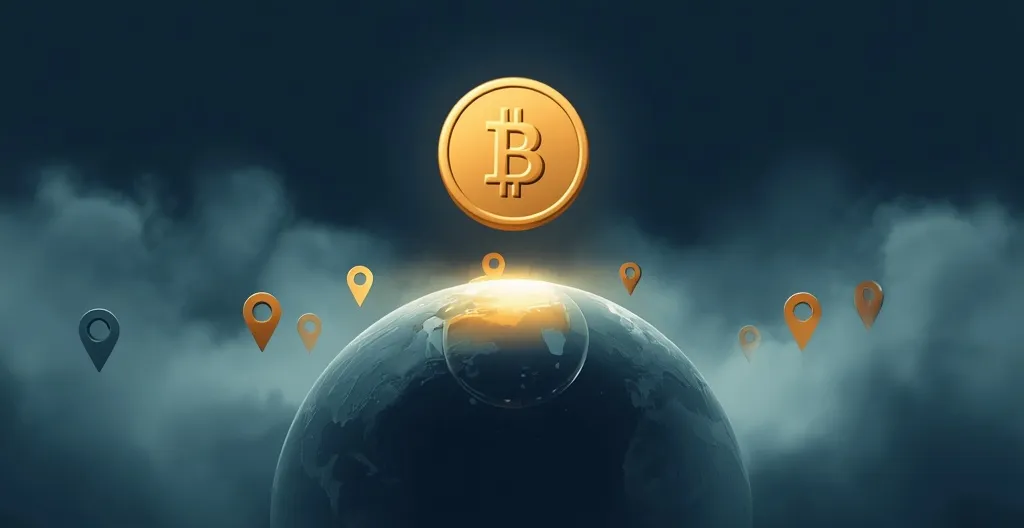
That gap matters. A geographic percentage means little unless readers know what was measured and how. “Identifiable location” could refer to a wallet, an intermediary, a custodian or an inferred owner. None of those necessarily identifies an investor’s residence or the location of the person who ultimately benefits from an investment. The geographic analysis in Chainalysis’s 2026 report shows why the scope and methodology behind regional figures matter.
The denominator matters, too. If researchers could assign locations to only part of the market, a country’s share of that subset is not its share of all tokenized Treasury products. The unassigned portion could change the picture substantially. Without details on coverage, definitions and methodology, even internally consistent percentages cannot establish the market’s full geographic distribution.
Holder counts also need care. A count of wallets or addresses does not necessarily equal a count of people. One investor may control multiple addresses, while an address may represent an institution or pooled account. Claims about the number of “holders” in a country should specify exactly what is being counted.
“Tokenized Treasuries” covers different products
Tokenized Treasury products generally use blockchain tokens to represent an interest in a fund or another investment vehicle that holds U.S. government debt. The token is not necessarily a Treasury security issued directly by the U.S. government. A market overview of tokenized U.S. Treasury funds can help readers see the range of products in this category.
That distinction has practical consequences. Legal rights, investor eligibility, minimum investments and redemption terms depend on the product and its issuer. A blockchain-based format may broaden access for some investors, but it does not make every product available to everyone or remove the need to understand its terms. The SEC’s statement on tokenized securities explains why the legal and regulatory framework behind these products matters.
Stablecoins are different, even when their issuers hold short-term Treasuries as reserves. A stablecoin holder and an investor in a tokenized Treasury fund have different claims, governed by different arrangements. Calling both simply “Treasury-backed crypto” obscures risks that depend on who issued the token and what rights it confers. That distinction matters even amid forecasts that stablecoin volumes could rise sharply.
DTCC’s plans are significant, but they are not adoption figures
Institutional infrastructure is moving forward. In a May 4, 2026 announcement, the Depository Trust & Clearing Corporation said its Industry Working Group included more than 50 financial-industry firms. Named participants included Ondo Finance, BlackRock, Goldman Sachs and JPMorgan.
DTCC said it planned limited production trades in July 2026 and a service launch in October 2026. Those were targets announced at the time, not confirmation that either milestone subsequently occurred. The proposed service covers assets already held in DTC custody. DTCC said it was designed to preserve the entitlements, investor protections and ownership rights of conventional holdings. Its later update on successful U.S. trades involving DTC-tokenized assets marks a separate milestone from broad adoption of tokenized Treasury funds.
The initiative shows that major market infrastructure firms are doing serious work on tokenization. It does not show that tokenized Treasury products are already widely adopted, or confirm claims about where investors in privately issued funds live. Those products may have different legal structures, transfer restrictions and redemption arrangements. Discussions of the tokenized U.S. Treasury and money market fund universe should not be confused with verified ownership data.
DTCC also said the SEC issued a No-Action Letter in December 2025 covering a defined service for three years and specified assets, including U.S. Treasury bills, bonds and notes. The release described DTCC’s custody of assets valued at over $114 trillion. That figure refers to assets in its custody, not assets already tokenized through the planned service.
Key questions about tokenized Treasury ownership
-
Are the reported country shares verified?
Not by the Chainalysis material available for review, which concerns agentic commerce rather than Treasury ownership. The relevant report, data and methodology are needed before those shares can be treated as confirmed.
-
Does a wallet’s location establish an investor’s residence?
No. A wallet or intermediary’s location may not identify the beneficial owner. Any geographic analysis needs to explain how locations were assigned and what portion of the market it covers.
-
Are tokenized Treasury products the same as U.S. Treasury securities?
Not necessarily. A token may represent an interest in a fund or other vehicle holding government debt. The product’s legal terms determine the rights it confers and who can access it.
-
Do DTCC’s plans prove widespread adoption?
No. The working group and planned service show institutional development activity, not broad market use. The announced launch dates were plans, not confirmation that the milestones were completed.
Tokenization may connect traditional financial assets with blockchain infrastructure, but claims about ownership need solid evidence. Until the underlying Treasury data and its methodology are available, the geographic figures remain unverified. For context on the company’s wider blockchain-analysis work, Chainalysis has also been involved in South Korea’s efforts to investigate crypto crime and crack down on North Korean crypto theft.