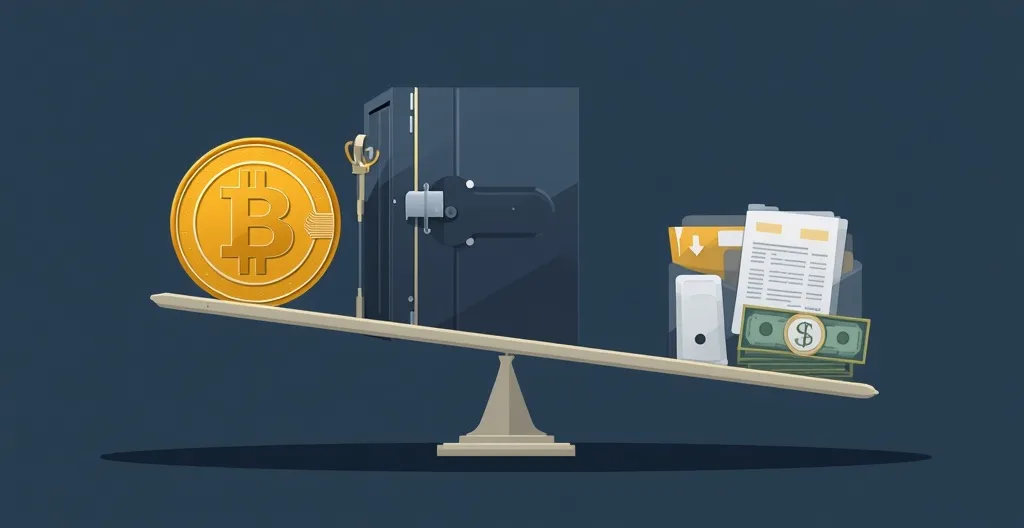
South Korea’s Toss Bank is testing Solana’s payment rails for cross-border remittances, and the timing is no accident. The internet-only bank has signed a memorandum of understanding with the Solana Foundation to explore blockchain-based global payments and settlement infrastructure, starting with a proof of concept for overseas transfers.
- Toss Bank and Solana Foundation signed an MOU in Seoul
- Proof of concept first — no live launch yet
- Stablecoins are at the center of the remittance test
- South Korea’s new transfer rules could change the game
- Asia keeps pushing blockchain payments into the real world
The agreement was signed on June 19 and disclosed on June 22. Toss Bank called it the first direct one-to-one strategic partnership between a South Korean internet-only bank and the Solana Foundation. That may sound like corporate fluff, but in a market as careful as South Korea, a bank openly testing public blockchain infrastructure is not nothing. Banks do not usually wander into crypto territory unless the regulatory weather is starting to clear.
What Toss Bank is actually testing
The initial goal is straightforward: see whether blockchain-based rails can make overseas transfers faster, cheaper, and easier to manage without blowing up the normal banking flow. In plain English, payment rails are the underlying systems that move money from one place to another. Settlement is the final step where funds are fully transferred and the payment is completed. The idea is to use Solana’s network as part of that backend, with stablecoins potentially acting as the transfer medium.
Stablecoins are cryptocurrencies designed to track a stable asset, usually the U.S. dollar. That makes them different from the usual casino-chip behavior of most tokens. For remittances, that stability matters because it can reduce the friction of moving money across borders while avoiding the kind of volatility that makes regular crypto a terrible way to pay your rent.
Park Jin-hyeon, Toss Bank’s head of strategy, described the partnership as a “starting point” for applying blockchain-based financial infrastructure to services the bank already runs.
“Starting point”
That is the right attitude. Too many blockchain projects are sold as revolutions before anyone has checked whether the plumbing works. This one is being framed as a feasibility step, which is far more honest. If the system can improve speed, cost, and settlement efficiency, great. If not, better to find out now than after some overcooked keynote about reinventing finance.
The cooperation also covers blockchain-based payment and settlement models, with future areas under review including stablecoins, digital assets, and tokenized assets. Tokenized assets are real-world assets represented digitally on a blockchain, which can make them easier to move, split, or settle. Useful in theory, yes. Messy in practice, also yes. Finance loves promising elegance and then dragging compliance into the room like an unwanted relative.
Why this matters for remittances
Cross-border transfers are still often slow and expensive because the old system depends on multiple intermediaries, correspondent banks, and foreign exchange steps that pile on fees and delays. Correspondent banking is basically a chain of banks moving money on behalf of each other. It works, but it is clunky, expensive, and not remotely built for the kind of speed users expect today.
Blockchain-based remittance systems aim to cut through that mess. A payment can be converted into a stablecoin, moved across the blockchain, and then converted back into local currency at the destination. If the setup works properly, that can mean faster transfers, lower fees, and fewer middlemen taking a bite out of the amount sent home.
South Korea has already seen what that can look like in pilot form. KB Financial previously tested won stablecoin issuance, offline QR payments, merchant settlement, and remittances to Vietnam. One transfer reportedly finished in under three minutes and cut fees by about 87%. That is not a minor optimization. That is the kind of improvement that makes legacy payment systems look like they were assembled in a government basement sometime in 1998.
Japan is moving too. SBI Remit has partnered with Fasset to build cross-border stablecoin infrastructure, showing that this is not just a South Korean experiment but part of a broader Asian push into blockchain payments.
South Korea’s regulatory shift is the real catalyst
The timing of Toss Bank’s Solana partnership matters because South Korea is preparing a new regulatory framework for virtual asset transfer services, expected to take effect in December. Under the proposed licensing regime, approved firms may be able to offer blockchain-based overseas transfers and foreign exchange services under formal oversight.
That is the key point. Banks do not like operating in legal fog. They like rulebooks, license terms, and a regulator they can at least pretend not to fear. A clearer framework gives institutions room to test blockchain-based settlement without guessing where the red lines are.
This is also why the deal is more than just a Solana headline. It reflects a wider shift where public blockchains are no longer dismissed as speculative toys by every serious financial institution. Banks and fintech firms across Asia are treating stablecoins and blockchain rails as practical tools for moving money, not just assets for traders to obsess over on a chart until their laptop overheats.
Why Solana keeps showing up in payments
Solana has been steadily building a reputation around payments, throughput, and low-cost transactions. That matters because a blockchain’s usefulness for banking is not just about speed. It also has to be reliable, liquid, compliant, and easy to integrate with real financial systems. Fast chain, slow bureaucracy, no product. That is the brutal truth.
Still, Solana is gaining real-world traction. Western Union launched USDPT on Solana for regulated payment and settlement services, adding another major institution to the list of firms testing the network for practical finance use cases. If a remittance giant and a bank are both exploring similar territory, the narrative is no longer “crypto as speculation.” It is increasingly “crypto as infrastructure,” even if the boring regulatory bits are doing most of the heavy lifting.
Toss group has also reportedly explored a custom Layer 1 or Layer 2 blockchain and a native token as part of its “Money 3.0” strategy. That suggests the Solana test may be one branch of a broader digital payments plan, not a one-off experiment. A Layer 1 blockchain is the base network itself, while a Layer 2 is built on top of another chain to improve speed, costs, or scalability. In other words, Toss is clearly thinking about the plumbing, not just the branding.
What still needs to be proven
As promising as this looks, nobody should confuse a memorandum of understanding with a finished product. There is no public launch date for Toss Bank’s remittance service. The cooperation is still in the testing and feasibility phase.
That matters because crypto has a long and embarrassing history of celebrating pilots like they are shipping infrastructure. They are not. A proof of concept is just that: a test to see whether the idea works, whether it can comply with the law, and whether the economics make sense at scale.
There are still real risks:
- Regulatory uncertainty — rules may still shift or narrow the scope of what banks can do
- Compliance complexity — KYC and AML requirements do not disappear just because a blockchain is involved
- Liquidity and conversion friction — stablecoins still need efficient on- and off-ramps into local currency
- Network dependence — building on one public chain creates concentration risk if reliability or policy issues emerge
- Consumer protection — financial services need clear handling for errors, disputes, and reversals
There is also a broader devil’s-advocate question worth asking: do banks want public blockchains because they are the best tool, or because they are the least-bad way to modernize old systems without rebuilding everything from scratch? The answer may be a bit of both. That does not make the effort less interesting. It makes it more realistic.
Asia is quietly building the future of payments
The big takeaway is that blockchain-based remittances are no longer a side hobby for crypto nerds and startup pitch decks. They are becoming part of the strategic planning of banks, payment firms, and regulators across Asia.
South Korea is preparing a licensing regime. Japan has active stablecoin infrastructure work. Financial groups are testing faster settlement and cheaper cross-border transfers. Western Union is putting regulated payment services on Solana. Toss Bank is now adding its own name to the list.
This is how adoption usually happens: not through dramatic declarations, but through a slow grind of tests, licensing, compliance, and business cases that finally make sense. Boring? Absolutely. Effective? That is the point.
What Toss Bank is testing with Solana?
Toss Bank is testing blockchain-based global remittance and settlement infrastructure, starting with a proof of concept for overseas transfers.
Is Toss Bank launching a live crypto remittance service now?
No. This is a testing and feasibility phase, not a public launch.
Why does South Korea matter here?
South Korea is preparing a new licensing regime for virtual asset transfer services, which could allow regulated blockchain-based overseas transfers and FX services.
How could stablecoins improve cross-border payments?
Stablecoins may reduce transfer times, lower fees, and simplify settlement by moving value over blockchain rails instead of relying on multiple intermediaries.
What does this mean for Solana?
It adds another serious institutional use case to Solana’s growing profile in payments and settlement, alongside other real-world deployments.
Are other banks and payment firms doing similar things?
Yes. KB Financial, SBI Remit, and Western Union have all explored stablecoin or blockchain-based payment and remittance systems.
What is the biggest risk?
The biggest risks are regulatory uncertainty, compliance burdens, liquidity issues, and whether the system can scale without becoming a flashy demo that falls apart under real banking requirements.
For all the noise, hype, and shameless price-pumping nonsense that usually surrounds crypto, this is the kind of development that actually matters: a real bank testing whether public blockchain rails can improve payments. That is how adoption starts — with rules, infrastructure, and a lot less bullshit than the market usually prefers.