
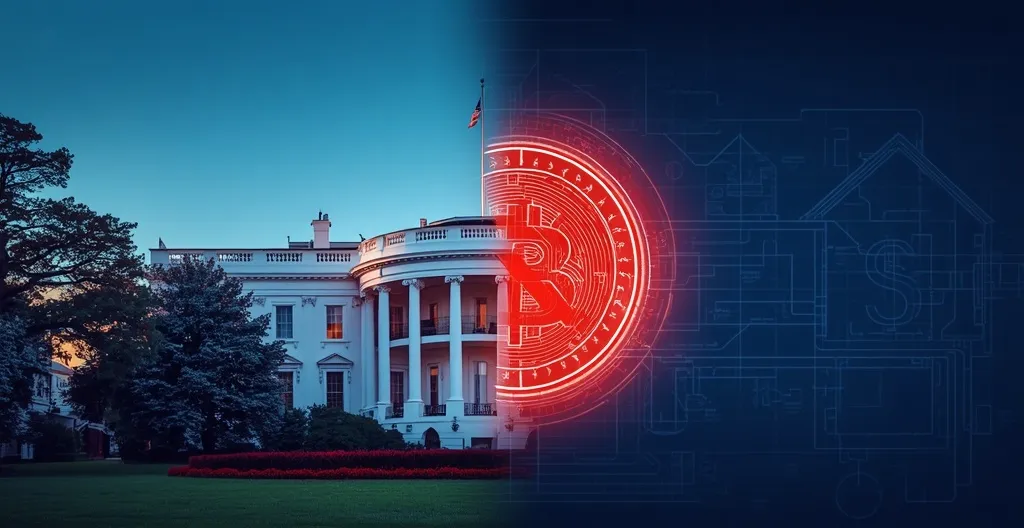
Donald Trump is sitting on a bipartisan housing bill that also sneaks in a hard anti-CBDC clause, turning a mostly mundane housing package into another Washington fight over digital money, privacy, and political leverage.
- Mike Johnson sent the housing bill to the White House on Monday.
- The package bans a Fed CBDC through 2030, including anything “substantially similar.”
- Trump has tied the bill to the SAVE America Act, irritating some Republicans.
- The Senate calendar is tight, and crypto legislation is feeling the squeeze.
House Speaker Mike Johnson sent the 21st Century ROAD to Housing Act to the White House on Monday, starting the president’s constitutional presentment clock. Under that process, Trump has 10 days, excluding Sundays, to sign the bill, veto it, or let it become law if Congress stays in session and he does nothing.
That part is basic civics. The messy part is the bill itself.
The package is mainly a housing measure, aimed at expanding supply, supporting manufactured housing, speeding up some reviews, and tightening some limits on large investors buying single-family homes. In other words, it is supposed to tackle housing scarcity and some of the regulatory friction that keeps new construction crawling when it should be moving.
But the headline-grabbing detail for crypto and privacy advocates is the rider buried inside it: the bill blocks the Federal Reserve from creating a central bank digital currency, or CBDC, through 2030. The language also covers any asset that is “substantially similar” to a CBDC, which is the legislative equivalent of slamming the door and then checking the hinges for escape routes.
That wording matters. It is not just a generic anti-digital-dollar gesture. It is an attempt to stop the Fed from issuing a retail digital dollar or building something close enough to count as a workaround during that period. The distinction matters because Congress often likes to say “no” while leaving a side window open for bureaucrats to call it something else.
Trump has not exactly treated the housing bill like the second coming of free markets. According to Reuters, he called it “a big yawn.” The New York Times reported that he described it as of “minor importance.” He also canceled a planned signing ceremony last week and tied the measure to the SAVE America Act, a voting bill that would require proof of U.S. citizenship for voter registration.
That move has set off grumbling inside his own party. Some Republicans wanted the housing bill signed cleanly, preferably before the midterms, as a tangible bipartisan win. Senator Bill Cassidy called it “irresponsible” to postpone signing the housing bill over the SAVE Act. Fair enough. Housing policy and election-law warfare are separate fights, even if Washington loves stapling them together like a bored office worker with too much authority.
The housing side of this package deserves more than a shrug. According to the Congressional Research Service material cited in the reporting, the bill includes reforms meant to streamline housing-related reviews and modernize parts of the approval process. That includes federal review processes that can delay construction and slow down projects before they ever break ground.
For normal people, that means fewer bureaucratic speed bumps. For builders, it means less time waiting for paperwork to finish its yoga routine. And for renters and buyers, it at least aims at the real problem: not enough housing reaching the market.
That does not make the bill a cure-all. Housing affordability is still getting hammered by restricted supply, high financing costs, local zoning barriers, and the usual parade of delays that make simple projects absurdly expensive. But a bill that tries to trim some of those bottlenecks is doing something concrete, which already puts it ahead of the usual political theater where everyone promises “more homes” and then acts shocked when nothing changes.
The anti-CBDC fight is where the broader crypto-policy stakes show up. A CBDC is a digital form of money issued by a central bank. In the U.S. context, that means a Fed-issued digital dollar. Supporters say it could modernize payments and make money movement more efficient. Critics see surveillance risk, programmable controls, and a neat little tool for financial overreach if it is built badly.
That skepticism is not fringe paranoia. A retail CBDC would give the government a new kind of direct visibility into payments infrastructure, and that makes privacy advocates understandably nervous. Bitcoin was born partly out of distrust in that exact model: a monetary system where institutions sit in the middle, collecting data, applying rules, and deciding who gets access.
A Fed digital dollar is not inherently dystopian, and serious economists would argue the U.S. should study the idea rather than pretending it will go away if ignored long enough. But there is a reason the anti-CBDC message keeps resurfacing in Congress. People hear “central bank digital currency” and immediately think “more control, ” not “more freedom.” That trust problem is very real.
At the same time, there is a downside to the way Washington keeps handling this issue. When every useful bill becomes a vehicle for a separate ideological fight, policy turns into a junk drawer. The housing package has real substance, but the CBDC rider is clearly carrying its own political weight. Critics would call that legislative camouflage: attaching a harder-to-kill anti-CBDC provision to a bill that is harder to oppose on the surface.
The larger timing problem is that Congress is short on runway. The Senate adjourned until July 13, which tightens the window for anything else that needs floor time, including broader crypto market-structure legislation. The CLARITY Act is part of that wider debate, but the calendar is doing what Congress often fails to do on its own: it is forcing a decision by running out of patience.
That matters because most legislation does not fail in a dramatic blaze of glory. It stalls, gets tucked behind other priorities, and then quietly runs out of time. The anti-CBDC push may be strong, but if the Senate calendar is squeezed, even popular crypto language can get trapped in procedural mud.
So this is no longer just a housing bill. It is a test of how much leverage Trump wants to use over a bipartisan measure, how much patience Republicans have for that strategy, and whether anti-CBDC language can survive the political sausage grinder without getting diluted or delayed.
For Bitcoiners and privacy hawks, the core issue is straightforward: a hard stop on a Fed digital currency through 2030 would be a meaningful political signal that Congress is not eager to hand central bankers a programmable money machine. For everyone else, it is another reminder that Washington can turn even housing policy into a fight over surveillance, control, and who gets to decide what money should be.
CBDC ban rides housing bill into Trumps 10-day deadline
Unlocking Housing Supply Through Streamlined and Modernized
Trump Cancels Bill Signing Amid GOP Tensions Over Voting
Bessent Says No U.S. CBDC, Pushes CLARITY Act to Bring
Trump Delays Housing Bill, Clouding U.S. Crypto Policy and
Key questions and takeaways
-
What is the 21st Century ROAD to Housing Act?
It is a bipartisan housing package focused on supply, manufactured housing, and faster review processes. It also includes an anti-CBDC provision that blocks the Federal Reserve from issuing a central bank digital currency through 2030. -
Why are crypto advocates watching this so closely?
Because the bill’s CBDC clause targets a Fed-issued digital dollar and anything substantially similar. For privacy-minded Bitcoiners, that is a direct pushback against centralized monetary surveillance. -
Why is Trump delaying action?
He has linked the housing bill to the SAVE America Act and wants Republicans to prioritize the voting measure first. That has annoyed lawmakers who wanted the housing package signed without the side quest. -
Does the CBDC ban kill a digital dollar forever?
No. The language described here blocks the Federal Reserve from creating one through 2030, rather than permanently ending the idea. It is a pause, not a final burial. -
Does the housing bill have real policy value?
Yes. It is not just a vehicle for crypto politics. The package includes housing-supply and review reforms aimed at reducing some of the bottlenecks that make new construction slow and expensive. -
What is the risk critics see in a CBDC?
They worry it could give the government more visibility and control over everyday transactions, especially if it were designed in a way that allows tracking or restrictions on how money is used. -
What happens if Trump does nothing?
If Congress remains in session long enough after presentment, the bill can become law without his signature once the 10-day window runs out, excluding Sundays. If Congress adjourns in a way that blocks return, the pocket-veto rules can complicate that outcome.
The bottom line is simple: the housing bill is real policy, the CBDC clause is real politics, and the Senate clock is real pressure. In Washington, those three things rarely stay in their own lane for long.


