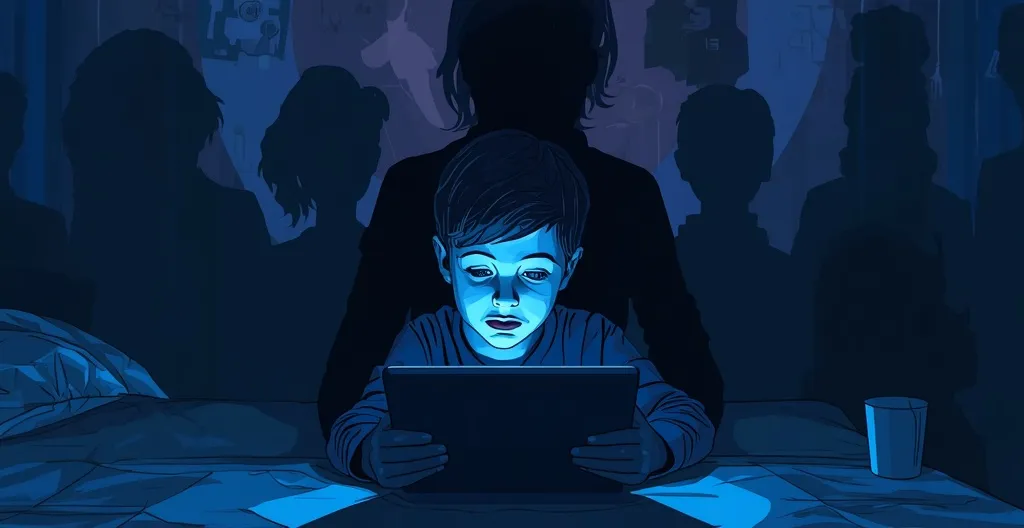
UNICEF says children are adopting AI more than three times faster than adults, and the warning comes with a catch: the data is based on surveys of about 1, 000 internet-using children aged 12 to 17 and 1, 000 parents or caregivers across 10 countries, then modeled into broader estimates.
- At least 20 million children have used AI, UNICEF estimates.
- More than 2 million said they use AI for advice about worries.
- 13 million said they use it for learning and homework.
- Risks include scams, misinformation, and sexually explicit deepfakes.
The United Nations Children’s Fund says AI is already “shaping childhood around the world, for better and for worse.” That is the right frame. This is not a clean victory lap for smart software, and it is not a moral panic either. It is a fast-moving technology getting into children’s hands faster than the rules, habits, and safeguards around it.
UNICEF’s figures come from nationally representative household surveys in Armenia, Brazil, Colombia, the Dominican Republic, Jordan, Mexico, Montenegro, North Macedonia, Pakistan, and Serbia. The organization and IPSOS asked internet-using children and their parents or caregivers how they were using AI, then used UN population data and internet-use estimates to scale the results. So when UNICEF says at least 20 million children have used AI, that is an estimate, not a headcount from some giant global registry in the sky.
Still, the signal is hard to miss. Children are adopting AI at rates more than three times faster than adults, according to UNICEF. That matters because AI is no longer just a lab demo or a toy for tech enthusiasts. For many kids, it is already a homework helper, a brainstorming tool, and sometimes a stand-in for advice they may not feel able to ask anywhere else.
UNICEF says an estimated 13 million children are using AI to support learning and homework. More than 2 million, or 1 in 10, said they turn to AI for advice about things that worry them. That is useful in one sense. A child stuck on a math problem or needing help phrasing an essay can get a quick boost. But if the machine becomes the first place a kid goes for reassurance, judgment, or answers to sensitive questions, the line between convenience and dependency starts to blur fast.
AI can be helpful without being trustworthy. It can sound calm, fluent, and confident while being wrong, biased, manipulative, or just making things up with excellent grammar. Adults struggle with that. Children, who are still learning how to assess authority and accuracy, have a much rougher deal.
UNICEF also says around a third of children were concerned about AI being used to scam or trick others or spread misinformation. A quarter feared their images or videos could be manipulated into sexually explicit deepfakes. Those are not fringe worries. They are exactly the kind of abuse generative AI makes easier to produce, easier to scale, and easier to weaponize.
Deepfakes are digitally manipulated images or videos that make someone appear to say or do things they never did. When that tech is pointed at children, it stops being a party trick and starts looking a lot more like exploitation, harassment, coercion, and in some cases illegal content.
UNICEF is not calling for AI to be shoved back into a box. It says the technology can help children learn, play, and create. The problem, in UNICEF’s words, is that “too many systems are reaching children with no guardrails, safety, seemingly, an afterthought.” Children are exposed to AI systems, including how they are designed, their underlying business models, and how their data is used, while having far less power to avoid or challenge them.
“AI is here. It is a growing part of all of our lives. And it is already shaping childhood around the world, for better and for worse.”
That is the blunt part. The more useful part is what comes next: UNICEF wants child rights built into AI governance, not stapled on later after a pile of harm has already accumulated. The group is calling for stronger laws, more corporate accountability, safer and more transparent AI systems, AI literacy for children and caregivers, research on AI’s impact on children, and better digital infrastructure and connectivity so the benefits of AI do not deepen the gap between the haves and the have-nots.
The access gap matters more than it may sound. If AI becomes a normal part of education, communication, and creative work, then unequal access stops being a minor inconvenience and starts becoming a structural disadvantage. One kid gets a capable tutor; another gets a slow connection and a “please try again later” screen. Civilization by loading spinner.
There is also a bigger question hanging over all of this: what happens when children rely on AI so much that they stop doing enough of the thinking themselves?
Some academic work has raised concerns that excessive reliance on AI-driven systems may contribute to what researchers call cognitive offloading, meaning people let the machine remember, decide, plan, or solve problems for them. In moderation, that is normal. Nobody needs to memorize every phone number anymore. But if a child leans on AI too heavily, too early, for too many tasks, it could weaken independent problem-solving, judgment, and personal agency.
That concern is real, but the evidence is not settled. The long-term effects of AI on children’s cognition and emotional development are still being studied, and anyone claiming certainty here is probably selling something, or at least telling a story that is cleaner than the facts deserve.
One reason regulators are paying attention is that AI misuse is already showing up in the wild. In January, Ofcom made “urgent contact with X and xAI” over reports of explicit AI-generated images on Grok, the AI tied to Elon Musk’s company. X later said that “image generation and editing are currently limited to paying subscribers.”
That is not a safety fix. It is a paywall with a nicer hat.
A spokesperson for UK Prime Minister Keir Starmer put it more directly, saying the move “simply turns an AI feature that allows the creation of unlawful images into a premium service.” The government’s point was straightforward: “the point here is we must stop these abhorrent images being made on Grok.”
Ofcom said it felt compelled to make “urgent contact with X and xAI to understand what steps they have taken to comply with their legal duties to protect users in the U.K.” That matters because it shows AI child-safety issues are no longer just about ethics, reputation, or hand-wringing in conference panels. They are becoming enforcement issues.
And they should be. In the U.K. and other jurisdictions, child protection laws already exist for pornographic content involving minors and for harmful material more broadly. AI-generated sexual content involving children is not some abstract policy debate. It is an abuse vector that can move from prompt to harm in seconds if the system is left wide open.
UNICEF’s broader point lands because it connects the dots between kids using AI, the incentives of the companies building it, and the weak protections around the whole mess. AI companies want growth. Kids want help, reassurance, and entertainment. Those incentives are not naturally aligned. If companies do not build with child safety in mind, or if regulators do not force the issue, the result is usually predictable: abuse, confusion, and a lot of expensive regret.
Key takeaways
- How fast are children adopting AI?
UNICEF says children are adopting AI more than three times faster than adults, based on surveys in 10 countries and population modeling. - What are children using AI for most?
UNICEF says the biggest uses are learning, homework, and advice about personal worries. - What are the main risks?
UNICEF highlights scams, misinformation, emotional dependence, and sexually explicit deepfakes. - Is AI already proven to harm children’s cognition?
Not conclusively. Researchers have raised concerns about cognitive offloading and overreliance, but long-term evidence is still emerging. - What does UNICEF want done?
It wants child rights built into AI governance through stronger laws, safer design, corporate accountability, AI literacy, and better digital access.
UNICEF says this is a decisive moment, and that the choices made about AI now will shape children’s safety, privacy, well-being, and equal access to opportunity for decades to come. That sounds dramatic because it is dramatic. A powerful technology is being absorbed into childhood faster than the institutions meant to protect children can keep up.
The optimistic reading is obvious: AI can help kids learn faster, create more, and get support that might otherwise be out of reach. The darker reading is just as obvious: if companies keep shipping powerful tools with weak guardrails, children will keep getting exposed to manipulation, exploitation, and a slow drip of outsourced thinking.
Both can be true at once. That is the uncomfortable part. The rest is just choosing whether to treat child safety as a design requirement or as an optional feature that shows up after the lawsuit.
Further reading
A few related pieces worth keeping on the radar as the AI-child safety mess keeps growing:
- UNICEF: Kids adopting AI over 3x faster than adults
- The Brain Side of Human-AI Interactions: The 3R Principle
- UNICEF Urges Action To Protect Children From AI
- Deepfake abuse is abuse
- AI Transforms TV News: Can Blockchain Fix Trust Issues Amid
- Bipartisan AI Fraud Bill Targets Deepfakes: A Critical
- Saylor: Bitcoin as Safe Haven Against AI-Driven Market